The Genesis of Fragmentation: Picasso and the Birth of Cubism
To understand the seismic shift that occurred in the early twentieth century, one must look beyond the mere surface of the canvas and into the restless mind of Pablo Picasso. Before the world recognized the fractured geometry of Cubism, there existed a tradition of perspective that had remained largely unchallenged since the Renaissance. Picasso, alongside Georges Braque, sought to dismantle this singular viewpoint, replacing it with a multi-dimensional reality that mirrored the accelerating complexity of the modern age. This was not merely a change in style, but a profound philosophical inquiry into how we perceive truth.
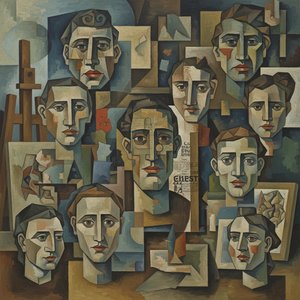
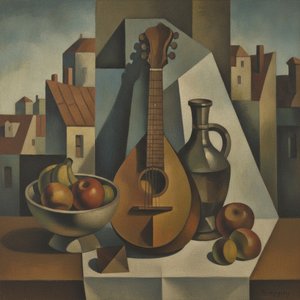
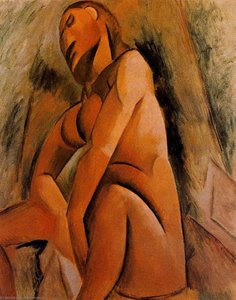
The early stages of this revolution were deeply influenced by the raw, emotive power of Primitivism. By looking toward non-Western aesthetics, Picasso found a way to strip away the decorative excesses of late nineteenth-century art, focusing instead on the essential structure of form. Works such as Untitled (37) demonstrate this early fascination with simplified, almost naive shapes that prioritize symbolic weight over anatomical accuracy. This period was characterized by an intense exploration of volume and mass, laying the groundwork for a movement that would eventually reject the illusion of depth in favor of a more honest, flattened representation of the subject.
As these artists began to experiment, they realized that a single moment in time could be captured from multiple angles simultaneously. This concept—the rejection of the static observer—became the heartbeat of Cubism. It invited the viewer not just to look, but to participate in the reconstruction of the image, piecing together fragments of memory and sight to form a cohesive whole.
Analytical Cubism: Deconstructing Form and Perspective
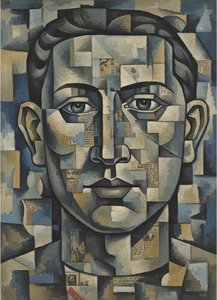
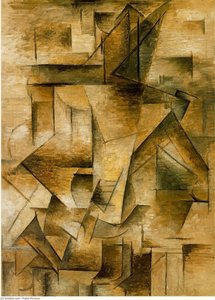
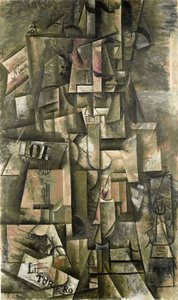
As the movement matured into what art historians now term Analytical Cubism, the palette underwent a deliberate, almost ascetic transformation. The vibrant colors of Picasso’s earlier periods were sacrificed for a sophisticated range of ochres, greys, and muted earth tones. This monochromatic approach was a strategic choice; by stripping away the emotional distraction of color, the artist could force the viewer to focus entirely on the intricate architecture of the composition. In works like Baño, we see this meticulous deconstruction in action, where geometric shapes overlap and intersect, creating a complex web of planes that challenge our sense of spatial orientation.
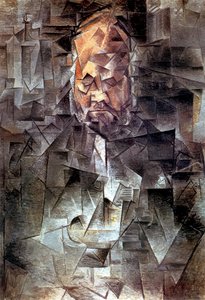
In this phase, the subject matter—often still lifes or portraits—is systematically broken down into its constituent parts. The boundaries between object and atmosphere begin to dissolve. A glass, a musical instrument, or a human face is no longer a discrete entity but a series of interlocking facets that bleed into the surrounding space. This technique creates a rhythmic, cerebral experience, where the eye must navigate a labyrinth of light and shadow. It is an intellectualized form of painting, demanding a high degree of visual literacy from the collector and the critic alike.
The brilliance of Analytical Cubism lies in its ability to represent the passage of time within a single frame. By presenting various facets of an object at once, Picasso achieved a temporal depth that traditional realism could never grasp. The painting becomes a record of movement, a dance of perception that captures the essence of an object through its many possible viewpoints.
Synthetic Cubism: The Art of Assemblage and Texture
If Analytical Cubism was about taking things apart, Synthetic Cubism was about bringing them back together in entirely new, unexpected ways. This period marked a departure from the monochromatic austerity toward a more playful, textured, and colorful approach. Picasso began to introduce elements of "real" reality into his work through the technique of collage, incorporating scraps of newspaper, wallpaper, and cloth directly onto the canvas. This innovation fundamentally altered the definition of painting, blurring the line between fine art and the everyday objects of modern life.
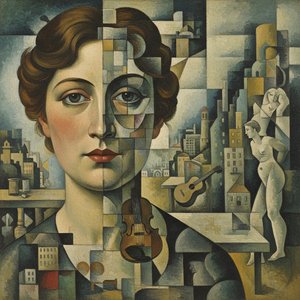
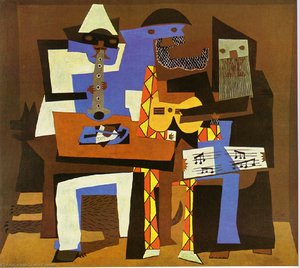
'This era introduced a sense of construction rather than deconstruction. Instead of dissecting an existing form, the artist built new forms from disparate parts. The use of texture became paramount; the tactile quality of the surface—the way light catches a raised edge or a piece of pasted paper—added a new dimension of sensory engagement. In works like La Paloma con Guisantes, we see a renewed interest in color and form that feels more integrated and decorative, yet remains deeply rooted in the structural lessons of the previous years.
Synthetic Cubism allowed for a greater degree of symbolism and metaphor. By using recognizable textures and shapes, Picasso could evoke complex ideas through simple visual cues. This period represents the ultimate triumph of the artist's agency, where the canvas is no longer a window into another world, but a physical object in its own right, constructed with intention and layered with meaning.
Beyond the Canvas: The Lasting Influence of Picasso’s Geometric Revolution
The ripples of Picasso’s Cubist revolution extended far beyond the boundaries of the canvas, influencing nearly every major movement that followed. From the sharp edges of Futurism to the dreamlike distortions of Surrealism, the language of fragmentation became a universal tool for the avant-garde. The liberation of form allowed subsequent generations of artists to explore themes of psychology, politics, and social upheaval with a visual vocabulary that was no longer bound by the constraints of literal representation.
Furthermore, the Cubist emphasis on structure and the interplay of planes paved the way for the development of abstract art. By proving that an image could be powerful without being mimetic, Picasso opened the door for pure abstraction, where color and line serve as the primary carriers of emotion. The movement’s legacy is visible in modern graphic design, architecture, and even contemporary sculpture, where the tension between mass and void continues to be a central preoccupation.
For the modern collector, understanding this lineage is essential. To appreciate a Cubist work is to understand the DNA of twentieth-century modernism. It is an appreciation of the courage required to break the world apart in order to see it more clearly.
Curating the Avant-Garde: Integrating Cubist Masterpieces into Modern Collections
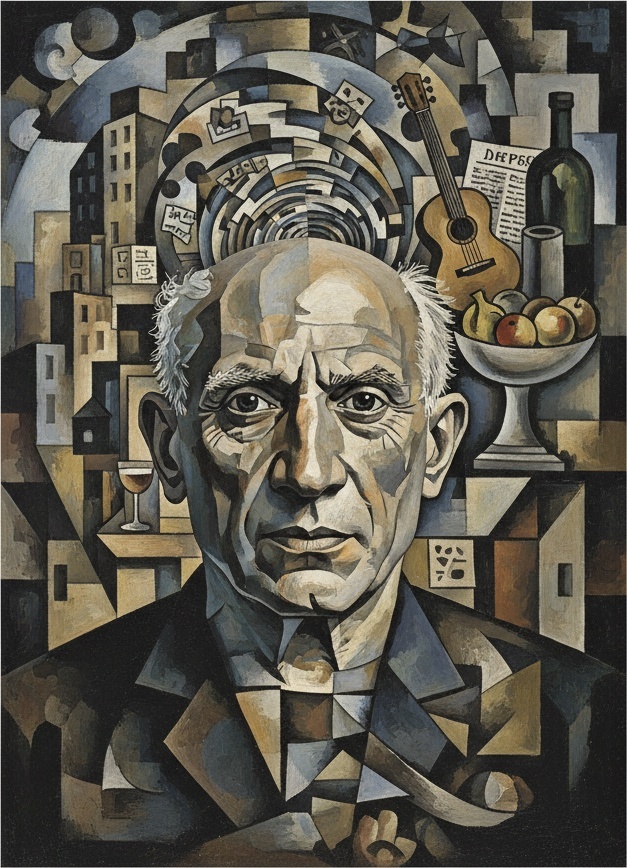
Integrating works inspired by the Cubist tradition into a contemporary collection requires a sophisticated understanding of balance and dialogue. Because Cubism is inherently complex and visually dense, these pieces often serve as the intellectual anchor of a room. When displayed alongside more minimalist or classical works, a Cubist-inspired painting provides a necessary point of tension, preventing a collection from becoming too static or predictable.
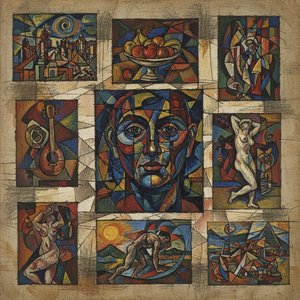
The key to successful curation lies in the interplay of texture and light. A high-quality oil reproduction, with its visible, tactile brushstrokes and impasto textures, can breathe life into a modern interior. The three-dimensional quality of a well-executed painting mimics the "living" essence of the original masters, offering a depth that flat prints simply cannot achieve. When selecting pieces for a large-scale installation, such as a multi-panel group set, one must consider how the geometric flow of the composition interacts with the architectural lines of the space.
Ultimately, collecting art inspired by Picasso is an act of preserving human creativity and intellectual rigor. Whether through the acquisition of museum-quality reproductions or the commissioning of bespoke works that "remix" historical styles, the discerning collector ensures that the revolutionary spirit of Cubism continues to resonate in the homes and galleries of the future.