The Pastoral Ideal: Exploring the Soul of Rural Landscapes
To gaze upon a landscape is to engage in a silent dialogue with time itself. For centuries, the pastoral ideal has served as a sanctuary for the human spirit, offering a visual reprieve from the encroaching complexities of civilization. These works do not merely depict fields and forests; they capture an idealized state of existence where the rhythm of nature dictates the pace of life. In the realm of classical art, the rural scene is often imbued with a sense of nostalgia—a longing for a lost Eden where the boundaries between humanity and the earth remain unblemed. This romanticized vision of the countryside allows the viewer to transcend the immediate moment, finding solace in the eternal recurrence of the seasons and the quiet dignity of the untouched meadow.
The essence of this genre lies in its ability to evoke a profound sense of belonging. When we observe a scene such as John Lancaster’s ‘Pastoral Scene’, we are not just looking at wildflowers and distant mountains; we are experiencing the emotional weight of tranquility. The composition serves as an invitation to wander through a world where every element—from the smallest petal to the most imposing peak—contributes to a larger, harmonious narrative. This pursuit of the pastoral is more than a stylistic choice; it is a philosophical endeavor to find permanence within the ephemeral beauty of the natural world.
Light and Atmosphere: The Impressionist Influence on Countryside Art
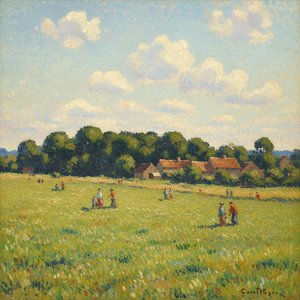
The evolution of landscape painting reached a transformative zenith with the advent of Impressionism, an era that fundamentally altered our perception of light and atmosphere. Before this movement, landscapes were often rendered with a meticulous, almost photographic precision. However, artists began to realize that the true subject of a landscape is not the physical terrain itself, and yet, it is precisely how light interacts with that terrain that defines its character. The mastery of diffused light became the hallmark of this era, as painters sought to capture the fleeting, transient qualities of a morning mist or the golden warmth of a setting sun.
Consider the works of Ernest Lawson, particularly his 1915 'Landscape with Stream'. Here, the Impressionist technique allows the Canadian countryside to breathe through light-drenched brushwork, where the water does not merely reflect the sky but seems to vibrate with its luminosity. Similarly, the landscapes of Albert Ernest Bottomley utilize a soft, atmospheric haze to evoke a sense of profound peace. By prioritizing the sensory experience of light over rigid anatomical detail, these artists taught us that atmosphere is the true architect of emotion in art. The air itself becomes a visible medium, thick with moisture, warmth, or the crisp chill of autumn.
Textures of Nature: From Impasto Brushstrokes to Diffused Light
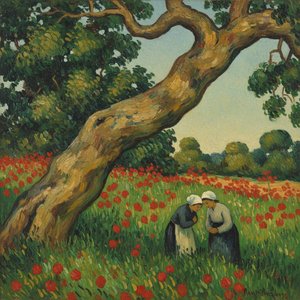
The tactile dimension of landscape painting provides a sensory depth that transcends mere visual observation. In the finest oil reproductions, one can almost feel the ruggedness of the earth and the softness of the clouds through the deliberate application of paint. The technique of impasto—the thick, sculptural application of pigment—allows artists to recreate the physical presence of nature. When an artist builds layers of oil paint, they create a three-on-dimensional texture that catches actual light within the room, mimicking the uneven surfaces of bark, stone, and wild flora.
This textural complexity is what distinguishes a true masterpiece from a flat reproduction. In works like John Lancaster’s more recent impressionistic explorations, the visible, tactile brushstrokes create a rhythmic energy that guides the eye across the canvas. This interplay between the heavy, textured foreground and the soft, blended distance creates an illusion of immense depth. It is through this technical mastery—the ability to balance the weight of the paint with the delicacy of light—that a painting achieves its living quality, inviting the viewer to touch the very essence of the landscape with their eyes.
The Emotional Resonance of Solitude in Landscape Painting
There is a unique, melancholic beauty found in the solitude of a rural landscape. Unlike portraiture, which focuses on human interaction and social hierarchy, the landscape offers a space for introspection. The absence of human figures does not signify emptiness; rather, it signifies a presence of spirit. In the idyllic depictions of José Weiss, the English and Sussex countrysides are presented as stages for quiet contemplation. These scenes allow the viewer to inhabit the solitude, finding a sense of peace in the stillness of an empty lane or the quietude of a sun-dappled glade.
This emotional resonance is deeply tied to our collective psyche. In an increasingly loud and interconnected world, the ability to look upon a painting and find a silent, solitary corner of the world is a rare luxury. The landscape becomes a mirror for our own internal states—reflecting our moments of calm, our periods of introspection, and our reverence for the sublime. The mastery of the genre lies in capturing this delicate balance: making the viewer feel both small in the face of nature's grandeur and deeply connected to its quiet, enduring pulse.
Curating Serenity: Integrating Timeless Landscapes into Modern Interiors
Bringing the tranquility of the countryside into a contemporary living space is an exercise in sophisticated curation. A well-placed landscape painting acts as a window, expanding the perceived boundaries of a room and introducing an organic element to often structured, modern environments. For the discerning collector, selecting a piece involves more than mere decoration; it is about establishing an emotional atmosphere. Whether it is a large-format mural that transforms a hotel lobby into a pastoral dream or a multi-panel group set that anchors a grand staircase, the landscape provides a foundational sense of calm.
When integrating these works, one must consider the dialogue between the art and the architecture. A textured oil reproduction, with its visible brushstrokes and rich pigments, offers a necessary counterpoint to the smooth surfaces of modern glass and steel. By choosing pieces that emphasize light and natural tones, collectors can create a cohesive aesthetic that feels both timeless and curated. Ultimately, the goal is to transform a house into a sanctuary, using the enduring beauty of rural art to anchor the soul in a world of constant change.
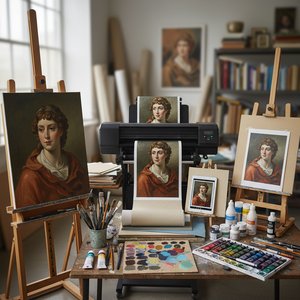
At ArtsDot.com, we specialize in preserving this legacy of human creativity. From hand-painted oil reproductions that capture the tactile depth of the Old Masters to museum-quality Giclée prints, our mission is to make the profound beauty of art history accessible to global collectors. Whether you seek a custom commission from a personal photograph or wish to explore our vast library of classical landscapes, our artists and experts are dedicated to bringing the serenity of the past into your modern home.