

The New Era of Quiet Luxury: From Ostentation to Intentional Curation
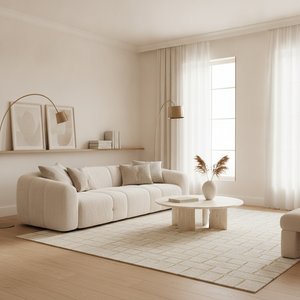 Soft Minimalism: The Definitive Guide to Curating Serene and Elegant Luxury Interiors
The Essence of Soft Minimalism: Defining Quiet Luxury through Texture and Tone In the contemporary landscape of high-end residential design, a profound shift is occurring—a movement away from the ostentatious displays of wealth toward a more whispere...
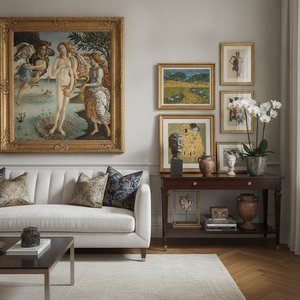
In the contemporary landscape of high-end residential design, a profound shift is occurring—a movement away from the ostentatious displays of wealth toward a more whispered, intentional form of expression known as quiet luxury. The modern luxury interior has undergone a quiet revolution, shifting from a mere display of affluence to an intimate expression of deeply personal narrative. No longer content with simply acquiring beautiful objects, the discerning collector seeks pieces that resonate with their experiences, values, and intellectual curiosity. This evolution demands a rejection of the superfluous in favor of the exceptional, where the value of a space is measured not by the quantity of its ornaments, but by the exquisite quality of its textures and the emotional resonance of its stillness.
To enter a room adorned with fine art is to step into a curated narrative, where every brushstroke and pigment choice whispers a story of heritage and personal identity. This new era of curation focuses on the concept of soft minimalism, a philosophy that seeks to cultivate an atmosphere of profound serenity and warmth. Unlike the stark, often clinical austerity of traditional minimalism, this approach utilizes a sophisticated spectrum of neutrals—creams, sands, warm greys, and muted taupes—to soften architectural boundaries. It is about creating a space where emptiness is not an absence, but a deliberate presence; the breath between notes in a symphony, providing the necessary space for true beauty to emerge.
Mastering the Narrative: Integrating Culturally Themed Collections and Personal Heritage
 Global Aesthetics in Luxury Interiors: Curating Culturally Themed Art Collections for Discerning Clients
The Rise of Culturally Themed Collections: Beyond Aesthetics Collezione Borromeo Discover Palazzo Borromeo on Isola Bella! Explore Baroque art, Flemish tapestries & stunning gardens. See the Galleria Berthier & learn about the historic Stresa Confere...
A truly curated collection serves as a carefully constructed dialogue between history, symbolism, and individual identity. For the global citizen, art is the medium through which one weaves their travels and cultural fascinations into the very fabric of their home. We see this in the rise of culturally themed collections that go beyond mere aesthetics to offer immersive experiences. Consider the fascination with Ukiyo-e prints from Edo-period Japan; a sophisticated collector does not simply hang these woodblock masterpieces on a wall, but incorporates elements that evoke the atmosphere of a traditional tea house—minimalist natural wood and delicate ceramics—to transport the viewer to another time and place.
This impulse to understand context and nuance allows for a more profound connection to the art. Whether it is the grandeur of Byzantine-inspired architectural sketches reminiscent of the Hagia Sophia or the intricate textures of Flemish tapestries, the goal is to create a sense of place. By thoughtfully juxtaposing historical motifs with modern luxury, one can achieve a global aesthetic that feels both grounded in tradition and vibrantly contemporary. The art becomes a window into vanished worlds, allowing the inhabitant to live amidst a collection of stories that are as much about their own journey as they are about the history of the pieces themselves.
Soft Minimalism and the Power of Texture: Creating Serene, Art-Centric Sanctuaries
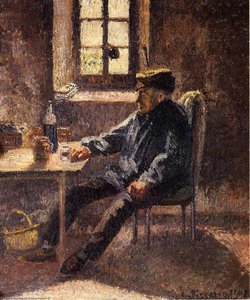 Old Wingrower in Moret (also known as Interior)
In the realm of Impressionist art, few paintings capture the essence of tranquility and comfort as eloquently as Camille Pissarro's "Old Wingrower in Moret," also known as "Interior." This 1902 masterpiece, measuring 65 x 54 cm and executed in oil on...
The mastery of a soft minimalist interior lies in the subtle interplay of light and shadow across tonal variations. The foundation of such a sanctuary is found in a curated palette that evokes the natural world: the soft glow of dawn, the weathered texture of limestone, or the gentle shade of sun-blement linen. In this environment, art takes center stage, acting as the emotional anchor of the room. When an interior is designed with chromatic restraint, a single, powerful artwork—perhaps an Impressionist masterpiece like Pissarro’s Old Wingrower in Moret—can breathe life into the space, its warm glow and rich textures providing a focal point that invites reflection and tranquility.
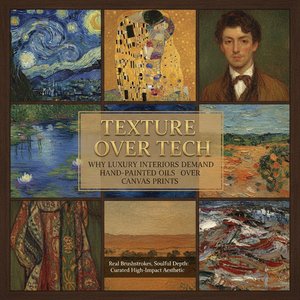
Texture plays a vital role in preventing monochromatic schemes from descending into monotony. The tactile depth of an oil painting, with its visible brushstrokes and impasto techniques, provides a necessary contrast to the smooth surfaces of modern architecture. This interplay between the physical and the visual creates a multi-sensory experience. When art is selected for its ability to provide organic warmth, it transforms a room from a mere living space into a soulful sanctuary, where every shadow and light play tells a story of profound depth and peace.
Architectural Grandeur: Utilizing Large-Format Murals and Multi-Panel Compositions
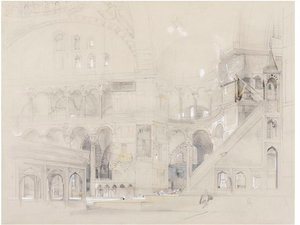 Interior of Hagia Sophia, Constantinople
Subject and Composition This captivating architectural drawing offers a detailed glimpse into the majestic interior of the Hagia Sophia, one of the most iconic symbols of Byzantine architecture and religious history. The sketch captures the grandeur ...
For those designing expansive halls, grand staircases, or hotel lobbies, the scale of art must match the ambition of the architecture. The use of large-format murals and frescoes allows for the recreation of historical magnificence within a modern context. Imagine the ability to transform a ceiling into a breathtaking vista, reminiscent of the Sistine Chapel, through meticulously crafted canvas rolls that are installed with the precision of high-end wallpaper. Such works command attention, emphasizing verticality and openness, and can redefine the very volume of a room.
Complementing this scale is the contemporary trend of multi-panel compositions, where a single, breathtaking image is split across three, four, or even five panels. This technique is particularly effective for wide walls or long corridors, creating a rhythmic, modern architectural look. The challenge and the beauty lie in ensuring that colors and brushstrokes flow seamlessly across every panel, maintaining a cohesive whole. These group set paintings act as a bridge between traditional fine art and modern structural design, turning a flat surface into a dynamic, multi-dimensional experience of movement and light.
The Connoisseur’s Choice: Distinguishing Between Hand-Painted Oils and Fine Art Prints
 Old Master
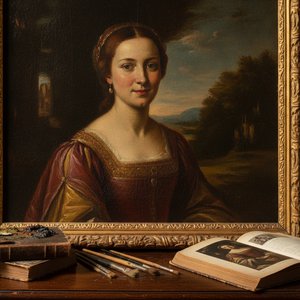
In art history, "Old Master" (or "old master") refers to any painter of skill who worked in Europe before about 1800, or a painting by such an artist. An "old master print" is an original print (for example an engraving, woodcut, or etching) made by ...
To the discerning collector, understanding the soul of a piece is paramount. There is a fundamental distinction between a Handmade Oil Reproduction and a high-quality Giclée print. A true oil reproduction is a bespoke creation, a labor of passion where an artist meticulously layers pigments on 100% cotton canvas over several weeks. The result is a work with physical depth—the tactile presence of the brushstroke, the way light catches the raised impasto, and a tonal range that no digital process can truly replicate. It is a unique object, a testament to human craftsmanship and academic excellence.
In contrast, while Giclée prints offer incredible accuracy and archival durability through 12-color inks, they remain a flat, two-dimensional medium. They are excellent for consistent, widespread decor, but they lack the "breath" of an original painting. For those seeking to invest in a legacy, the choice often leans toward the hand-painted. These works are finished with protective layers like Damar varnish and utilize specific oils to prevent yellowing, ensuring that the masterpiece remains vibrant for generations. The choice between the two is ultimately a choice between the convenience of a print and the enduring, textured soul of an original-style painting.
Bespoke Legacies: Transforming Personal Milestones into Timeless Masterpieces
 Art Concierge: The Ultimate Luxury Service for Curating Your Space
The Philosophy of Curation: Transforming Interiors into Private Galleries The Curated Interior: Elevating Private Collections Through ArtsDot’s Bespoke Art Consultation Services The Art of Curation: Defining Your Aesthetic Vision To enter a room ado...
Perhaps the most profound way to curate an interior is through the "Buy from Photo" movement, which allows for the transformation of personal milestones into fine art. This service specializes in turning wedding portraits, family legacies, or even cherished pet portraits into museum-grade oil paintings. By utilizing advanced techniques—and even the intersection of technology and tradition through AI-assisted restyling—one can request a modern photograph to be reimagined in the expressive, distorted forms of Marc Chagall or the light-drenched impressionism of Monet. This is the ultimate form of customization: a "period shift" that turns a contemporary memory into a 17th-century masterpiece.
This level of bespoke service ensures that art is not just something one acquires, but something one creates from the essence of their own life. Whether it is a group portrait combining individuals from different photographs or a custom commission that captures a specific family heirloom, these works become more than decoration; they become heirlooms. At ArtsDot.com, we facilitate this journey through our professional Project Coordinators and expert Art Consultants, ensuring that every commission meets the highest standards of academic excellence and emotional resonance, turning your most precious memories into a permanent, painted legacy.