The Genesis of Form: The Enduring Legacy of Ancient Greek Sculpture
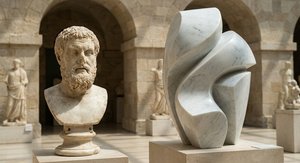
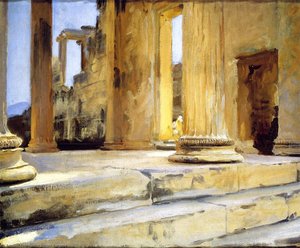
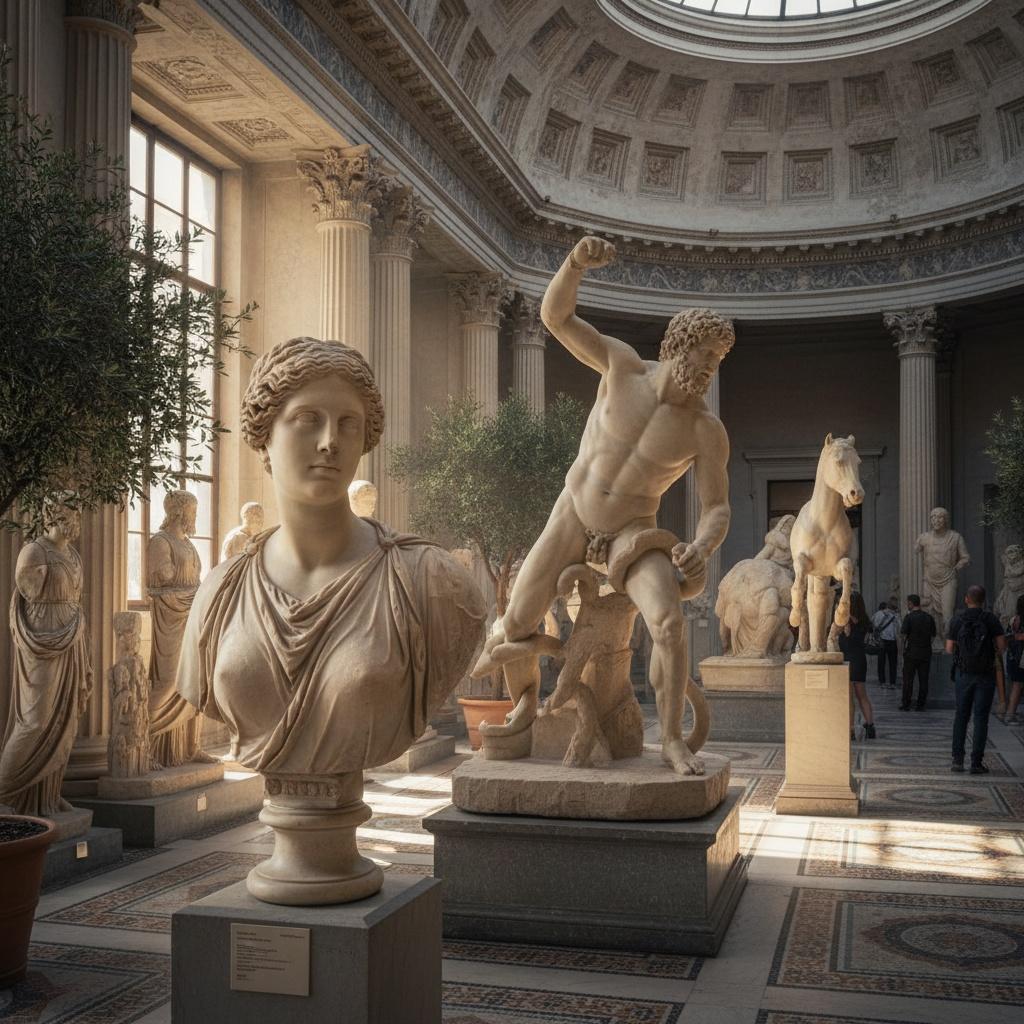
To contemplate the origins of Western aesthetic consciousness is to stand before the silent, powerful presence of Ancient Greek sculpture. Long before the advent of modern sensibilities, the artisans of the Hellenic world sought to capture not merely the likeness of man, but the very essence of divine proportion and mathematical harmony. This era marked a profound departure from the rigid, stylized forms of earlier civilizations, moving instead toward an organic fluidity that breathed life into stone. The foundational works of this period, deeply rooted in the architectural triumphs like the Parthenon, established a lexicon of beauty that remains the cornerstone of art history.
The mastery of the Greek sculptors lay in their ability to manipulate marble to mimic the softness of flesh and the tension of muscle. Through the development of contrapposto—that subtle, asymmetrical weight shift in the human stance—sculptors achieved a sense of potential motion, as if the figure might step from its pedestal at any moment. This pursuit of naturalism was not merely a technical feat but a philosophical endeavor; it was an attempt to mirror the order and balance believed to exist within the cosmos itself. As we examine these ancient relics, we are reminded that the quest for perfection is a timeless human impulse.
Divine Proportions: Exploring Hellenistic Realism and Mythological Narrative
As the classical era transitioned into the Hellenistic period, the serene idealism of the early masters gave way to a more visceral, emotive, and dramatic expression. This was an age of Hellenistic realism, where the focus shifted from the calm perfection of gods to the raw, often agonizing reality of human experience. Sculptures began to tell complex, sweeping narratives, capturing moments of intense pathos, struggle, and even decay. The stone no longer merely represented a state of being; it captured a moment in time, frozen in an eternal struggle between light and shadow.
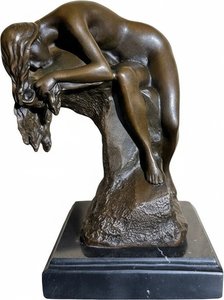
In works such as the hauntingly beautiful depictions found in Alcamenes’ Prokne and Itys, we witness the intersection of myth and tragedy. The Hellenistic sculptor utilized deep undercutting and dramatic drapery to create high-contrast shadows, a technique that heightened the emotional impact of the mythological subject matter. This era embraced the grotesque and the sublime with equal fervor, exploring the depths of human suffering alongside the grandeur of the divine. It is within this tension—between the idealized form and the realistic emotion—that the true power of classical narrative sculpture resides.
Renaissance Rebirth: The Evolution of Bronze and the Equestrian Tradition
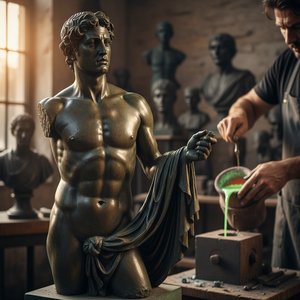
The long slumber of the Middle Ages was broken by the luminous dawn of the Renaissance, a period characterized by a profound rediscovery of classical antiquity. This rebirth brought with us a renewed fascination with the medium of bronze and the monumental scale of the ancients. Sculptors of this era did not merely imitate the Greeks; they expanded upon their discoveries, infusing their works with a new sense of psychological depth and individual character. The revival of lost-wax casting techniques allowed for an unprecedented level of detail, enabling artists to push the boundaries of what metal could express.
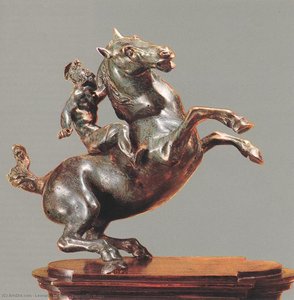
Perhaps no motif captures the spirit of this era more effectively than the equestrian statue, a symbol of power, command, and the triumph of human will over nature. Donatello’s Equestrian Statue of Gattamelata stands as a monumental achievement in this tradition, utilizing the weight and permanence of bronze to project the authority of the subject. This movement toward larger-than-life bronze works reflected the burgeoning political complexities of the Italian city-states, where art served as both a tribute to individual greatness and a testament to the enduring legacy of Roman and Greek precedents.
Marble and Majesty: The Grandeur of Baroque and Neoclassical Mastery
As the centuries progressed, the sculptural landscape underwent further transformations, moving from the exuberant, swirling energy of the Baroque to the disciplined restraint of Neoclassicism. The Baroque period, led by visionaries who treated marble as if it were wax, sought to overwhelm the senses through movement and theatricality. Every fold of drapery and every muscular contraction was designed to evoke awe, creating a sense of divine intervention within the physical realm. This was sculpture as spectacle, where the boundaries between the viewer's space and the artwork's space began to blur.
In stark contrast, the Neoclassical movement emerged as a sophisticated reaction against such ornamentation, seeking to return to the purity and clarity of the classical past. Artists like Pietro Francavilla, in works such as Jove, looked back to the Hellenistic mastery of anatomy and the serene dignity of the gods. This era emphasized classical grandeur and structural integrity, stripping away the excessive drama of the Baroque in favor of a timeless, noble simplicity. It was a period that celebrated the intellect and the enduring stability of form, ensuring that the aesthetic values of antiquity would continue to influence the modern world.
Curating Eternity: Integrating Classical Aesthetics into Modern Interiors
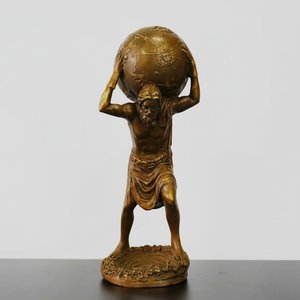
The beauty of classical sculpture lies not in its isolation within museums, but in its ability to transcend time and inhabit our contemporary spaces. To integrate these timeless aesthetics into a modern interior is to invite a sense of permanence and profound culture into the home. Whether through the presence of a meticulously crafted bronze reproduction or the subtle influence of classical motifs in architectural details, the essence of the masters can be felt in any thoughtfully curated environment.
For the discerning collector, art serves as a bridge between the historical and the personal. At ArtsDot.com, we believe that fine art should be accessible to all who appreciate its depth. Our mission is to preserve human creativity by offering exquisite, hand-painted reproductions and museum-quality works that capture the soul of the masters. From custom oil paintings that reimagine historical scenes to bespoke commissions that bring classical grandeur to your walls, we provide the expertise and craftsmanship necessary to transform any space into a sanctuary of eternal beauty.