Introduction
To step into a gallery dominated by rosy brown is to enter a space of profound warmth and quiet intimacy. It is a palette that does not shout for attention with the brilliance of gold or the aggression of crimson, but rather whispers through the soft, earth-bound hues of dusk, terracotta, and sun-wrought umber. This particular chromatic harmony—a delicate marriage between the grounded stability of brown and the tender, ephemeral glow of rose—has long served as the heartbeat of many of history’s most evocative masterpieces.
Historically, these tones have been the language of the masters when they sought to capture the human condition, the weight of mortality, and the fleeting beauty of light. From the chiaroscuro-laden shadows of the Baroque era to the soft, atmospheric transitions of Impressionism, the use of rosy browns allowed artists to render skin with a lifelike pulse and landscapes with a sense of enduring soul. These pigments evoke the scent of aged parchment, the warmth of a hearth, and the nostalgic glow of a setting sun, grounding the viewer in a sensory experience that feels both ancient and deeply personal.
In our modern, often hyper-saturated world, these artworks remain profoundly meaningful because they offer a sanctuary of subtlety. They remind us that true depth is found not in high contrast, but in the nuanced gradations of shadow and warmth. As we prepare to journey through this curated selection, we invite you to look beyond the surface of the canvas. We will explore ten iconic paintings where these rosy, earthen tones reign supreme, each piece a testament to how a specific color harmony can transform a mere image into an eternal, breathing emotion.
The kiss - Gustav Klimt
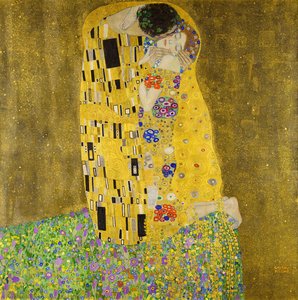 The kiss - Gustav Klimt
To encounter Gustav Klimt’s The Kiss is to step into a realm of gilded transcendence, where the boundaries between the physical and the divine dissolve. As one of the most profound masterpieces in our collection, this work commands attention not merely through its fame, but through its unparalleled emotional intelligence and decorative opulence. While celebrated for its shimmering gold leaf, the painting’s true depth lies in its sophisticated palette; beneath the luminous surface, a foundation of rich rosy brown tones and earthy ochres provides a warm, grounding contrast to the brilliant metallic highlights.
This interplay of warmth and light creates a sensory experience that is both intimate and monumental. The way the deep, sepia-toned shadows anchor the floral meadow allows the figures to emerge with a breathtaking, sculptural presence. For the discerning collector or interior designer, The Kiss offers more than just historical significance; it brings a sense of timeless luxury and soulful warmth to a modern space. Its harmonious blend of geometric strength and organic softness makes it an essential centerpiece for any refined aesthetic seeking to evoke passion, stability, and eternal beauty.
Olympia - Édouard Manet
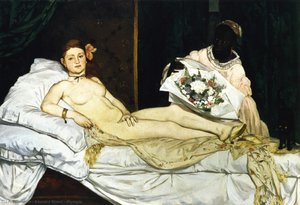 Olympia - Édouard Manet
In Édouard Manet’s 1863 masterpiece, Olympia , the composition achieves a striking structural harmony that anchors its place among the top 10 famous paintings dominated by rosy brown tones . The artwork is built upon a sophisticated interplay of organic shapes and decisive linear forms; the soft, undulating curves of the reclining figure are masterfully balanced against the geometric rigidity of the bedframe and the dark, vertical presence of the attendant. This careful arrangement of weight and shadow creates a sense of timeless perfection that continues to captivate the modern eye.
The palette is a rich tapestry of earthy warmth, where deep umbers and chocolate browns meet delicate, rosy flesh tones, creating a grounded, sophisticated atmosphere. Much like the principles of modern minimalist design , Manet’s use of flattened forms and a controlled color temperature provides a clean, impactful aesthetic that avoids unnecessary clutter. This internal balance allows the painting to serve as a profound focal point in contemporary interiors, offering a soulful connection to art history through its understated yet powerful tonal depth.
American Gothic - Grant Wood
 American Gothic - Grant Wood
In the hallowed halls of American Regionalism, few works command the room with such stoic gravity as American Gothic by Grant Wood. While many approach this 1930 masterpiece through the lens of cultural iconography, the discerning collector finds a profound sensory experience within its muted, earthy palette. The painting is anchored by deep, rosy brown and sepia tones that ground the stern figures against the rolling landscape, evoking a sense of weathered permanence.
Wood’s technique, heavily influenced by the meticulous precision of Flemish masters, utilizes smooth brushwork to render the textures of denim, colonial prints, and the sharp, metallic gleam of the pitchfork. The interplay of light across the somber browns and clay-like earth tones creates a mood of quiet dignity and resilient strength. To possess a reproduction of this work is not merely to decorate a wall; it is to invite a piece of the American soul into your home, transforming a contemporary space into a gallery of historical depth and emotional resonance.
The Blue Boy (Jonathan Buttall) - Thomas Gainsborough
 The Blue Boy (Jonathan Buttall) - Thomas Gainsborough
What if I told you that The Blue Boy by Thomas Gainsborough was born from a moment of brilliant rebellion—a stroke of defiance against the ordinary? While its namesake azure silk captures the eye, it is the masterful interplay of rosy brown earth tones and deep, shadowed landscapes that anchors this masterpiece within our collection of tonal wonders. This painting does not merely represent a young aristocrat; it serves as a manifesto of light and texture.
Gainsborough’s inclusion in our Top 10 is earned through his ability to balance the vibrant, cool blues against a warm, atmospheric backdrop of weathered rocks and autumnal earth. The subtle, fleshy tones of the subject's skin and the rich, umber depths of the landscape create a sophisticated harmony that redefines classical beauty. At ArtsDot.com, we believe such profound artistry should not be confined to museum halls. Imagine this evocative piece as living decor in your private sanctuary—a reminder that your space is not just a room; it is a statement of heritage and refined taste.
Mandola - Georges Braque
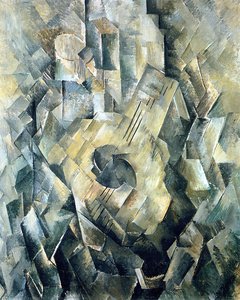 Mandola - Georges Braque
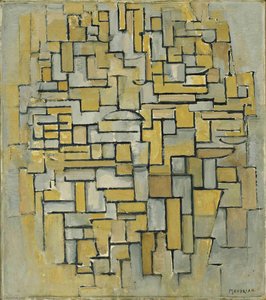
Step into the fractured, quiet world of Georges Braque’s 1910 masterpiece, Mandola . As you approach this cornerstone of Analytical Cubism, the air seems to thicken with the scent of aged wood and muted earth. The painting does not merely depict a musical instrument; it deconstructs it into a rhythmic dance of geometric planes. Braque eschews vibrant distractions, instead embracing a sophisticated palette where rosy brown tones , deep ochres, and weathered umbers interlock like a complex puzzle.
The texture is palpable, with visible brushstrokes creating a tactile depth that invites the eye to wander through its overlapping facets. There is a profound, introspective melancholy in these earthy hues—a sense of looking at the world through layers of memory and perception. In a contemporary interior, such a work acts as an intellectual anchor. Its subdued, warm tonality brings a grounded, sculptural elegance to a room, offering a moment of quiet reflection and a sophisticated connection to the very evolution of modern art.
Gilles - Jean-Antoine Watteau
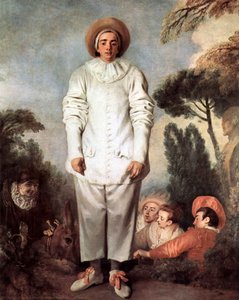 Gilles - Jean-Antoine Watteau
In the quiet stillness of Jean-Antoine Watteau’s Gilles , time seems to suspend itself, capturing a profound moment of theatrical vulnerability beneath a soft, atmospheric glow. This masterpiece earns its place among the top paintings dominated by rosy brown tones through its masterful use of warm, earthy undertones and muted, sepia-infused landscapes that cradle the central figure. The palette is a sophisticated dance of dusky ochres, deep umbers, and subtle roseate highlights, creating a sense of nostalgic warmth that feels both antique and eternally present.
The texture of the oil on canvas breathes life into Pierrot’s costume, where heavy, shadowed folds meet the luminous, pale skin of the performer. For the discerning collector or interior designer, this work offers an unparalleled sense of historical depth; its harmonious blend of woody browns and soft, fleshy pinks provides a grounding yet elegant focal point for modern, sophisticated spaces. Gilles does more than depict a character; it invites a sensory journey into the heart of the Rococo era, where light and shadow conspire to evoke a beautiful, wistful melancholy.
Anthropometry of the blue period - Yves Klein
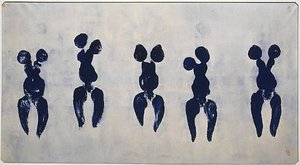 Anthropometry of the blue period - Yves Klein
While many collectors seek the warmth of earth tones, Yves Klein’s 1960 masterpiece, Anthropometry of the blue period , offers a profound departure through its visceral, ritualistic energy. The creation of this work was less a traditional painting session and more a choreographed performance; Klein famously bypassed the brush entirely, directing models to coat their bodies in his signature, luminous International Klein Blue (IKB) before pressing them directly onto the canvas. This technique transformed human silhouettes into spectral, rhythmic archetypes that seem to dance across a textured, pale expanse.
Though this piece is celebrated for its deep ultramarine intensity rather than the rosy brown tones found in other classics of our list, its conceptual gravity is undeniable. The stark contrast between the dark, imprinted forms and the off-white ground evokes a sense of ancient ceremony and spiritual transcendence. For the discerning professional, displaying such a commanding work in a modern study or home office fosters an atmosphere of focused intellect and boundless creativity, inviting a sense of monumental scale and avant-garde sophistication into one's daily workspace.
Great Scene of Agony - Max Beckmann
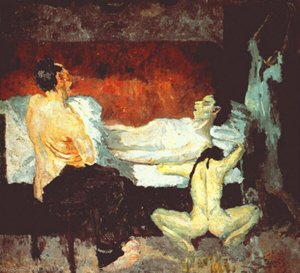 Great Scene of Agony - Max Beckmann
In Max Beckmann’s Great Scene of Agony , the viewer is not merely an observer but a witness to a profound psychological drama. This pivotal work, a cornerstone in our exploration of top 10 famous paintings dominated by rosy brown tones , utilizes a somber, earth-bound palette to anchor its visceral themes of vulnerability and existential dread. The canvas is steeped in deep ochres, bruised umbers, and muted reddish browns, creating an atmosphere that feels both ancient and unsettlingly immediate.
Beckmann employs a heavy, tactile impasto that lends a sculptural weight to the nude figures, their forms emerging from a shadowy, abstract interior. The way the warm, rosy-brown shadows cling to the flesh evokes a sense of raw, human fragility. In contemporary interior curation, such works serve as powerful anchors for sophisticated spaces, offering a soulful counterpoint to modern minimalism. This masterpiece remains a vital cultural touchstone, reminding us that even within the most melancholic tones, there is an enduring, haunting beauty found in the exploration of the human condition.
Impression, Sunrise - Claude Monet
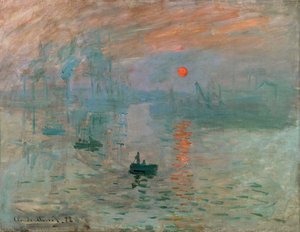 Impression, Sunrise - Claude Monet
There is a gaze in Impression, Sunrise by Claude Monet that follows you—not with judgment, but with understanding . This isn’t merely a depiction of the Le Havre harbor; it is a mirror reflecting the fleeting nature of time itself. As one of the most significant works in our collection of paintings dominated by rosy brown and amber tones, this masterpiece captures that precise, ephemeral moment where the warmth of a rising sun pierces through a hazy, industrial atmosphere.
Monet utilizes a sophisticated palette where deep, earthy browns and muted ochres anchor the composition, allowing the vibrant, fiery orange of the sun to dance upon the cool, blue-grey waters. The visible, rhythmic brushstrokes create a shimmering texture that feels alive, inviting you to lose yourself in the atmospheric haze. To possess such a piece is to invite a sense of profound tranquility into your home; it does not just decorate a wall, but reminds you that even in the midst of movement and change, there is a breathtaking, luminous peace waiting to be discovered.
Rocky Mountains - Albert Bierstadt
 Rocky Mountains - Albert Bierstadt
In Rocky Mountains , Albert Bierstadt does more than capture a landscape; he orchestrates a profound encounter with the sublime. As a cornerstone of our exploration into the top 10 famous paintings dominated by rosy brown tones , this 1863 masterpiece uses a warm, earth-bound palette to anchor the viewer within the untamed American West. The composition is a masterclass in atmospheric depth, where rugged, chocolate-hued peaks emerge from a veil of mist, illuminated by a celestial glow of sunset gold and soft rose.
The painting’s philosophical weight lies in its duality: the permanence of the stone mountains contrasted with the fleeting, delicate grace of a doe and her fawns at the water's edge. This interplay of strength and vulnerability resonates deeply within contemporary interior design, where the rosy brown color palette is increasingly sought after to evoke organic warmth and grounded luxury. By weaving together luminous light and rich, autumnal textures, Bierstadt creates a timeless narrative of harmony that continues to inspire collectors seeking art that speaks to both grandeur and tranquility.
Conclusion
As the light fades on our exploration of these sepia-toned wonders, we are reminded that a painting is never truly finished once the artist lays down their brush; it continues to live through every gaze that meets its surface. These masterpieces, bathed in the warmth of rosy browns and earthen ochres, do more than merely decorate a wall—they anchor a room, providing a sense of historical weight and emotional sanctuary. They whisper of autumn afternoons, of quiet studies, and of the enduring human connection to the earth and our own shared histories.
To bring such works into your personal sanctuary is to invite an eternal dialogue between the grandeur of the Old Masters and the intimacy of your everyday life. Whether through the tactile depth of a Handmade Oil Reproduction or the delicate precision of a fine print, these tones offer a timeless elegance that transcends fleeting trends, shaping interiors into spaces of reflection and grace. We invite you to continue this journey of discovery and find the piece that speaks to your soul within our full collection .
In every stroke of pigment and every layer of varnish, there remains a profound sense of wonder—a testament to the fact that while eras pass and cultures shift, the quiet power of a perfectly captured hue remains an immutable part of our collective human spirit.