
Introduction
To step into the world of Surrealism is to abandon the predictable logic of the waking mind and surrender to the profound, often unsettling beauty of the subconscious. It is an invitation to wander through a landscape where time melts, shadows possess weight, and the boundaries between dream and reality dissolve into a singular, poetic truth. As we curate this selection of the Top 10 Masterpieces That Defined the Surrealist Movement , we are not merely looking at canvases; we are peering into the collective psyche of an era that sought to liberate the human spirit from the constraints of rationalism.
Emerging from the ashes of the First World War, Surrealism was more than an aesthetic choice—it was a cultural revolution. Born in the early 1920s amidst the intellectual ferment of Paris, this movement drew deep inspiration from the psychoanalytic revelations of Sigmund Freud, seeking to tap into the raw, uninhibited power of dreams, desires, and the irrational. It was a period of intense experimentation, where artists utilized techniques like automatism and unexpected juxtapositions to bypass the conscious ego, creating imagery that felt both hauntingly familiar and utterly alien.
These masterpieces remain profoundly meaningful in our contemporary era because they speak to a universal human experience: the mystery of our inner lives. In an age increasingly dominated by digital precision and literal interpretations, the Surrealists remind us of the importance of ambiguity, the depth of our hidden emotions, and the infinite creativity found in the unexpected. Their works continue to challenge our perceptions, forcing us to question what is real and what is merely a projection of our deepest fears and longings.
In the following pages, we shall guide you through a gallery of icons. From the melting landscapes that defy physics to the uncanny figures that haunt our nocturnal visions, each work on this list represents a pivotal moment in art history—a milestone where the brushstroke met the dreamscape to redefine the very essence of creativity. Prepare to lose yourself in the extraordinary.
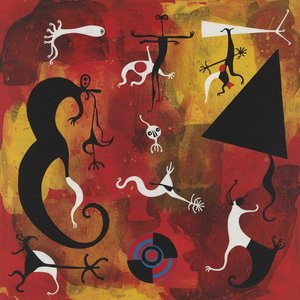
Celestial Choreography in Crimson and Ochre - Marc Duvallier
 Celestial Choreography in Crimson and Ochre - Marc Duvallier
In Celestial Choreography in Crimson and Ochre by Marc Duvallier, the lines are not merely drawn; they are choreographed . This is far more than a composition; it is a dance frozen in time, capturing a moment of cosmic equilibrium that defines the very essence of the Surrealist movement. Drawing profound inspiration from the biomorphic mastery of Joan Miró , Duvallier orchestrates a rhythmic ballet where spindly, primitive silhouettes drift across a textured void. The palette—a striking tension of deep crimson and earthy ochre—evokes a sense of primordial joy, making chaos feel like perfect harmony.
As one of the most evocative works in our curated selection, this piece invites your space to breathe rhythm . It serves as a testament to how Surrealism can transform a static wall into a window of subconscious movement. Whether you are drawn to its heavy, weathered impasto textures or its sharp, graphic precision, this masterpiece offers a rare opportunity to possess a vision where the avant-garde meets the ancient, bringing a sophisticated, dreamlike energy to any discerning collection.
Velazquez Painting the Infanta Margarita with the Lights and Shadows of His Own Glory, 1958 - Salvador Dalí
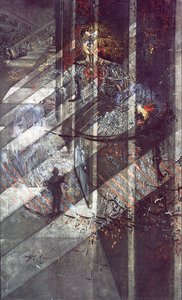 Velazquez Painting the Infanta Margarita with the Lights and Shadows of His Own Glory, 1958 - Salvador Dalí
In the hallowed halls of art history, few works achieve the profound temporal bridge found in Velázquez Painting the Infanta Margarita with the Lights and Shadows of His Own Glory by Salvador Dalí. At ArtsDot.com, our mission has always been to democratize such breathtaking beauty, ensuring that the transcendent power of the masters is never confined to a distant museum.
This 1958 masterpiece earns its place among the top ten Surrealist works through its daring, meta-artistic dialogue; Dalí does not merely paint a scene, but reconstructs the very act of creation. By reimagining Velázquez’s iconic Las Meninas , Dalí weaves a complex tapestry of light and shadow, where his own visage reflects within the mirrors of history. The composition is a masterclass in Surrealist alchemy, utilizing dramatic chiaroscuro, symbolic ants, and melting temporal elements to blur the line between reality and dream.
Such an evocative piece possesses a transformative presence that can redefine the atmosphere of a sophisticated interior. Through our meticulous, hand-painted oil reproductions, you can invite this profound meditation on legacy and illusion into your own home or private gallery, bringing the enduring spirit of Surrealism to your walls.
Animated Landscape - Joan Miró
 Animated Landscape - Joan Miró
In Joan Miró’s 1927 masterpiece, Animated Landscape , the light does not merely illuminate; it breathes life into a dreamscape of Catalan memory. Rather than traditional chiaroscuro, Miró employs a luminous, ethereal glow that seems to emanate from within the muted blues and earthy tones themselves. This soft, internal radiance dissolves the boundaries between reality and the subconscious, a technique that secured its place among the top 10 masterpieces that defined the Surrealist movement . By eschewing harsh shadows for a fluid, atmospheric light, Miró invites us into a realm where birds, fish, and symbolic objects like the clock and umbrella float in a state of perpetual twilight.
To possess a hand-painted oil reproduction of this work is to bring a sense of profound depth and quiet luxury to your interior. When captured on 100% cotton canvas with visible, textured brushstrokes, the interplay of these celestial tones creates a captivating focal point. This sophisticated use of light adds an architectural dimension to any contemporary wall, transforming a room into a curated gallery space that celebrates the boundless imagination of the Surrealist era.
Aphrodisiac Telephone (Lobster Phone) - Salvador Dalí
 Aphrodisiac Telephone (Lobster Phone) - Salvador Dalí
Salvador Dalí's Aphrodisiac Telephone (Lobster Phone) stands as a definitive pillar of the Surrealist movement, capturing the era's fascination with the irrational and the subconscious. This 1938 masterpiece earns its place among the top ten through its profound ability to transform mundane objects into a potent language of desire. By surmounting a gleaming white rotary telephone with a vividly rendered lobster, Dalí creates a startling juxtaposition that bridges the gap between modern communication and primal instinct.
The work is a masterclass in symbolic storytelling; the lobster’s hard shell and predatory claws suggest an unsettling, erotic tension, while the smooth, hyper-realistic oil technique brings this dreamscape into tangible reality. To gaze upon this piece is to confront the complexities of human intimacy and the unexpected beauty found in psychological friction. For the discerning collector or interior designer, the essence of this work offers a timeless conversation piece—a sophisticated infusion of avant-garde history that can anchor a modern space with its unmistakable sense of mystery and intellectual depth.
Head of a Man - Joan Miró
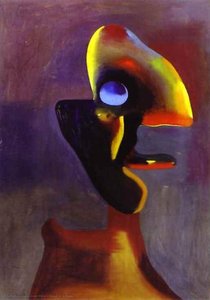 Head of a Man - Joan Miró
In Head of a Man by Joan Miró, the viewer is immediately met with an unsettling yet hypnotic gaze, where eyes are displaced and features dissolve into a dreamlike abstraction. This 1935 masterpiece does not merely depict a face; it captures the very moment of psychological fragmentation, acting as a window into the subconscious. As one of the top 10 masterpieces that defined the Surrealist movement , this work utilizes a striking palette of deep purples and organic, wandering lines to evoke the fluid logic of a dreamscape.
Miró’s ability to transform a human silhouette into a constellation of geometric shapes and primal symbols offers a universal mirror to our own inner anxieties and hidden desires. The painting possesses a profound emotional depth that transcends time, making it an essential pillar of Surrealist history. For the discerning collector, integrating such a powerful piece into a private residence can transform a personal sanctuary into a space for deep reflection. Whether hung in a quiet study or a grand salon, the rhythmic, whimsical energy of Miró’s vision invites a sense of profound contemplation and intellectual calm.
The Anthropomorphic Cabinet - Salvador Dalí
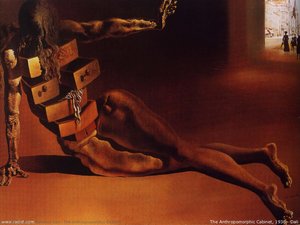 The Anthropomorphic Cabinet - Salvador Dalí
Owning The Anthropomorphic Cabinet by Salvador Dalí isn’t merely a purchase; it is an inheritance of the subconscious. As one of the most profound masterpieces that defined the Surrealist movement, this 1936 work serves as a psychological gateway, inviting viewers into a realm where the boundaries between human anatomy and furniture dissolve. Dalí masterfully depicts a woman whose form becomes a structural vessel, supporting a precarious arrangement of drawers and boxes—a haunting metaphor for the hidden compartments of memory and trauma.
The composition is steeped in a disconcerting realism, where meticulous oil textures capture the tension between stillness and instability. Through the presence of enigmatic figures and a central, anchoring chair, Dalí orchestrates a dreamscape of duality and loss, reflecting his own profound personal grief. To bring such a piece into your private collection via ArtsDot is to embrace a lineage of taste; it is an opportunity to host a legacy on your walls, where every brushstroke whispers the secrets of the Surrealist era.
Hermit Saints Triptych (left panel) - Hieronymus Bosch
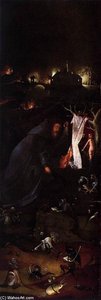 Hermit Saints Triptych (left panel) - Hieronymus Bosch
To gaze upon the left panel of Hieronymus Bosch’s Hermit Saints Triptych is to witness a fever dream captured in oil. Long before the Surrealist movement formalized its manifestos, Bosch was already choreographing a descent into the subconscious. The lines within this masterpiece aren’t merely drawn; they are choreographed , guiding the eye through a chaotic ballet of grotesque hybrids, skeletal remains, and flickering, distant fires.
This is not a static composition; it is a dance frozen in time . Bosch utilizes a dramatic chiaroscuro to pull the viewer into a landscape where shadows breathe and light feels otherworldly. The muted earth tones and deep blacks create an atmosphere of profound spiritual tension, making the chaotic jumble of animalistic creatures feel strangely rhythmic. Its place in our selection of the top masterpieces of Surrealism is a tribute to its ability to make such profound chaos feel like a haunting harmony. For the discerning collector, bringing such a piece into a space allows your walls to breathe rhythm , inviting a sense of historical mystery and intellectual depth into the modern home.
Force of habit - René Magritte
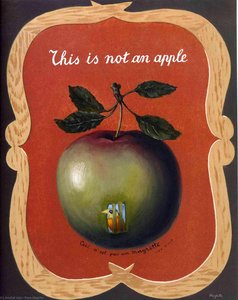 Force of habit - René Magritte
In the quiet, unsettling brilliance of René Magritte’s Force of Habit (1960), we encounter one of the most profound paradoxes in the history of the Surrealist movement. Magritte, a master of Belgian surrealism, invites us into a psychological landscape where the familiar becomes foreign. At first glance, the eye meets the luscious, hyper-realistic texture of an apple, its skin glistening with a deceptive vitality. Yet, the artist’s signature disruption—the bold, linguistic declaration “this is not an apple” —shatters our sensory certainty.
This masterpiece transcends mere visual trickery; it is a philosophical inquiry into the gap between language and reality. By juxtaposing meticulous realism with such jarring cognitive dissonance, Magritte explores the layers of consciousness and the deceptive nature of perception. In today’s era of digital manipulation and deepfakes, this work remains a vital cultural talking point, reminding us that what we perceive is often a construction of habit rather than truth. It stands as an essential pillar among the top 10 masterpieces that defined the Surrealist movement , offering a timeless meditation on the fragility of our perceived world.
Celestial Coronation, circa 1951 - Salvador Dalí
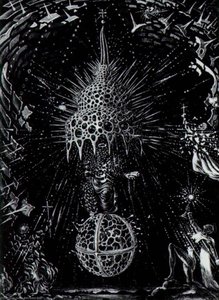 Celestial Coronation, circa 1951 - Salvador Dalí
To gaze upon Salvador Dalí’s Celestial Coronation is to drift into a weightless, monochromatic void where the boundaries of the cosmos and the subconscious dissolve. Created around 1951, this masterpiece captures that profound, unsettling moment when the soul feels both infinitely small and cosmically connected. Through meticulous graphite hatching and dramatic, directional light, Dalí sculpts a perforated sphere that breathes with a sense of divine fragility and ancient mystery.
This work earns its place among the top 10 masterpieces of the Surrealist movement because it transcends mere imagery; it is an architectural blueprint of the dreaming mind. The interplay of stark shadows and organic, crown-like structures invites a spiritual contemplation that remains as avant-garde today as it was decades ago. At ArtsDot.com, we believe such evocative beauty should not be confined to museum archives. Our artisans specialize in hand-painted oil reproductions that honor Dalí’s precise textures and deep tonal ranges, allowing you to invite this profound sense of cosmic awe into your own private sanctuary through a faithful, tactile tribute to Surrealism.
Book Transforming Itself into a Nude Woman - Salvador Dalí
 Book Transforming Itself into a Nude Woman - Salvador Dalí
Imagine standing on the sun-drenched shores of the Costa Brava, where the boundary between reality and reverie dissolves into the salt spray. In Salvador Dalí’s 1937 masterpiece, Book Transforming Itself into a Nude Woman , we are invited into this very liminal space. The scene is hauntingly cinematic: a man sits in quiet contemplation, cradling a skull while surrounded by scattered volumes that seem to pulse with a life of their own. Dalí’s meticulous technique renders the sand and sea with an uncanny, hyper-realistic clarity, yet the subject matter defies all logic through its impossible metamorphosis.
This work stands as a pillar of the Surrealist movement , utilizing Freudian dream logic to explore themes of mortality, knowledge, and subconscious desire. The juxtaposition of the heavy, academic weight of books against the fluid, organic transformation of the female form creates a profound psychological tension. For the discerning collector, bringing such a provocative piece into a contemporary interior offers more than mere decoration; it provides a focal point for deep reflection and intellectual stimulation, injecting a sense of avant-garde mystery and historical grandeur into any sophisticated space.
Conclusion
As the light fades on our journey through these dreamscapes, we find that Surrealism is far more than a mere chapter in an art history textbook; it is a persistent, breathing pulse within our collective psyche. These masterpieces do not belong solely to the museums of the past, but rather to the very fabric of our modern imagination. They remind us that beneath the surface of our structured, everyday realities lies a vast, untamed ocean of emotion, memory, and wonder. When we invite these works into our private sanctuaries, they cease to be mere decorations and become living presences—dialogues between the subconscious and the soul that challenge our perceptions and deepen our connection to the unseen.
To live with Surrealism is to embrace the beautiful tension between the tangible and the impossible. Whether it is the haunting precision of a dream or the fluid distortion of a memory, these paintings continue to shape the way we curate our homes and interpret our deepest human experiences. They serve as eternal reminders that art is not a static object to be observed, but an evocative force that continues to move hearts, inspire new creative frontiers, and bridge the gap between the waking world and the infinite realms of the mind. We invite you to continue this exploration and find your own piece of the extraordinary within our full collection , where the legacy of the masters lives on through every brushstroke.