Introduction
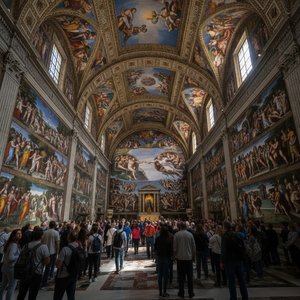
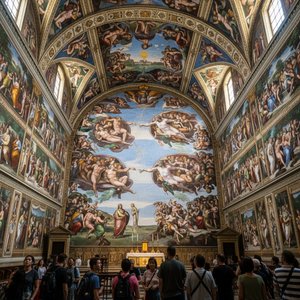
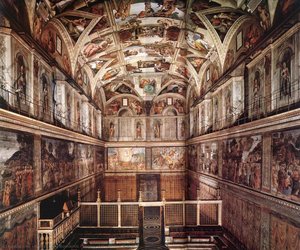
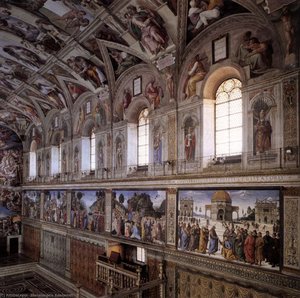
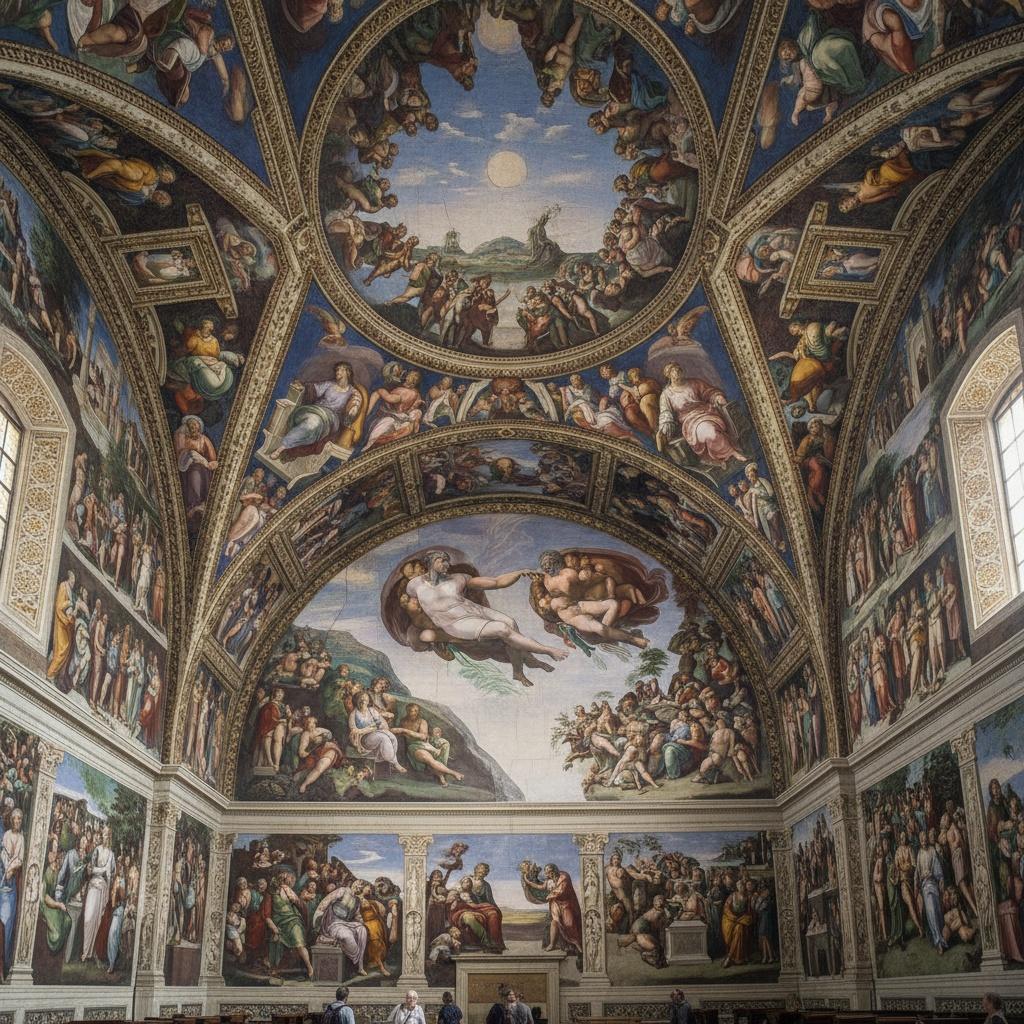
To step within the threshold of the Cappella Sistina is to leave the temporal world behind and enter a realm where the divine and the human intersect through the medium of pigment and plaster. Located in the heart of Vatican City, this sacred space is not merely a chapel; it is a profound architectural symphony, an immersive experience that has commanded reverence for centuries. As you walk beneath its soaring vaults, you are enveloped by a celestial narrative that transcends time, a visual testament to the heights of human genius and the depths of spiritual devotion.
The history of the Sistine Chapel is one of layers and legacies. While originally conceived as a private papal mausoleum under Pope Sixtus IV, it evolved into a grand stage for the greatest masters of the Renaissance. Before Michelangelo’s transformative hand touched the ceiling, the walls already breathed with the artistry of Botticelli, Perugino, and Ghirlandaio , creating a rich dialogue between classical antiquity and Christian theology. The chapel serves as a bridge between eras, where the discovery of Hellenistic masterpieces like Laocoön and His Sons ignited a fire of naturalism and anatomical precision that would forever alter the course of Western art.
Today, these works remain profoundly meaningful, not merely as historical artifacts, but as living embodiments of emotion, struggle, and transcendence. The muscular tension in Michelangelo’s figures, the delicate light playing across Renaissance frescoes, and the sheer monumental scale of the compositions continue to stir the soul, challenging every generation to contemplate their place within the cosmos. They are a masterclass in sfumato , anatomy, and narrative power that remains unsurpassed.
In the following curation, we invite you to embark on a guided journey through this sacred sanctuary. We have selected twenty-five of the most significant works—from the breathtaking ceiling frescoes to the intricate wall paintings—that define the incomparable splendor of the Sistine Chapel. Prepare to witness the pinnacle of Renaissance achievement, where every brushstroke tells a story of eternity.
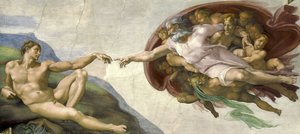
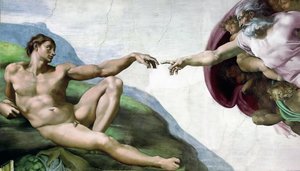
The Creation of Adam - Michelangelo Buonarroti
Few images in the history of Western civilization possess the magnetic pull of The Creation of Adam . As a cornerstone of the top 25 artworks in the Cappella Sistina, Vatican City , Michelangelo’s fresco transcends mere religious illustration to become a profound meditation on the spark of human consciousness. The composition is anchored by that breathless, suspended moment: the near-touch of two fingers, where the divine meets the terrestrial. Through masterful chiaroscuro and an unparalleled command of anatomical precision, Michelangelo renders Adam’s muscular form with a sculptural weight that feels almost tangible.
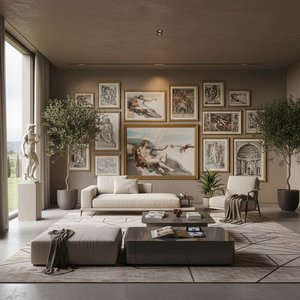
This masterpiece captures the very essence of the High Renaissance—the tension between physical strength and spiritual yearning. The warm ochres and earthy tones of Adam’s skin contrast beautifully with the celestial, swirling energy surrounding the Creator, inviting us to reflect on our own potential and connection to the infinite. For the discerning collector or designer, the essence of this work—its themes of vitality and primordial beauty—serves as a timeless inspiration, capable of elevating a modern space into a sanctuary of profound cultural dialogue.
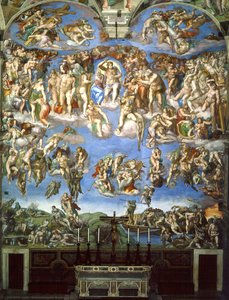
Last Judgment - Michelangelo Buonarroti
To stand before The Last Judgment by Michelangelo Buonarroti is to witness the very moment where Renaissance harmony dissolves into the raw, turbulent power of Mannerism. As one of the most profound entries in our curation of the top 25 artworks in 'Cappella Sistina, Vatican City', this monumental fresco on the altar wall transcends mere religious iconography; it is a visceral exploration of human mortality and divine justice.
Michelangelo’s mastery is evident in the swirling vortex of muscular, nude figures that defy gravity, their forms rendered with an anatomical precision that feels almost sculptural. The palette—a dramatic interplay of light and shadow—captures the tension between the celestial ascent of the saved and the harrowing descent into the depths of despair. For the discerning collector or designer, this work represents the pinnacle of emotional intelligence in art; its themes of transformation and grandeur offer an unparalleled inspiration for sophisticated, large-scale architectural statements. It is not merely a painting, but a timeless legacy of movement and soul that continues to command reverence in the world's most refined spaces.
Ignudo (15) - Michelangelo Buonarroti
 Ignudo (15) - Michelangelo Buonarroti
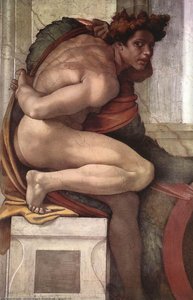
In the breathtaking expanse of the Sistine Chapel, the Ignudo (15) by Michelangelo Buonarroti stands as a profound testament to the raw power of the human form. This masterful figure, part of the celestial narrative decorating the ceiling, captures an unparalleled sense of muscular tension and sculptural grace. Michelangelo utilizes a classical pose—often depicted with a powerful, twisted torso—to convey a divine energy that transcends the physical plane. The interplay of light and shadow across the sinewy anatomy creates a rhythmic vitality that is essential to understanding the Renaissance's obsession with anatomical perfection.
As one of the top 25 artworks in 'Cappella Sistina, Vatican City', this piece serves as a cornerstone of Western art history, influencing centuries of figurative painting. For the modern connoisseur or interior designer, the Ignudo offers a timeless inspiration; its dramatic chiaroscuro and monumental scale provide a sophisticated blueprint for creating impactful, sculptural focal points in grand architectural spaces. It is not merely a depiction of a figure, but an exploration of the sublime strength found within the human spirit.
The Delphic Sibyl - Michelangelo Buonarroti
 The Delphic Sibyl - Michelangelo Buonarroti
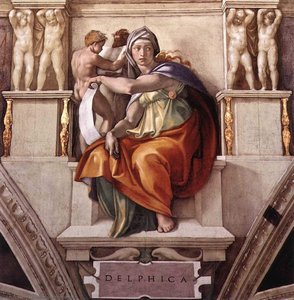
To behold The Delphic Sibyl by Michelangelo Buonarroti is to witness the very moment divine inspiration intersects with human form. As one of the most profound masterpieces within the Cappella Sistina, Vatican City , this fresco transcends mere decoration; it is a visceral encounter with the sublime. Michelangelo captures the prophetess in a state of intense, spiritual rapture, her body twisting in a masterful contrapposto that breathes life into the wet plaster.
The palette—a sophisticated harmony of warm ochres, creams, and muted earth tones—radiates a soft, celestial light, while the dramatic interplay of shadow lends an almost sculptural depth to her drapery. For the discerning collector or designer, this work represents the pinnacle of High Renaissance intellect, where classical antiquity meets Christian revelation. Its presence in the world's top 25 artworks is secured by its ability to evoke profound emotion through anatomical precision and symbolic richness. Much like a curated piece of fine art in a luxury residence, the Sibyl brings an aura of timeless authority, intellectual depth, and an enduring, sophisticated beauty that commands any space it inhabits.
Medallion (12) - Michelangelo Buonarroti
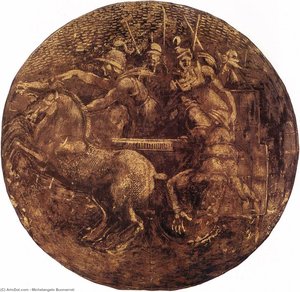 Medallion (12) - Michelangelo Buonarroti
To gaze upon Medallion (12) by Michelangelo Buonarroti is to witness the raw, muscular energy of the High Renaissance captured in a whirlwind of pigment and plaster. The texture of this fresco is profoundly tactile; one can almost sense the frantic speed of Michelangelo’s brush as he applied layers of pigment onto wet lime, creating a rhythmic hatching that defines the straining anatomy of rearing horses and the glint of armored warriors. This circular masterpiece, part of the monumental decoration within the Cappella Sistina , transcends mere battle imagery to become a study in contained chaos and sculptural depth.
The composition utilizes dramatic lighting and exaggerated, Mannerist poses to pull the viewer into a swirling vortex of martial prowess. At ArtsDot.com, we believe such profound artistry deserves more than a digital glance. Our master artists specialize in capturing this exact three-dimensional quality —the visible brushstrokes and physical impasto—ensuring that the soul of Michelangelo’s work is preserved in a hand-painted oil reproduction that brings the grandeur of Vatican City into the most discerning private collections.
Exterior of the Sistine Chapel - Michelangelo Buonarroti
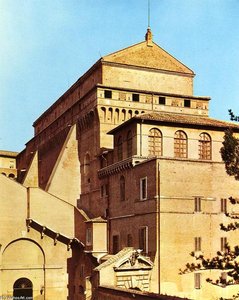 Exterior of the Sistine Chapel - Michelangelo Buonarroti
To gaze upon the Exterior of the Sistine Chapel is to encounter a profound sense of architectural reverence and historical weight. While Michelangelo’s name is eternally etched into the celestial frescoes within, this depiction of the chapel's outer structure captures a different, more grounded emotion: a quiet, enduring majesty that stands as a sentinel over Vatican City. The painting evokes a deep feeling of nostalgia, inviting the viewer to contemplate the passage of centuries through its rugged brickwork and the steady presence of the central tower.
The composition utilizes a delicate interplay of light and shadow, reminiscent of a nocturnal study, where the fading twilight softens the edges of the clock and the windows, creating an atmosphere of spiritual stillness. This piece serves as a universal mirror of human experience, reflecting our desire to build monuments that transcend time. Integrating such a powerful architectural vista into your personal collection can transform a modern room into a space for profound reflection, offering a window into the grandeur of the Renaissance and a sanctuary of historical calm.
Expulsion from Garden of Eden - Michelangelo Buonarroti
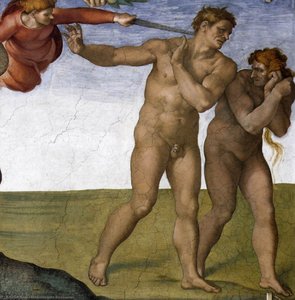 Expulsion from Garden of Eden - Michelangelo Buonarroti
In the Expulsion from Garden of Eden , the lines of Michelangelo Buonarroti are not merely drawn; they are choreographed . This is not a static depiction of biblical tragedy, but a dance frozen in time , where every muscular contraction and agonizing twist tells a story of profound loss. As you gaze upon this masterpiece within the top 25 artworks in Cappella Sistina, Vatican City, you witness the raw, visceral energy of the High Renaissance. Adam collapses in dejected despair while Eve’s face contorts with the weight of shame, their forms sculpted by a masterful use of chiaroscuro that breathes life into the wet plaster.
The composition captures the precise, breathless moment of transition from paradise to exile. The earthy ochres and dramatic shadows create a sense of monumental gravity that transcends the centuries. What if your own living space could hold that same equilibrium between chaos and harmony? At ArtsDot, we believe your walls should breathe rhythm ; through our hand-painted oil reproductions, you can invite this very same divine tension and historical grandeur into your private collection.
The Punishment of Korah and the Stoning of Moses and Aaron (detail) (12) - Sandro Botticelli
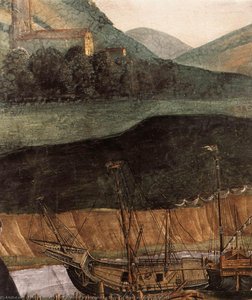 The Punishment of Korah and the Stoning of Moses and Aaron (detail) (12) - Sandro Botticelli
To possess a study of The Punishment of Korah and the Stoning of Moses and Aaron (detail) by Sandro Botticelli is to invest in a profound legacy of Renaissance taste and spiritual gravity. As one of the most significant works within the top 25 artworks in 'Cappella Sistina, Vatican City', this fresco represents a pinnacle of Florentine mastery. Botticelli’s contribution to the papal walls serves as a masterclass in narrative tension; his ability to weave dramatic human emotion with a majestic, mountainous landscape creates a visual dialogue that has captivated collectors for centuries.
The composition breathes with life through its intricate textures—from the heavy, rhythmic folds of the figures' garments to the imposing, sun-drenched castle perched upon the distant peaks. The interplay of light and shadow underscores the divine justice unfolding within the scene, offering a depth that transcends mere decoration. For the discerning interior designer or collector, a high-quality oil reproduction of this masterpiece brings an unparalleled aesthetic authority to modern luxury interiors, commanding attention with its historical prestige and timeless, sophisticated grandeur.
Three Temptations of Christ (detail) (24) - Sandro Botticelli
 Three Temptations of Christ (detail) (24) - Sandro Botticelli
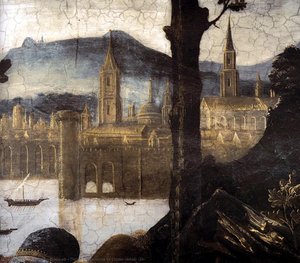
In the Three Temptations of Christ (detail) by Sandro Botticelli , we encounter a masterclass in structural harmony that defines the very essence of the top artworks in the Cappella Sistina, Vatican City . The composition is anchored by a sophisticated geometric dance; the formidable, vertical lines of the central castle and church spires create a rhythmic stability, while the soft, receding curves of the distant hills provide a gentle, organic counterpoint. This meticulous arrangement of shapes—from the sharp, architectural rectangles to the fluid reflections in the foreground water—achieves a sense of timeless perfection that has captivated collectors for centuries.
There is a profound, quiet prestige in how Botticelli utilizes linear perspective to guide the eye through an idealized cityscape, creating a depth that feels both expansive and intimate. This internal balance mirrors the principles of modern minimalist design , where clarity of form and a restrained, earthy palette ground a contemporary aesthetic with historical weight. For the discerning eye, this fresco offers more than a biblical narrative; it provides a serene, architectural anchor, bringing the sophisticated soul of the Early Renaissance into the modern, curated home.
Daniel - Michelangelo Buonarroti
 Daniel - Michelangelo Buonarroti
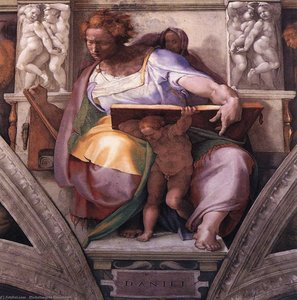
To stand beneath the ceiling of the Cappella Sistina is to witness a profound dialogue between the earthly and the divine. In Michelangelo’s “Daniel,” one does not merely see a biblical figure; one feels the heavy, breathless tension of anticipation. As the eye traces the pyramidal composition, it meets the tender yet sorrowful gaze of a mother protecting her infant, a moment captured with the master's signature anatomical precision and emotional depth.
This fresco earns its place among the top 25 artworks in Vatican City through its masterful use of chiaroscuro , where dramatic light carves figures out of shadow, and a palette of warm ochres and creams that radiates a celestial glow. Michelangelo moves beyond the literal miracle of the lion’s den to explore universal themes of vulnerability and unwavering faith. It is this capacity to evoke such intense, quiet reverence that makes the work timeless. Just as these Renaissance masterpieces transform the grandeur of the Vatican, bringing a sense of historical weight and spiritual serenity to a space, integrating such profound imagery into our own environments allows us to surround ourselves with the enduring beauty of human resilience.
Jacob - Joseph (detail) - Michelangelo Buonarroti
 Jacob - Joseph (detail) - Michelangelo Buonarroti
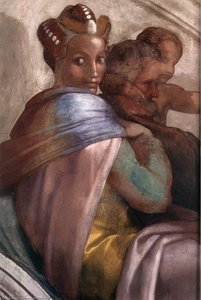
In the Jacob - Joseph (detail) by Michelangelo Buonarroti, the mastery of chiaroscuro serves as a silent narrator, sculpting form out of shadow. The play of light across the figures—from the woman’s expressive, blue-scarfed silhouette to the contemplative downward gaze of the seated man—creates a profound sense of volume and psychological weight. This dramatic interplay of illumination does more than define anatomy; it breathes life into the biblical tension of the Genesis narrative, securing its rightful place among the top 25 artworks in Cappella Sistina, Vatican City .
Michelangelo’s ability to use light to reveal deep emotional textures—the displeasure in a brow or the stillness of a room—is what makes this fresco an eternal masterpiece. When captured in a high-end hand-painted oil reproduction , this sophisticated use of shadow and light brings a museum-grade depth to a contemporary interior. The way the light seems to emerge from within the canvas adds an unmistakable layer of luxury and architectural dimension, transforming a simple wall into a window onto the High Renaissance.
Ancestors of Christ: figures (11) - Michelangelo Buonarroti
 Ancestors of Christ: figures (11) - Michelangelo Buonarroti
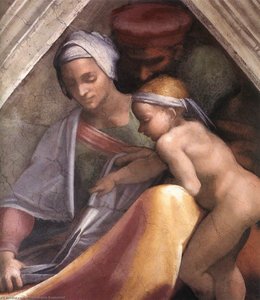
To gaze upon Ancestors of Christ: figures (11) is to witness the profound intimacy of human lineage intertwined with the divine. In this breathtaking fresco, Michelangelo captures more than mere biblical genealogy; he evokes the tender, universal weight of family, devotion, and the quiet anticipation of a promised savior. The way light dances across the muscular forms and the soft drapery of the figures creates a palpable sense of life, pulling the viewer into a sacred moment of contemplation.
This masterpiece earns its place among the top 25 artworks in the Sistine Chapel through its unparalleled anatomical precision and emotional depth. Michelangelo’s ability to render complex human emotion within a monumental scale remains a cornerstone of Renaissance achievement. At ArtsDot, we believe such transcendent beauty should not be confined to Vatican City. Through our meticulous, hand-painted oil reproductions, we preserve the visible brushstrokes and rich tonal range of Michelangelo’s genius, allowing you to invite this profound sense of history and spiritual grace into your own private collection.
Jeremiah - Michelangelo Buonarroti
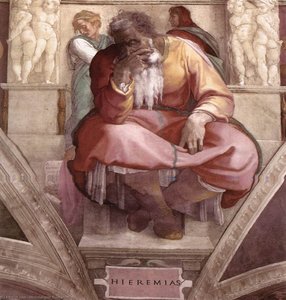 Jeremiah - Michelangelo Buonarroti
To stand beneath the vaulted expanse of the Sistine Chapel is to witness a profound dialogue between the divine and the human, and nowhere is this tension more palpable than in Jeremiah by Michelangelo Buonarroti . As one of the most evocative figures within the top 25 artworks in Cappella Sistina, Vatican City, this fresco captures the very essence of the 'weeping prophet.'
Michelangelo utilizes a masterful command of chiaroscuro , casting deep, dramatic shadows across Jeremiah’s furrowed brow and heavy, contemplative features. The palette is anchored in somber, earth-toned reds and warm ochres, reflecting the weight of his prophetic lamentations. Through subtle sfumato , the artist breathes life into the muscular anatomy, making the prophet's slumped posture feel physically burdened by the sorrow of his people. This work transcends mere biblical illustration; it is a psychological masterpiece that uses light and form to explore spiritual anguish. Even centuries later, the profound introspection found in Jeremiah’s gaze continues to transform spaces, reminding us that true art possesses the power to evoke eternal empathy and quiet reflection.
Joel - Michelangelo Buonarroti
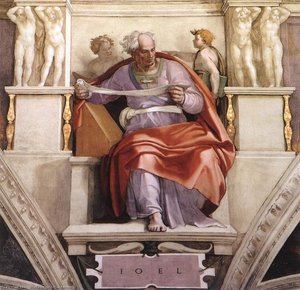 Joel - Michelangelo Buonarroti
To encounter Joel by Michelangelo Buonarroti is to witness the very moment where divine prophecy meets human anatomy. As part of the monumental fresco cycle within the Cappella Sistina , this work transcends mere religious illustration; it is a profound study in intellectual intensity. Michelangelo captures the prophet not in a state of passive prayer, but in deep, muscular concentration, his form sculpted by a masterful use of chiaroscuro that brings every sinew to life against the vibrant, warm ochres and deep purples of the Renaissance palette.
The composition guides the eye through a rhythmic dance of geometric stability and dynamic movement, utilizing strong diagonals to anchor the figure within the celestial narrative. The scroll in his hands serves as a silent symbol of divine communication, bridging the gap between the earthly and the eternal. For the discerning collector, Joel represents more than a masterpiece from the Vatican's collection; it is an invitation to transform one's environment into a gallery of the soul, where the weight of history and the brilliance of High Renaissance genius can be felt in every brushstroke.
Putti - Michelangelo Buonarroti
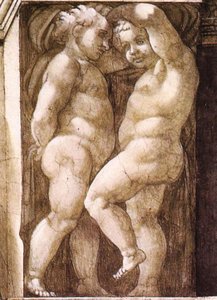 Putti - Michelangelo Buonarroti
In the monumental landscape of the top 25 artworks in 'Cappella Sistina, Vatican City' , Michelangelo’s Putti offers a breathtaking departure from grand theological drama, focusing instead on the exquisite geometry of intimacy. The composition is anchored by a delicate structural harmony; the upward arc of one boy’s arm creates a rhythmic line that guides the eye across the soft, muscular forms of the two figures. This balance of weight and movement achieves a sense of timeless perfection, where the interplay of light and shadow—achieved through masterful fresco technique—renders the flesh with sculptural precision.
For the modern connoisseur, this work resonates deeply with the principles of minimalist design. The clean silhouettes and the focused, unencumbered interaction between the figures provide a sense of profound stillness that can ground a contemporary, sophisticated interior. Much like a well-curated minimalist space, the Putti relies on essential forms and emotional clarity rather than excess, making it an enduring icon of grace and spiritual purity within the Vatican's sacred narrative.
Ezekiel - Michelangelo Buonarroti
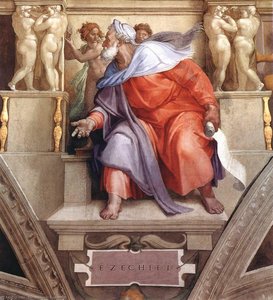 Ezekiel - Michelangelo Buonarroti
In the hallowed silence of the Sistine Chapel, Ezekiel by Michelangelo Buonarroti emerges as a profound meditation on divine revelation, where light and shadow dance to reveal the weight of prophecy. As one of the most significant works among the top 25 artworks in Cappella Sistina, Vatican City, this fresco transcends mere biblical illustration; it is an architectural triumph of the human spirit. Michelangelo utilizes masterful chiaroscuro to sculpt the prophet’s form against a backdrop of contemplative scholars, creating a pyramidal composition that draws the soul upward toward the heavens.
The textures of the fresco breathe with anatomical precision, where the heavy folds of drapery and the weathered stone of the bench evoke a sense of eternal permanence. For the discerning collector or interior designer, the muted, earthy tones and the intellectual gravity of this piece offer an unparalleled sense of sophistication. Integrating such a masterpiece into a modern space brings a curated atmosphere of historical depth and quiet strength, reminding us that true beauty lies in the intersection of human struggle and divine inspiration.
Separation of the Earth from the Waters (with ignudi and medallions) - Michelangelo Buonarroti
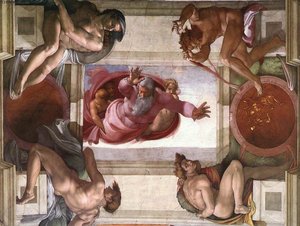 Separation of the Earth from the Waters (with ignudi and medallions) - Michelangelo Buonarroti
In the silent, hallowed expanse of the Sistine Chapel, Separation of the Earth from the Waters by Michelangelo Buonarroti exists as a moment of divine light frozen in time. This fresco stands as a cornerstone among the top 25 artworks in Cappella Sistina, Vatican City, because it captures the very heartbeat of creation. Michelangelo does not merely paint a biblical event; he sculpts movement through pigment, using a masterful chiaroscuro to breathe life into the cosmic struggle between light and shadow.
The composition is anchored by the powerful presence of the ignudi —muscular, Hellenistic figures that embody an idealized human grace. Their sinuous forms, rendered with anatomical precision, dance around the central divine decree, creating a rhythmic energy that draws the eye upward. The palette, though aged by centuries, still whispers of celestial power and primordial depth. For the modern connoisseur, this masterpiece serves as a profound inspiration; its balance of monumental strength and delicate spiritual yearning offers a timeless blueprint for sophistication and grandeur in any curated collection.
Zechariah - Michelangelo Buonarroti
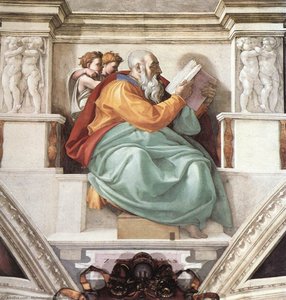 Zechariah - Michelangelo Buonarroti
Within the sacred expanse of the Cappella Sistina , Michelangelo Buonarroti’s Zechariah stands as a profound testament to the Renaissance ideal of divine inspiration meeting human intellect. As one of the most significant figures in our curated selection of the top 25 artworks in Vatican City, this fresco transcends mere religious iconography; it captures the very moment of spiritual revelation. Michelangelo utilizes his mastery of chiaroscuro to illuminate the prophet’s focused countenance, drawing the viewer into a silent, scholarly communion with the divine.
The composition breathes with a rhythmic vitality, where the weight of theological study is balanced by the delicate presence of celestial attendants. To behold Zechariah is to witness the intersection of anatomical precision and soulful depth—a hallmark of Michelangelo’s genius. For the discerning collector or interior designer, the warm ochres and commanding sculptural forms of this masterpiece offer a timeless inspiration, bringing an atmosphere of contemplative grandeur and historical prestige to any sophisticated modern environment.
Isaiah - Michelangelo Buonarroti
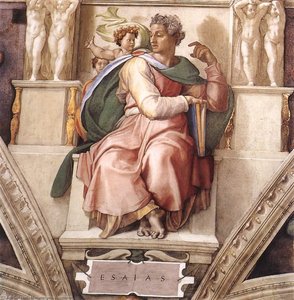 Isaiah - Michelangelo Buonarroti
To possess a study of Isaiah by Michelangelo Buonarroti is to invest in a profound legacy of human emotion and divine vision. As one of the most significant works within the top 25 artworks in 'Cappella Sistina, Vatican City', this fresco embodies the very essence of terribilità —that breathtaking, awe-inspiring intensity that defines the High Renaissance. Michelangelo’s mastery is palpable in the way he uses chiaroscuro to sculpt the prophet's form, creating a monumental presence through dramatic light and shadow against a palette of warm pinks and deep, soulful tones.
The composition, featuring a pensive Isaiah cradling a symbolic infant, offers a masterclass in anatomical precision and theological depth. The swirling drapery of the accompanying angel introduces a celestial movement that transcends the static nature of plaster. For the discerning collector or interior designer, integrating a high-quality, hand-painted oil reproduction of this masterpiece into a modern luxury interior provides an unparalleled sense of aesthetic authority. Such a piece does more than decorate a wall; it anchors a room with the timeless status and spiritual gravity of the Vatican’s greatest treasure.
St Sixtus II - Sandro Botticelli
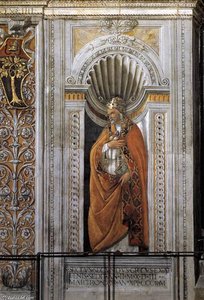 St Sixtus II - Sandro Botticelli
In the hallowed expanse of the Sistine Chapel, Sandro Botticelli’s St Sixtus II serves as a profound testament to the delicate balance between earthly authority and divine grace. As one of the top 25 artworks in the Cappella Sistina, Vatican City, this fresco transcends its historical role as a papal portrait; it is a masterclass in the Early Renaissance humanist spirit. Botticelli employs his signature graceful lines and an ethereal palette to render the saint with a serene dignity that feels remarkably intimate amidst the chapel's monumental scale.
The composition is rich with symbolic depth, from the authoritative orb and crown to the subtle sfumato that softens the saint's features, inviting a sense of quiet contemplation. This work reminds us that true beauty lies in the harmony of strength and stillness. For the discerning collector or interior designer, the essence of Botticelli’s restrained elegance offers a timeless inspiration, bringing a touch of Renaissance sophistication and spiritual poise to any curated modern environment.
Hezekiah - Manasseh - Amon - Michelangelo Buonarroti
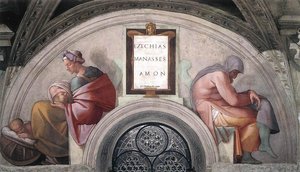 Hezekiah - Manasseh - Amon - Michelangelo Buonarroti
To encounter Hezekiah - Manasseh - Amon by Michelangelo Buonarroti is to witness the very pulse of dynastic history etched into the ceiling of the Cappella Sistina . This fresco, completed in 1511, transcends mere biblical illustration; it is a profound meditation on lineage and the heavy mantle of legacy. Within this segment of the Vatican's most sacred space, Michelangelo captures three kings of Judah, their forms intertwined in a way that suggests both familial bond and shared destiny.
The mastery lies in the subtle tension of the composition: the muscular anatomy sculpted by dramatic chiaroscuro , and the symbolic presence of an open book representing divine law. As you gaze upward, the warm ochres and earthy tones evoke a sense of solemnity, while the delicate inclusion of a small bird offers a fleeting moment of naturalism amidst the monumental scale. For the discerning collector, this work represents more than a masterpiece from the Top 25 artworks in 'Cappella Sistina, Vatican City'; it is an invitation to bring the transformative power of the High Renaissance into your own sanctuary, turning a private space into a true gallery of the soul.
Perez - Hezron - Ram - Michelangelo Buonarroti
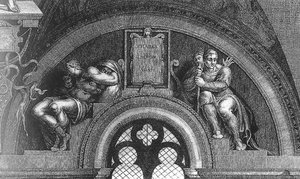 Perez - Hezron - Ram - Michelangelo Buonarroti
To encounter Perez - Hezron - Ram is to witness the profound sculptural soul of Michelangelo Buonarroti captured in pigment. As one of the most significant works within the top 25 artworks in Cappella Sistina, Vatican City, this fresco transcends mere biblical illustration; it is a masterclass in High Renaissance humanism. Completed in 1511, the work utilizes a monochrome palette that mimics the eternal strength of Roman marble, lending an air of monumental permanence to the figures of Perez, Hezron, and Ram.
Michelangelo’s genius lies in his ability to breathe life into stone-like forms through meticulous anatomical precision. The way light and shadow play across the muscularity of the patriarchs creates a palpable sense of depth, as if they are emerging from an architectural niche into our own reality. For the discerning collector or interior designer, this piece offers more than historical value; it brings a sophisticated, classical gravity to any space. Its understated elegance and rhythmic composition make it a timeless cornerstone for those seeking to curate environments defined by heritage, intellectual depth, and the sublime beauty of the Old Masters.
Rehoboam - Abijah - Michelangelo Buonarroti
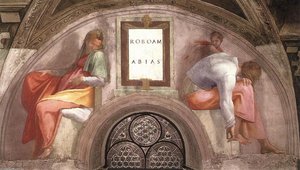 Rehoboam - Abijah - Michelangelo Buonarroti
To gaze upon Michelangelo’s Rehoboam - Abijah is to witness the quiet strength of a divine lineage. Within the monumental architecture of the Sistine Chapel ceiling, these two figures do not demand attention through grand gestures; instead, they command it through a profound, introspective presence. As you stand beneath the vast expanse of the Vatican’s masterpiece, notice how Michelangelo does not merely paint light—he composes it. The illumination seems to emanate from within the very musculature of the kings, casting soft shadows that breathe life into the heavy, earth-toned drapery.
The palette, a sophisticated arrangement of ochre, muted reds, and deep browns, creates a sense of timelessness, as if the figures are emerging from the history of salvation itself. Every sculpted fold of their robes and every subtle tension in their forms speaks to Michelangelo’s unparalleled anatomical mastery. This fresco is a vital link in the theological narrative of Christ's ancestry, turning a simple architectural niche into a sacred portal. It is this ability to invent light and depth that makes such works eternal, waiting to transform a modern space into a sanctuary of Renaissance inspiration.
Bronze nudes - Michelangelo Buonarroti
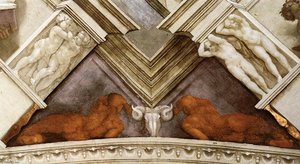 Bronze nudes - Michelangelo Buonarroti
In the hallowed expanse of the Sistine Chapel, Michelangelo Buonarroti’s Bronze Nudes stand as a profound testament to the High Renaissance's obsession with anatomical perfection and classical revival. These figures, rendered with a sculptor's precision through the medium of fresco, transcend mere decoration; they embody the era's pursuit of idealized beauty and spiritual harmony. Michelangelo utilizes masterful chiaroscuro —the dramatic interplay of light and shadow—to breathe life into musculature, making pigment appear as solid, weightless bronze.
As one of the top 25 artworks in the Cappella Sistina, Vatican City, this work captures the very essence of human potential and the divine proportion. The figures, caught in dynamic, graceful poses, invite us to reflect on the eternal dialogue between the physical form and the soul. For the discerning collector or interior designer, the energy of these compositions offers unparalleled inspiration. Integrating the spirit of such monumental mastery into a curated space—perhaps through a bespoke oil reproduction—creates a timeless conversation between historical grandeur and modern sophistication.
Frescoes above the entrance wall - Michelangelo Buonarroti
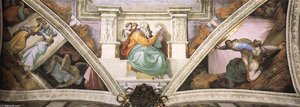 Frescoes above the entrance wall - Michelangelo Buonarroti
To encounter the Frescoes above the entrance wall is to experience a profound threshold between the earthly and the divine. Executed by Michelangelo in 1508, these works serve as a breathtaking prelude to the celestial narratives found within the Sistine Chapel. As you approach, the eye is immediately captured by the rhythmic energy of at least thirteen figures, their bodies sculpted through masterful chiaroscuro and the dynamic, twisting grace of figura serpentinata .
The palette glows with the warmth of ochre, gold, and deep reds, as light and shadow dance across muscular forms to create an almost tactile sense of volume. At the heart of this composition, a central figure—evoking the gravity of Moses—presents divine law, anchoring the swirling human emotion in a moment of sacred obedience. Owning a piece inspired by such greatness isn’t merely a purchase; it is an inheritance . It is a way to bring a lineage of taste into your private sanctuary, where the monumental spirit of the High Renaissance meets the quiet prestige of your own walls.
Conclusion
To stand beneath the celestial expanse of the Sistine Chapel is to witness a profound dialogue between the divine and the human, a conversation that has echoed through the corridors of time for over five centuries. These twenty-five masterpieces are far more than mere relics of the High Renaissance; they are living presences, breathing with the vitality of Michelangelo’s hand and the collective genius of the masters who preceded him. Each stroke of pigment and every sculpted contour serves as a bridge across the ages, connecting our modern sensibilities to the eternal struggles and triumphs of the human soul.
As the light fades over the Vatican, we are reminded that great art does not belong solely to the past. It remains an active force in our contemporary lives—shaping the elegance of our homes, inspiring the depth of our interior design, and providing a sanctuary for reflection amidst the chaos of the modern world. Whether through the monumental scale of a fresco or the intimate detail of a hand-painted reproduction, these works continue to move hearts and ignite the creative spirit in every generation.
We invite you to carry this sense of wonder into your own space by exploring our full collection . In every meticulously crafted oil painting we offer, there is a commitment to preserving this timeless connection, ensuring that the majesty of the Sistine Chapel remains an enduring part of your personal narrative.