The Soul of the Equine: The Life and Art of Alfred Grenfell Haigh
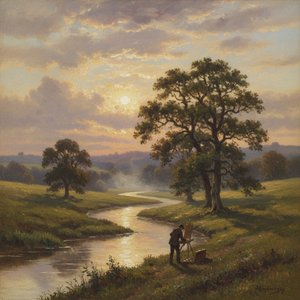
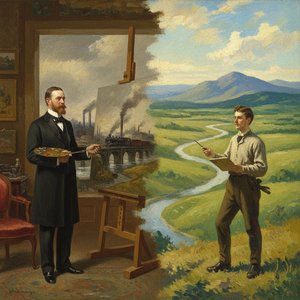
In the tapestry of British art history, few threads capture the intersection of Victorian tradition and Impressionist vitality as gracefully as the work of Alfred Grenfell Haigh. Born in 1870 amidst the industrial grit of Wigan, Lancashire, Haigh’s early life was shaped by the stark realities of Britain's manufacturing heartland. Yet, his spirit was never tethered to the soot and iron of the north; instead, it drifted toward the rolling hills and pastoral serenity of the English countryside. This internal migration from the industrial to the idyllic would become the cornerstone of his artistic identity, transforming him into one of the most revered animal painters of his generation.
Haigh’s formal journey into the upper echelons of fine art began at Wigan Grammar School, where a burgeoning talent for classical scholarship met an undeniable passion for the visual arts. This potential led him to the prestigious Slade School of Fine Art in London, a crucible of talent where he studied under the legendary Frederic Leighton. Under Leighton’s tutelage, Haigh absorbed the principles of the Beaux Arts movement, learning the importance of idealized form and the dramatic interplay of light and shadow. However, as the art world began to shift away from rigid academicism, Haigh did not merely cling to tradition; he evolved, weaving the fleeting, atmospheric nuances of Impressionism into his classical foundation.
Mastery of Motion and Light
The true brilliance of Haigh’s technique lies in his ability to breathe life into his subjects, particularly his celebrated equine portraits. He possessed a rare, intuitive understanding of the horse—not merely as a biological specimen, but as a vessel of emotion and power. His breakthrough work, “Sandboy” (1900), serves as a definitive manifesto of his style. In this evocative piece, a chestnut horse gallops across moorland under a brooding, tempestuous sky. Through the use of strong diagonals and meticulous directional shading, Haigh captures a sense of raw, kinetic energy that mirrors the works of Claude Monet and Camille Pissarro.
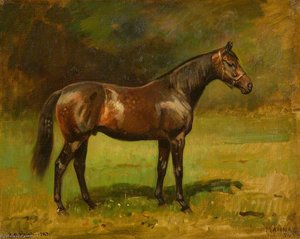
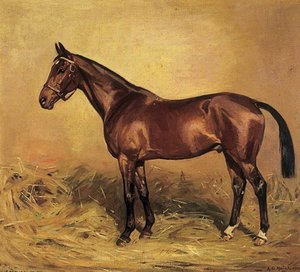
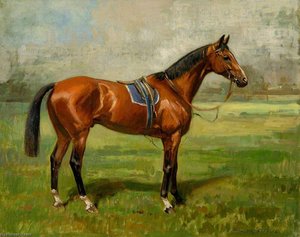
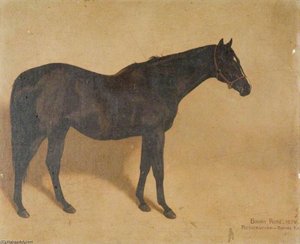
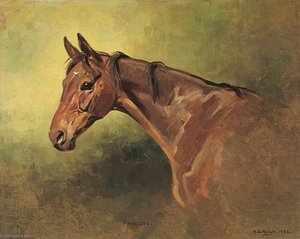
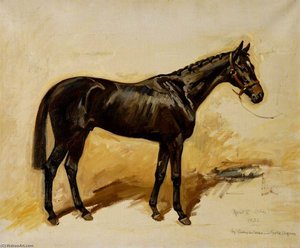
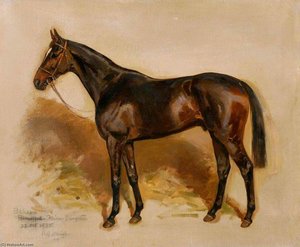
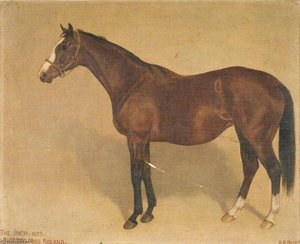
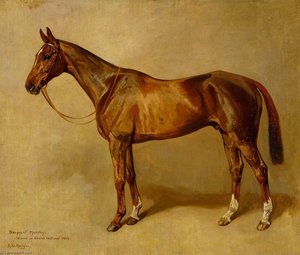
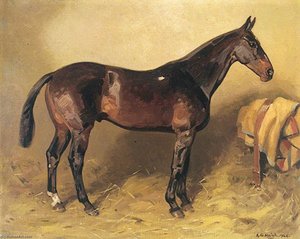
His approach to the canvas was both scientific and poetic. Haigh utilized a sophisticated method of layering thin glazes of oil paint over toned surfaces, a technique that allowed light to penetrate the pigment and create an inner luminosity. This mastery is particularly evident in his more intimate portraits:
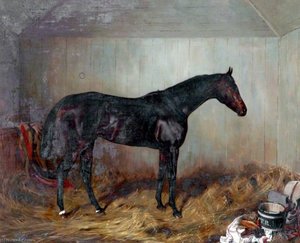
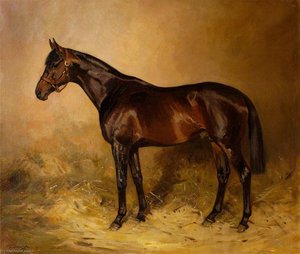
- Diomedes: A stunning display of chiaroscuro, where the artist uses deep shadows and brilliant highlights to grant the horse a sculptural depth and majesty.
- Bonny Rose: An exquisite study of light and color, showcasing his ability to capture the subtle textures of a horse's coat against a minimalist backdrop.
- Bahram: A testament to his commitment to academic realism, demonstrating a profound respect for the anatomical precision required of a master animalier.
A Lasting Legacy in British Landscape and Portraiture
As Haigh’s career progressed toward the mid-20th century, his work remained a vital bridge between the structured landscapes of the Victorian era and the more emotive, atmospheric explorations of the modern age. His paintings do more than document animals; they capture the very essence of the British landscape—the dampness of the moorland air, the warmth of a stable's interior, and the fleeting brilliance of sunlight breaking through clouds. His ability to imbue his subjects with an alert, almost sentient expression ensures that each piece invites a dialogue between the viewer and the animal.
Today, the works of Alfred Grenfell Haigh reside in some of the most esteemed collections in the United Kingdom, including the Walker Art Gallery in Liverpool and the National Horseracing Museum. His legacy is not merely found in the museums that house his canvases, but in the enduring way he captured the dignity of the natural world. Through his eyes, we see a Britain where the strength of the horse and the beauty of the landscape remain eternally intertwined, preserved forever in the luminous glazes of his masterful oil paintings.