The Soul of the Equine: The Life and Art of Arthur Louis Townshend
In the golden twilight of the Victorian era, a period defined by both industrial expansion and a profound nostalgia for the pastoral, the works of Arthur Louis Townshned offered a serene sanctuary. Born in 1848 in the quiet landscape of Fredericks Grove, Ohio, Townshend’s life was a journey of transatlantic movement and artistic refinement. His path took him from the American Midwest, where he established a successful studio in Iowa, to the historic, mist-covered streets of Bath, Somerset. This migration between the rugged landscapes of his youth and the refined art circles of England allowed him to weave a unique tapestry of influences, blending an American observational vigor with the sophisticated academic traditions of the British Royal Academy Schools.
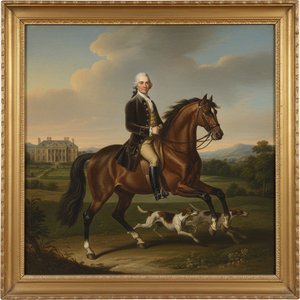
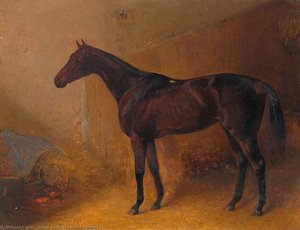
Townshend’s artistic evolution was marked by a transition from self-taught experimentation to a mastery of formal composition. While his early years were spent honing his eye through direct observation, his formal training in London provided him with the technical vocabulary necessary to translate the physical world into emotive experiences. He did not merely seek to replicate the anatomy of a horse or the texture of a stable; rather, he sought to capture the psychological resonance of the subject. His brushwork, often characterized by a delicate balance of realism and impressionistic flair, allowed him to convey the palpable energy of a galloping steed or the quiet, heavy stillness of a resting animal in a dimly lit stall.
A Mastery of Movement and Light
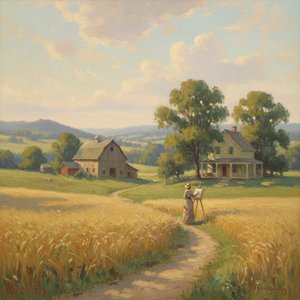
The true brilliance of Townshend’s oeuvre lies in his ability to bridge the gap between sporting art and sentimental landscape. While many of his contemporaries focused on the grandiosity of hunting scenes or the nobility of the aristocracy, Townshend found profound beauty in the everyday rhythms of rural life. His canvases serve as windows into a vanished world, where the relationship between man, animal, and nature remained intimate and unhurried.
His technical prowess is particularly evident in his use of various mediums to achieve specific atmospheric effects:
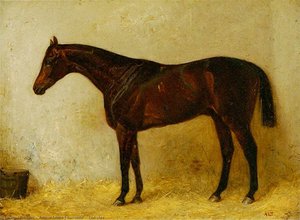
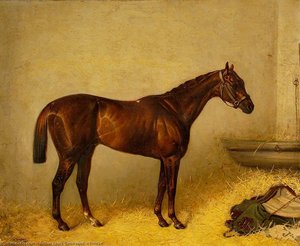
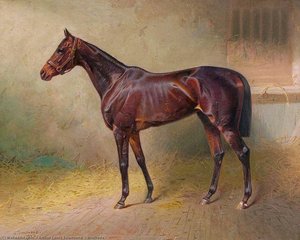
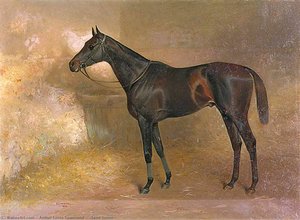
- Oil on Canvas: In works such as Winfreda (1900), Townshend utilized the richness of oil to create depth and texture, allowing the viewer to feel the weight of the horse's coat and the soft light filtering through a nearby window.
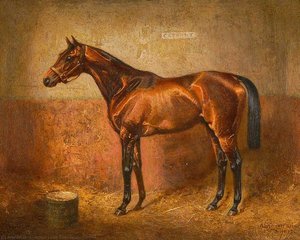
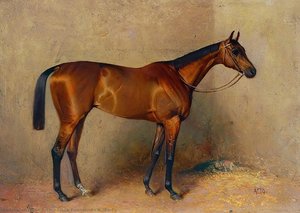
- Oil on Panel: In more intimate portraits like Mamia (1900), the use of a harder support allowed for an exquisite precision, capturing the elegant contours of his equine subjects with a jewel-like clarity.
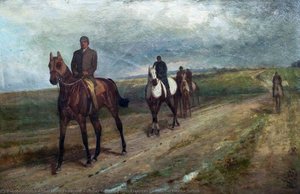
- Impressionistic Landscapes: In pieces such as Horses Returning from Exercise, Newmarket Heath (1886), he embraced a more fluid, atmospheric style, using light and color to evoke the damp, invigorating air of the English countryside.
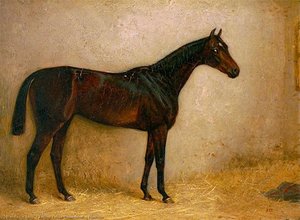
Through these techniques, Townshend achieved a sense of immediacy. Whether it is the dark, brooding presence of a horse in the painting Hauteur or the sun-dappled scenes of Suffolk, his work pulsates with a life force that transcends the mere depiction of subject matter. He possessed a rare ability to use light not just as a tool for visibility, but as a medium for emotion, casting shadows that suggest mystery and highlights that evoke hope.
Legacy and Historical Significance
Though Arthur Louis Townshend may not have commanded the massive fame of the era's most legendary portraitists, his contribution to the tradition of British sporting and landscape art is undeniable. He remains a vital figure for collectors and historians alike, representing a bridge between the rigid academicism of the mid-19th century and the more emotive, atmospheric movements that followed. His work stands as a testament to the enduring allure of the equestrian spirit and the quiet dignity of the rural landscape.
Today, his paintings continue to resonate because they capture a sense of timelessness. In an age of rapid technological change, Townshend’s ability to freeze a moment of peace—a horse looking off-camera, a rider returning home at dusk—offers a profound connection to the natural world. His legacy is found in every meticulously rendered muscle and every soft, atmospheric glow that invites the viewer to step back into the tranquil, storied landscapes of the late Victorian age.