The Delicate Line: The Life and Legacy of Edmund Hort New
In the golden twilight of the Victorian era, a period defined by both industrial upheaval and a profound longing for artisanal purity, the work of Edmund Hort New emerged as a serene sanctuary. Born in December 1871 in Evesham, Worcestershire, New would become a defining voice within the Birmingham Group, a collective of artists dedicated to the revival of traditional craftsmanship. His artistic journey was not merely one of personal development but a reflection of the broader Arts and Crafts movement, which sought to reject the cold uniformity of mass production in favor of the soulful, hand-wrought beauty found in the English landscape and historical architecture.
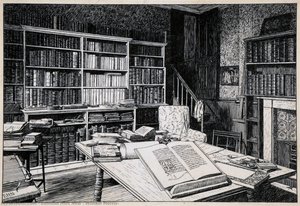
New’s formative years were steeped in the rigorous traditions of the Birmingham Municipal School of Art. Under the mentorship of luminaries such as Edward R. Taylor and A. J. Gaskin, he mastered the intricate discipline of wood engraving and pen-and-ink drawing. This technical foundation allowed him to capture the world with a precision that felt both scientific and deeply poetic. His early mastery of black-and-white illustration placed him at the heart of a significant cultural moment, where the line between fine art and book illustration became beautifully blurred through the pursuit of aesthetic excellence.
A Symbiosis of Art and Literature
Perhaps the most enchanting chapter of New’s career was his profound connection to the Kelmscott Press and the legendary William Morris. In 1895, a pivotal meeting at Kelmscott Manor opened doors to a world where typography, illustration, and design existed in perfect harmony. New’s ability to convey atmosphere through meticulous detail made him an ideal collaborator for Morris’s vision. He contributed exquisite illustrations to several editions of Morris’s most celebrated works, including Paradise Lost and Saint Augustine’s Confessions, breathing life into the printed page with a sense of historical reverence.
His talent extended far beyond the Kelmscott circle, as he became a sought-after illustrator for prestigious publishing houses like the Bodley Head. His pen traveled through the pages of classics such as Izaak Walton’s The Compleat Angler and Gilbert White’s The Natural History of Selborne. Through these works, New did more than illustrate stories; he captured the very essence of the English countryside, rendering rural landscapes and ancient buildings with a sensitivity that resonated with the romantic sensibilities of his era. His work served as a visual bridge between the literary imagination and the tangible beauty of the natural world.
The Oxford Chronicles and Final Impressions
In 1905, New’s life took a transformative turn when he moved to Oxford, a move that would define the latter half of his creative output. He became captivated by the architectural majesty of the University of Oxford, embarking on an ambitious, lifelong project to document the various colleges through a series of drawings. These works, often engraved by Emery Walker and known as the "New Loggan Prints," showcased his unparalleled ability to observe the interplay of light, shadow, and stone. His compositions were never boastful; instead, they favored subtle tonal gradations and an understated elegance that mirrored the quiet dignity of the university itself.
Beyond his landscapes, New’s versatility was evident in his design work, ranging from intricate bookplates to the 1912 banner for the Oxford Women Students' Society. Even his role as a teacher—notably instructing T. E. Lawrence—speaks to his standing as a master of his craft. Though he passed away in 1931, leaving his great Oxford project unfinished, the legacy of Edmund Hort New remains etched in the history of British art. He stands as a testament to the power of the meticulous line and the enduring allure of the English pastoral, reminding us that true beauty often resides in the most quiet and scrupulous observations.