The Grandeur of Tradition: The Life and Legacy of Éloi Firmin Féron
In the vibrant, often turbulent landscape of nineteenth-century French art, Éloi Firmin Féron emerged as a steadfast guardian of academic excellence. Born in Paris in 1802, Féron’s early life was shaped by an atmosphere of international sophistication, courtesy of his father, Jean-Baptiste Firmin Féron, a diplomat whose service in Prussia and Russia expanded the young artist's cultural horizons far beyond the borders of France. This cosmopolitan upbringing provided a unique foundation for a career that would eventually bridge the gap between classical antiquity and the royal courts of France. As a student at the prestigious École Supérieure des Beaux-Arts, Féron immersed himself in the rigorous traditions of his era, refining his technique under the guidance of masters such as Antoine-Jean Gros, Alexandre Cabanel, and Jean-Auguste Dominique Ingres. These mentors instilled in him a devotion to anatomical precision, compositional harmony, and the polished finish that became the hallmark of the Neoclassical and Academic styles.
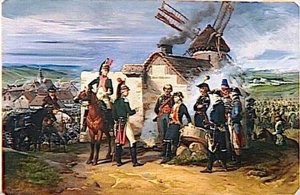
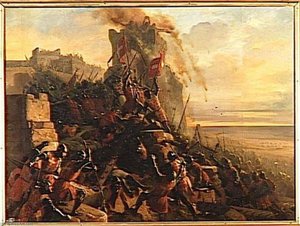
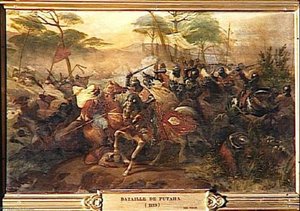
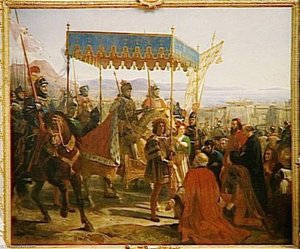
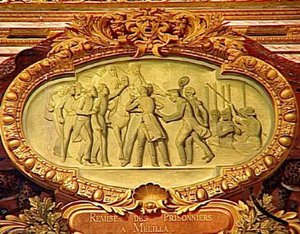
Féron’s ascent within the Parisian art world was marked by significant early triumphs that signaled his mastery of historical narrative. In 1826, at the age of only twenty-four, he achieved the monumental distinction of winning the Prix de Rome for his evocative work Damon et Pythias. This victory not only solidified his reputation among the elite but also granted him the prestige necessary to navigate the highest echelons of French society. His talent soon caught the eye of King Louis Philippe I and the royal princes, leading to a period of profound professional success where he became a favored painter of the monarchy. His contributions to the galleries of Versailles remain some of his most enduring legacies, as he populated the halls of royalty with sweeping historical canvases such as Entrée de Charles VIII à Naples (1837) and the dramatic Prise de Rhodes (1840).
Mastery of Light and Mythological Narrative
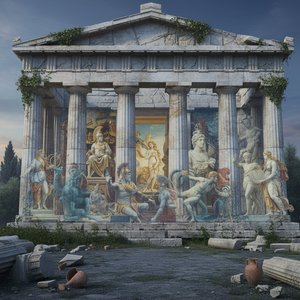
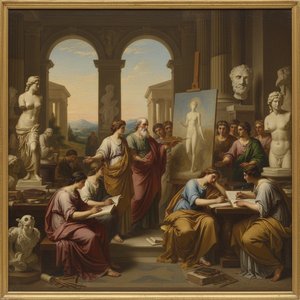
The artistry of Féron is characterized by a profound ability to breathe life into the legends of the past. His canvases often served as windows into Greek and Roman antiquity, utilizing mythological subjects to explore deep-seated moral allegories and timeless human virtues. Through the skillful application of chiaroscuro—the dramatic interplay between light and shadow—Féron was able to sculpt form with a sculptural intensity, imbuing his figures with both physical weight and emotional depth. Whether depicting the stoic perseverance found in works like La Perseverance or the delicate balance of justice in La Justice, his technique remained rooted in the pursuit of an idealized beauty that sought to elevate the viewer's spirit.
While the art world began to shift toward the fleeting impressions and spontaneous brushwork of the Impressionist movement, Féron remained a bastion of the established order. His work represents a period where the artist acted as a storyteller of history, using meticulous detail to honor the grandeur of tradition. Even as aesthetic sensibilities evolved, his commitment to the classical precepts of balance and clarity ensured that his paintings possessed a monumental quality. Beyond his individual canvases, Féron’s significance is also found in his role as a mentor, passing down the rigorous standards of the Academy to subsequent generations of painters. His life and work stand as a testament to an era of profound artistic transition, capturing the final, brilliant glow of Academic classicism before the dawn of modernity.