The Venetian Master of Drama: The Life and Legacy of Johann Karl Loth
In the sun-drenched, theatrical atmosphere of seventeenth-century Venice, few artists captured the profound tension between the divine and the earthly as masterfully as Johann Karl Loth. Born around 1632 in Munich, within the Electorate of Bavaria, Loth was a painter whose identity bridged the robust traditions of German artistry with the luminous, emotive splendor of the Italian Baroque. Though his name might not resonate with the immediate household recognition of a Titian, his presence in the Venetian landscape was monumental. He was famously celebrated by the biographer Arnold Houbraken as one of the three grand masters of art bearing the name "Karel"—a prestigious distinction that placed him alongside luminaries such as Karel Duijardin and Carlo Maratta, signaling his arrival among the elite of European painting.
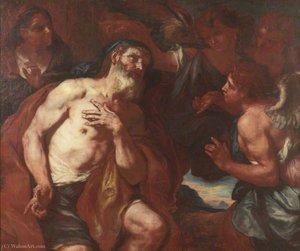
Loth’s artistic journey began under the watchful eye of his father, Johann Ulrich Loth, a painter who provided the foundational technical rigor that would later allow the son to experiment with such grand scale. This early training in Munich instilled a disciplined approach to composition, yet it was his move to Venice that truly ignited his creative spirit. In the vibrant Venetian milieu, Loth absorbed the influence of Giovan Battista Langetti, adopting a style defined by chiaroscuro—the dramatic interplay of light and shadow—and a penchant for tenebrism. This technique allowed him to sculpt figures out of darkness, imbuing his canvases with a sense of weight, mystery, and spiritual urgency that became his unmistakable signature.
A Tapestry of Myth and Scripture
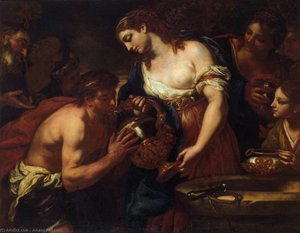
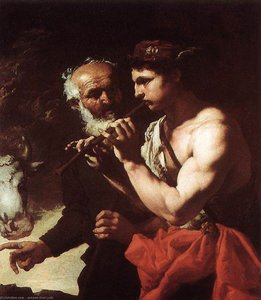
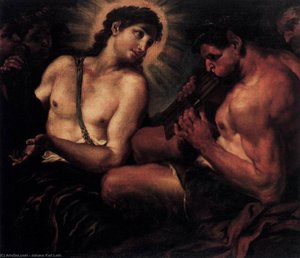
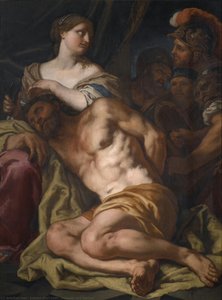
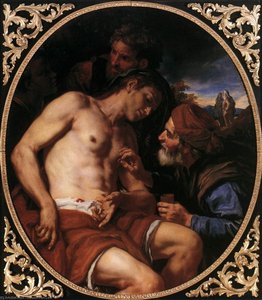
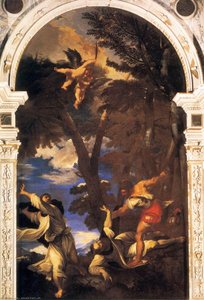
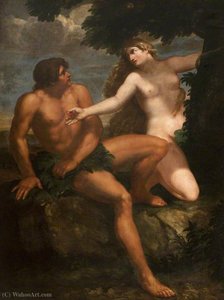
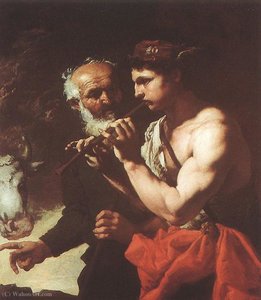
The true brilliance of Loth’s oeuvre lies in his ability to transform the canvas into a stage for the most epic narratives of human history. He specialized in large-scale history paintings, often characterized by densely populated, crowded group scenes that demanded immense compositional skill. His subjects were drawn from the wellspring of classical mythology and the profound depths of the Old Testament, treated not merely as illustrations but as living, breathing dramas. Whether depicting the celestial intervention of gods or the harrowing trials of biblical patriarchs, Loth utilized a palette of vibrant colors and loose, expressive brushwork to evoke intense emotion.
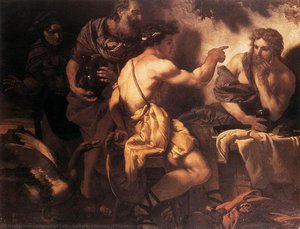
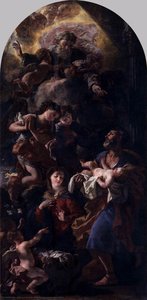
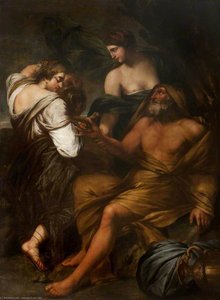
One can see this mastery in works such as Jupiter and Mercury at Philemon and Baucis, where the divine presence is felt through a sudden, illuminating light that pierces the humble surroundings of a mortal cottage. Similarly, his religious compositions, such as Holy Family and God the Father, showcase a profound command over atmospheric depth and sacred intimacy. His ability to weave complex human emotions—devotion, fear, awe, and familial love—into these grand narratives ensured that his work resonated far beyond the borders of Italy, attracting the attention of prestigious patrons including Emperor Leopold I of the Habsburg court in Vienna.
Influence, Collaboration, and Enduring Significance
Loth’s career was not a solitary endeavor but one marked by significant artistic synergy. In Venice, he engaged in fruitful collaborations with fellow masters like Pietro Liberi, working together to fulfill ambitious commissions that elevated the standards of historical storytelling. His studio became a beacon for aspiring talents; he mentored a generation of painters, including Michael Wenzel Halbax and Johann Michael Rottmayr, ensuring that his stylistic hallmarks—the dramatic lighting and theatrical compositions—would ripple through the subsequent decades of Baroque art. Even beyond the realm of painting, Loth’s reputation drew well-to-do travelers and artists, such as Cornelis de Bruijn, to his doorstep, making his studio a vital node in the European artistic network.
As he approached the end of his life, residing in Venice until his death in 1698, Loth had secured a legacy that transcended his German origins. He was a painter who could command both the intimate shadows of a single figure and the chaotic energy of a multitude. Today, his works reside in some of the world's most esteemed institutions, from the Kunsthistorisches Museum in Vienna to the Hermitage Museum in St. Petersburg. Through his ability to marry the structural discipline of his youth with the emotive fluidity of the Venetian school, Johann Karl Loth remains a definitive voice of the Baroque era, reminding us of a time when art was a grand, theatrical pursuit of the sublime.