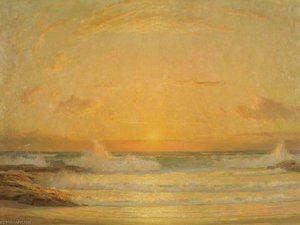
The Luminous Vision of Lindsay Grandison MacArthur
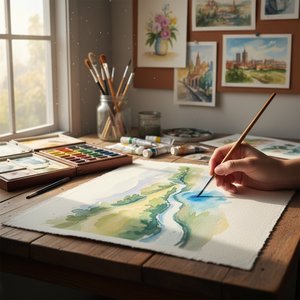
In the delicate dance between pigment and water, few artists achieved a sense of atmospheric truth as profound as Lindsay Grandison MacArthur. Born in New York City in 1866, MacArthur emerged as a masterful watercolorist whose work served as a bridge between meticulous observation and emotional resonance. Her artistic journey was deeply rooted in an upbringing that cherished the intersection of art and literature, providing her with the intellectual foundation to look beyond the mere surface of her subjects. Through her disciplined training at the Pratt Institute, she mastered the technical rigors of her medium, learning to command the fluid nature of watercolor to capture the fleeting, ethereal qualities of light and weather.
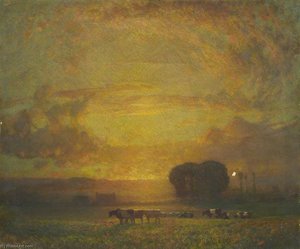
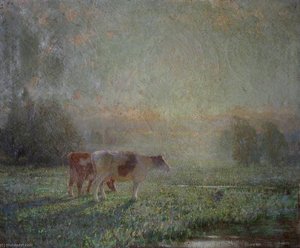
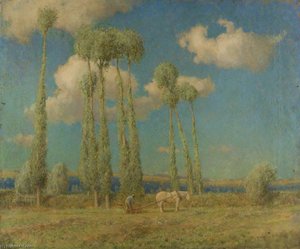
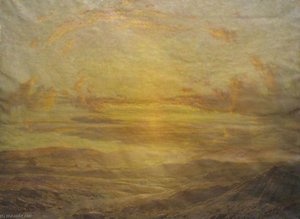
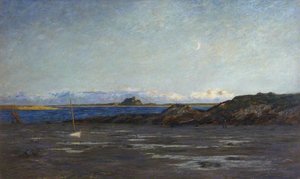
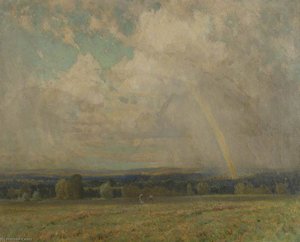
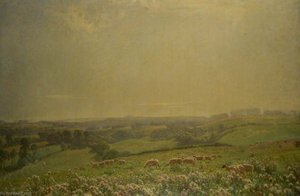
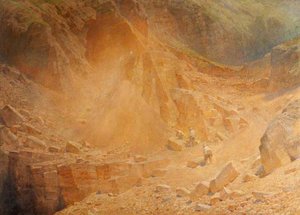
MacArthur’s oeuvre is a testament to her ability to translate the grandeur of the natural world onto paper with an almost scientific precision. Her compositions were never static; they breathed with the movement of mist, the warmth of sunlight, and the heavy stillness of rain. By blending elements of Impressionism and Luminism, she created landscapes that felt both immediate and timeless. Whether she was rendering the imposing silhouette of Château Gaillard in France or the serene, biblical vistas of the Sea of Galilee, her work possessed a unique luminosity. This was achieved through a sophisticated understanding of transparency, allowing light to penetrate layers of pigment and reflect off the white paper beneath, creating an inner radiance that few of her contemporaries could replicate.
A Legacy of Natural Documentation and Artistic Mastery
Beyond the sweeping vistas of mountains and coasts, MacArthur’s contribution to American art history is significantly marked by her dedication to the botanical world. Her collection of approximately 300 watercolors includes exquisite studies of flora and fauna that marry artistic beauty with biological accuracy. Her depictions of wildflowers and ferns are celebrated not only for their aesthetic grace but for their role in documenting the natural heritage of the United States. This duality—the ability to be both a poet of the landscape and a precise chronicler of nature—defines her unique place in the late 19th and early 20th-century art movements.
The breadth of her travels and subjects further enriched her artistic vocabulary, as seen in works such as 'Coasting, Ceylon', which brought distant, exotic landscapes to life for her audience. Her career, spanning several decades until her passing in 1945, remains a vital chapter in the history of American watercolor. To study MacArthur’s work is to witness a lifelong pursuit of capturing the soul of nature, leaving behind a legacy of light, color, and an enduring connection to the earth's most tranquil moments.