MASTER OF THE CATHOLIC MONARCHS
The Master of the Retablo of the Reyes Católicos, a figure shrouded in mystery despite his prolific output during Spain’s Golden Age (approximately 1485-1500), remains one of the most celebrated painters of his era. Precise biographical details are scarce—his birthdate and death year remain unknown—leaving scholars to reconstruct his life primarily through analysis of his artistic oeuvre. He gained renown for his monumental retablos, elaborate altarpieces commissioned by the Catholic Monarchs themselves, which served as visual narratives of Christian faith and royal patronage. These works exemplify the stylistic innovations of the period, blending Byzantine influences with Florentine Renaissance ideals to create emotionally resonant images that continue to captivate audiences today.
Early Life and Artistic Training
Information regarding his formative years is fragmentary. Evidence suggests he was born in Castile sometime around 1485, though definitive documentation is lacking. His artistic training likely commenced under the tutelage of Flemish masters who had established a significant presence in Castile during Isabella I’s reign—a testament to the burgeoning cultural exchange between Spain and Flanders at the time. The influence of Flemish painters like Rogier van der Weyden and Hugo van der Goes can be discerned in his meticulous attention to detail, expressive drapery folds, and masterful use of color palettes reminiscent of Northern European art. This exposure undoubtedly shaped his artistic sensibilities and equipped him with the technical skills necessary for tackling ambitious projects such as the retablos destined for the royal chapel.
The Retablo Style: Innovation and Symbolism
The Master’s contribution to Spanish painting is indelibly marked by his pioneering role in developing what historians term “retablo style.” This distinctive artistic approach departed from traditional panel painting conventions, prioritizing narrative complexity and emotional impact over mere decorative splendor. Retablos were conceived as immersive experiences for worshippers, depicting biblical scenes with dramatic staging and vibrant colors—a deliberate effort to convey theological truths through visual storytelling. The artist skillfully employed techniques borrowed from Byzantine iconographic tradition – particularly the use of tesserae (small colored stones) – to achieve unparalleled textural richness and luminosity. Furthermore, he incorporated symbolic elements drawn from humanist scholarship, reflecting a broader intellectual climate characterized by renewed interest in classical antiquity and philosophical inquiry.
Notable Works: The Marriage at Cana and Christ Among the Doctors
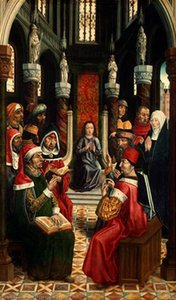
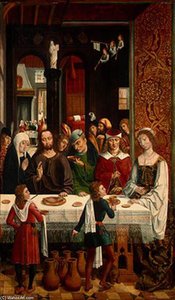
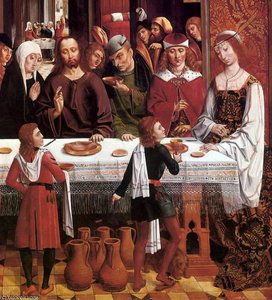
Among his most enduring achievements are two masterpieces that exemplify the stylistic hallmarks of retablo style: “The Marriage at Cana” and “Christ Among the Doctors.” Executed around 1495-1496, “The Marriage at Cana,” housed in the Musée du Prado, depicts Jesus miraculously transforming water into wine during a wedding feast—a pivotal episode from Christian scripture. The painting’s composition is meticulously balanced, with figures arranged in pyramidal groupings that convey solemn dignity and spiritual contemplation. The artist's masterful rendering of drapery folds and subtle gradations of color imbues the scene with palpable emotion, capturing the joyous celebration of divine grace. Similarly impressive is “Christ Among the Doctors,” commissioned by Cardinal Juan Gil Ramirez for the Cathedral of Toledo—a monumental depiction of Jesus surrounded by prominent theologians debating theological matters. The painting’s grandeur reflects the ambition of its patron and underscores the artist's ability to convey profound intellectual and spiritual concepts through visual imagery.
Legacy and Influence
The Master of the Catholic Monarchs stands as a pivotal figure in Spanish Renaissance art, shaping the aesthetic sensibilities of subsequent generations of painters. His retablo style established itself as the dominant idiom for altar decoration throughout Spain and beyond—inspiring artists to explore narrative complexity and emotional depth within their compositions. Moreover, his meticulous attention to detail and masterful use of color palettes influenced stylistic trends across Europe, cementing his reputation as one of the foremost practitioners of Renaissance painting. Although his identity remains elusive, his artistic legacy continues to resonate through centuries of art history, ensuring that his monumental retablos—and indeed, his singular contribution to Spanish visual culture—will endure as symbols of faith, royal patronage, and artistic brilliance.
Further Resources
* Biography of MASTER of the Catholic Kings in the Web Gallery of Art: https://www.wga.hu/bio_m/m/master/catholic/biograph.html
* The Marriage at Cana: https://www.museodelprado.es/en/the-collection/obra-de-arte/the-marriage-at-cana-%28detail%29-%285f%2B46efe0c5f4cd4491072067319e3099.jpg
* Christ Among the Doctors: https://www.museodelprado.es/en/the-collection/obra-de-arte/christ-among-the-doctors-%28detail%29-%28c9%2444d7e8fab84c85959539fcbe3044ce.jpg
* The Virgin of the Catholic Monarchs: https://www.museodelprado.es/en/the-collection/obra-de-arte/the-virgin-of-the-catholic-monarchs-%28detail%29-%286be8122a-%277cc8-%253B4438-%253B15d1a03be0eb.jpg