The Enigmatic Master of Affligem: A Renaissance Painter of Intimate Devotion
The identity of the “Master of Affligem,” a name adopted in 1923 by art historian Walter Friedländer, remains one of the most enduring mysteries within the history of Northern Renaissance painting. Working primarily during the late 15th and early 16th centuries, this artist—likely born around 1470 and passing away sometime in the 1520s—left behind a remarkably consistent body of work characterized by an extraordinary level of detail, profound emotional depth, and a deeply personal approach to depicting biblical narratives. His paintings, predominantly small-scale panels, offer intimate glimpses into scenes from the lives of Joseph, Christ, and the Virgin Mary, revealing a unique artistic vision that continues to captivate art historians and viewers alike.
The artist’s origins are shrouded in uncertainty. While he is generally considered a painter of the South Netherlandish school—a region renowned for its vibrant colors, meticulous realism, and profound religious devotion—his precise birthplace remains elusive. He seems to have spent much of his career working in Brussels, though evidence suggests connections to the Abbey of Affligem near Kortrijk, Belgium, from which he derived his enduring pseudonym. The abbey’s proximity likely played a significant role in his artistic development, providing him with access to a wealthy patron base and fostering an environment deeply immersed in religious contemplation.
A Legacy of Tondi and Panels: Defining the Master's Style
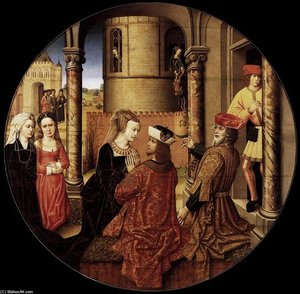
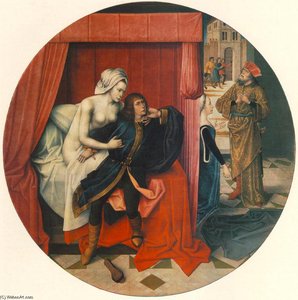
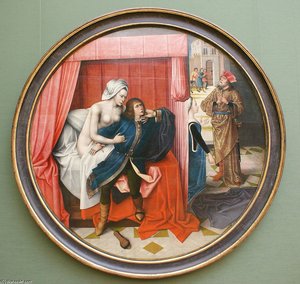
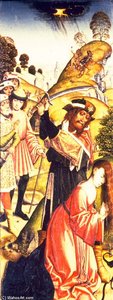
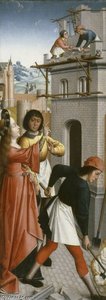
The Master of Affligem is most celebrated for his series of “tondi”—circular panels depicting scenes from the Legend of St. Joseph—which are now scattered across museums throughout Europe, including the Berlin Museum für die Bildende Kunst and the Metropolitan Museum of Art in New York. These works, executed with astonishing precision and a remarkable sensitivity to light and shadow, showcase the artist’s mastery of detail and his ability to imbue even seemingly mundane scenes with profound emotional resonance. Alongside these tondi, he produced a series of panels depicting episodes from the Life of Christ and the Life of the Virgin Mary—often referred to as “panels”—each meticulously rendered with an almost photographic realism.
What distinguishes the Master’s work is not merely technical skill but rather his deeply personal approach. Unlike many of his contemporaries, who favored grand, theatrical compositions, he consistently opted for intimate scenes, focusing on individual figures and their emotional responses to pivotal moments in the biblical narratives. His use of color is particularly noteworthy—a rich palette of deep reds, blues, and greens creates a sense of warmth and luminosity, while subtle gradations of light and shadow imbue his figures with an almost palpable humanity. The faces of his subjects are rendered with remarkable psychological acuity, capturing fleeting expressions of joy, sorrow, fear, and contemplation.
Influences and Artistic Context
The Master of Affligem’s style reflects a complex interplay of influences. He was undoubtedly influenced by the early Renaissance masters of Florence—particularly Fra Angelico and Masaccio—whose emphasis on naturalism, emotional depth, and spiritual symbolism resonated deeply with him. However, he also drew inspiration from the more traditional Flemish school of painting, particularly its meticulous attention to detail and its penchant for depicting religious subjects with a profound sense of piety. Furthermore, his work demonstrates a clear debt to the late Gothic tradition, evident in his use of elongated figures, dramatic lighting effects, and richly ornamented backgrounds.
It’s important to note that the Master of Affligem operated within a period of significant artistic and intellectual ferment. The rise of humanism—a philosophical movement that emphasized human potential and celebrated earthly achievements—challenged traditional religious dogma and encouraged artists to explore new ways of representing the world. The Master's work, with its focus on individual emotion and intimate scenes, can be seen as a reflection of this broader cultural shift.
Major Works and Historical Significance
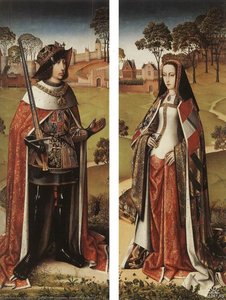
Among his most celebrated works are the “Wings of an Altarpiece” (now in Dresden), depicting the Annunciation; “And The Wife Of Putiphar” (Musées Royaux des Beaux-Arts, Brussels); and “And Asenath” (Metropolitan Museum of Art, New York). These paintings exemplify the artist’s signature style—characterized by meticulous detail, profound emotional depth, and a deeply personal approach to depicting biblical narratives. The tondi illustrating St. Joseph's life are particularly significant for their intimate scale and their remarkable psychological acuity.
Despite the enduring mystery surrounding his identity, the Master of Affligem remains one of the most important figures in Northern Renaissance painting. His work offers a unique window into the artistic sensibilities of a pivotal era—a time when religious devotion intersected with humanistic ideals to produce some of the most beautiful and emotionally resonant images in Western art history. His legacy continues to inspire artists and scholars today, reminding us of the power of art to illuminate the complexities of the human experience.