Biography of MASTER of the Crucifixion in the Marienkirche at Dortmund
The Master of the Crucifixion, also known as Master of the Berswordt Altar, was a german painter active around Dortmund during the 14th and 15th centuries. His artistic legacy is primarily defined by his contribution to the vibrant international gothic style that flourished across Europe during this period—a style characterized by meticulous detail and luminous color palettes. While biographical information remains scarce due to the anonymity of his name, scholars have pieced together a picture of his life and career based on stylistic analysis and documented commissions.
Early Life and Artistic Training
Precise details regarding the Master’s birthdate and family background are elusive. However, he emerged from Dortmund—a significant center for artistic production during the medieval era—suggesting exposure to established workshops and traditions. Evidence points towards influences from Reims Cathedral, where Jean de Limbourg's Très Sainte Vierge adorée par Saint Benoît et Saint Nicolas demonstrated the stylistic innovations of the time – a fusion of Flemish realism with French manuscript illumination techniques. This formative experience undoubtedly shaped his artistic sensibilities and honed his technical skills.
Notable Works and Artistic Style
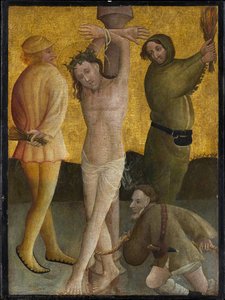
The Master’s fame rests largely on two monumental achievements: The Flagellation, a painting that exemplifies the stylistic hallmarks of international gothic, and particularly the Berswordt Altar—an altarpiece commissioned for Sankt Maria und Sankt Georg Kirche in Bielefeld. These works showcase his mastery over perspective, drapery rendering, and color harmony—elements characteristic of the style’s preoccupation with conveying emotion and spiritual grandeur. The Berswordt Altar, featuring thirty narrative scenes depicting Christ's Passion, stands as a testament to his dedication to storytelling through visual imagery. It is considered one of Dortmund’s most important artistic treasures.
Influences and Artistic Context
The Master’s oeuvre reflects the broader artistic currents circulating in northwest Germany during the early fifteenth century. Konrad van Soest, another prominent artist operating concurrently, served as a potential predecessor or collaborator—a debate that continues to fascinate art historians. The stylistic echoes of Flemish manuscript illumination – notably Limbourg's Très Sainte Vierge adorée par Saint Benoît et Saint Nicolas – are palpable in Dortmund’s artistic landscape. This convergence of influences underscores the interconnectedness of European artistic culture during this transformative era.
Legacy and Historical Significance
Despite his anonymity, the Master of the Crucifixion remains a pivotal figure in Dortmund's art history. His contribution to international gothic style cemented his place among the leading painters of his time—a period marked by religious fervor and artistic experimentation. The Berswordt Altar continues to inspire admiration for its intricate detail and emotive power, serving as an enduring symbol of medieval artistic excellence. His work is housed in the Marienkirche, Dortmund, where it remains accessible to visitors eager to contemplate the beauty and complexity of a bygone era—a testament to the lasting impact of his creative vision.