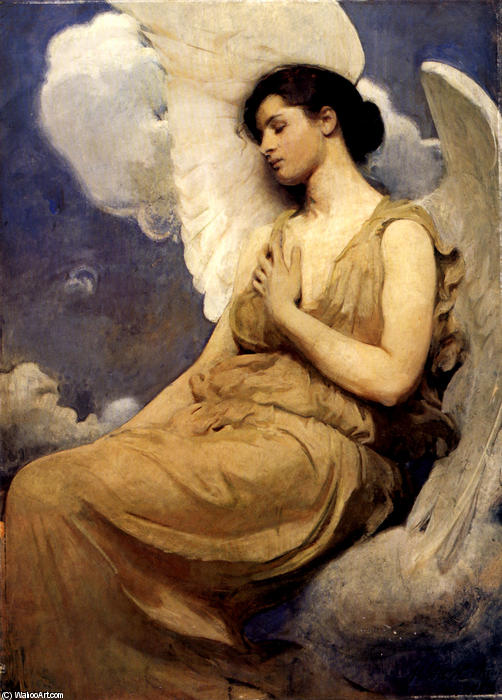
Winged Figure by Abbott Handerson Thayer
Abbott Handerson Thayer’s “Winged Figure,” painted in 1889, stands as a poignant emblem of Romantic Symbolism—a testament to the artist's masterful blend of realism and ethereal beauty. Initially recognized for his depictions of animals, Thayer embarked on a transformative artistic journey after studying in Paris, where he absorbed the stylistic innovations of Impressionism and embraced a more ambitious exploration of allegorical themes.
- Subject Matter: The artwork portrays a female angel seated serenely against a turbulent sky brimming with billowing clouds. This deliberate choice underscores Thayer’s fascination with conveying profound emotion through visual representation, mirroring the artistic currents of his era.
- Style & Technique: “Winged Figure” exemplifies Romantic Symbolism's characteristic preoccupation with idealized beauty and atmospheric drama. Employing oil paint on canvas, Thayer achieved remarkable textural depth and luminosity through visible brushstrokes—a technique that captures the fleeting effects of light and shadow with exquisite precision.
- Historical Context: Painted during the late Victorian period, “Winged Figure” reflects the broader artistic landscape of its time – a reaction against scientific rationalism and an embrace of spiritual contemplation. It aligns perfectly with the Symbolist movement’s desire to express inner psychological states through evocative imagery.
The composition itself is strikingly simple yet profoundly impactful. The angel dominates the frame, positioned centrally against the expansive sky, emphasizing her contemplative gaze downwards—a gesture laden with symbolism representing introspection and spiritual yearning. Lines are soft and flowing, particularly in the depiction of the clouds and drapery, contributing to an overall sense of tranquility amidst turbulent forces.
Color palettes are dominated by muted tones – warm browns and creams – creating a melancholic atmosphere that invites reflection. The artist skillfully utilizes layering techniques to build up texture and volume, mirroring the grandeur of nature while simultaneously conveying a feeling of vulnerability. As noted in archival documentation from The Art Institute of Chicago, Thayer’s intention was to “put on wings probably more to symbolize an exalted atmosphere … where one need”, highlighting his artistic sensitivity.
- Symbolism: The angel's wings serve as a powerful visual metaphor for spirituality and transcendence. Her posture embodies serenity and contemplation, prompting viewers to consider themes of sorrow, faith, and divine grace.
“Winged Figure” continues to resonate with audiences today due to its masterful execution and evocative emotional core—a timeless masterpiece that exemplifies the enduring power of Romantic Symbolism.