A Symphony of Warmth Amidst the Chill
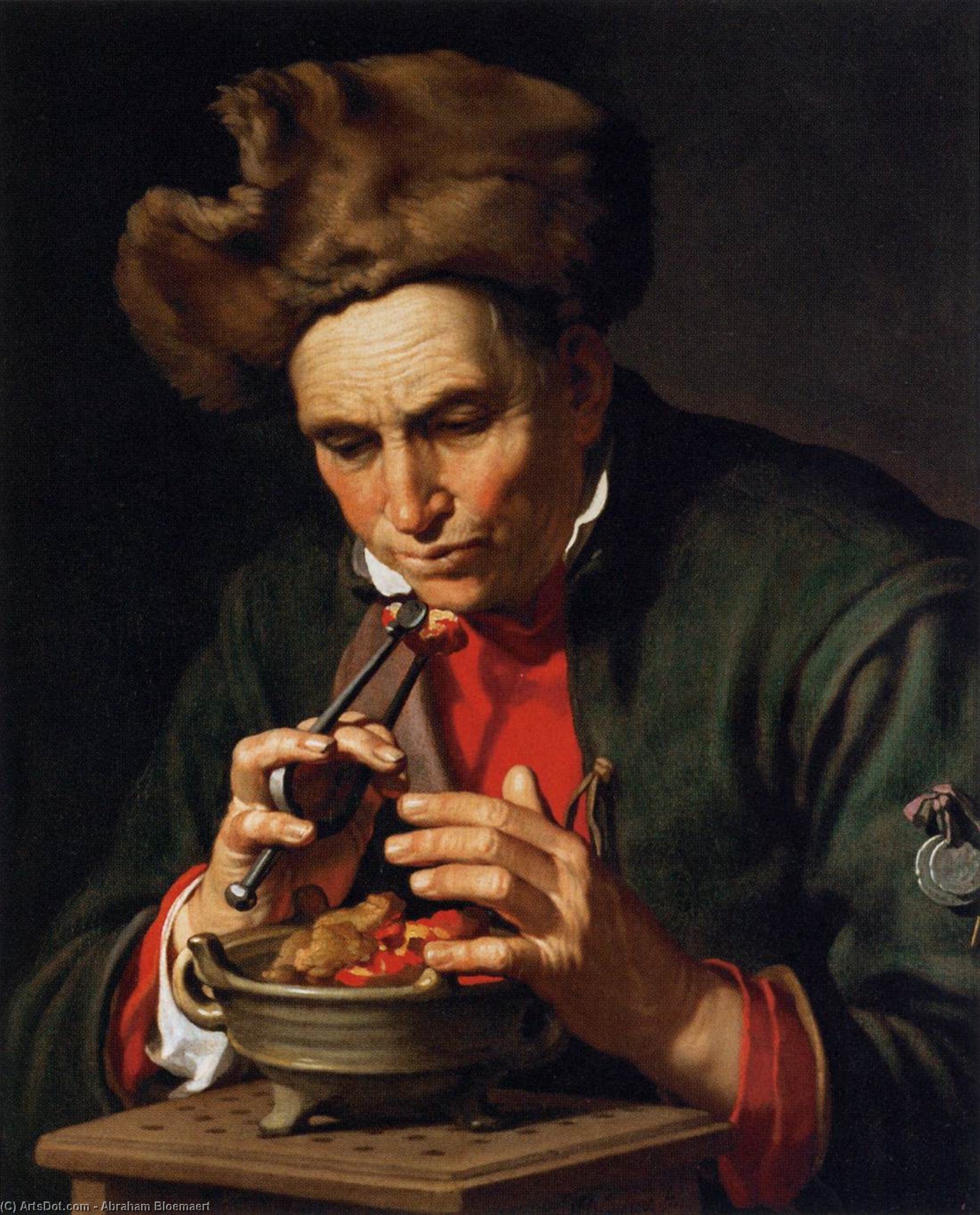
In the quiet, flickering glow of a hearth, Abraham Bloemaert’s Allegory of Winter invites the viewer into a moment of profound intimacy and survival. Painted between 1625 and 1630, this masterpiece transcends a mere genre scene of a man enjoying a meal; it serves as a poignant meditation on resilience. The central figure, a gentleman draped in a striking scarlet jacket, sits anchored at his table, a vibrant splash of warmth against the encroaching shadows of the season. As he holds a bowl filled with nourishing stew or soup, there is an undeniable sense of tactile comfort—the weight of the ceramic, the steam rising from the food, and the soft presence of a female servant nearby who embodies the nurturing spirit required to endure the harshest months.
The painting captures more than just a physical meal; it captures the psychological state of a Netherlands navigating an era of profound transition. During the early Baroque period, Utrecht was a crucible of artistic and religious transformation. Bloemaert, a master who bridged the gap between the intricate elegance of Mannerism and the dramatic intensity of the Baroque, utilizes this setting to reflect the broader human struggle for stability amidst political and spiritual upheaval. To gaze upon this work is to feel the tension between the external cold of the world and the internal sanctuary of the home.
Mastery of Light and Shadow
Technically, Allegory of Winter is a triumph of the Utrecht Caravaggisti style. Bloemaert employs a masterful use of chiaroscuro, the dramatic interplay between deep, velvety shadows and piercing highlights, to sculpt the figures from the darkness. This technique does more than create three-dimensional depth; it directs the eye with theatrical precision toward the textures that define the scene—the coarse weave of the man's attire, the glint of light on the bowl, and the soft, weathered skin of the subjects. The use of oil on canvas allows for a rich, luminous quality that makes the scarlet tones of the gentleman's clothing appear almost tactile, pulling the viewer into the warmth of the firelight.
For the discerning collector or interior designer, this painting offers an unparalleled emotional anchor. Its composition is balanced yet dynamic, making it a sophisticated choice for spaces that require a sense of groundedness and historical weight. Whether placed in a study filled with books or as a focal point in a contemporary living space, the artwork brings a layer of narrative complexity and "hygge"—that much-coveted sense of cozy contentment—to any environment.
The Language of Symbolism
Every element within Bloemaert’s composition whispers a deeper meaning. The bread and wine, staples of the table, act as symbols of sustenance and the continuity of life, standing in defiance of the seasonal decay represented by winter. The very act of eating becomes a ritual of survival and a celebration of human dignity. Through his meticulous observation, Bloemaert transforms a simple domestic moment into an allegory of the soul's fortitude. This layer of hidden meaning ensures that the painting remains a subject of endless contemplation, offering new insights with every viewing, much like a well-loved classic that reveals its secrets only to those who linger.