The Weight of Mortality: Abraham Bloemaert’s “Death and the Lovers”
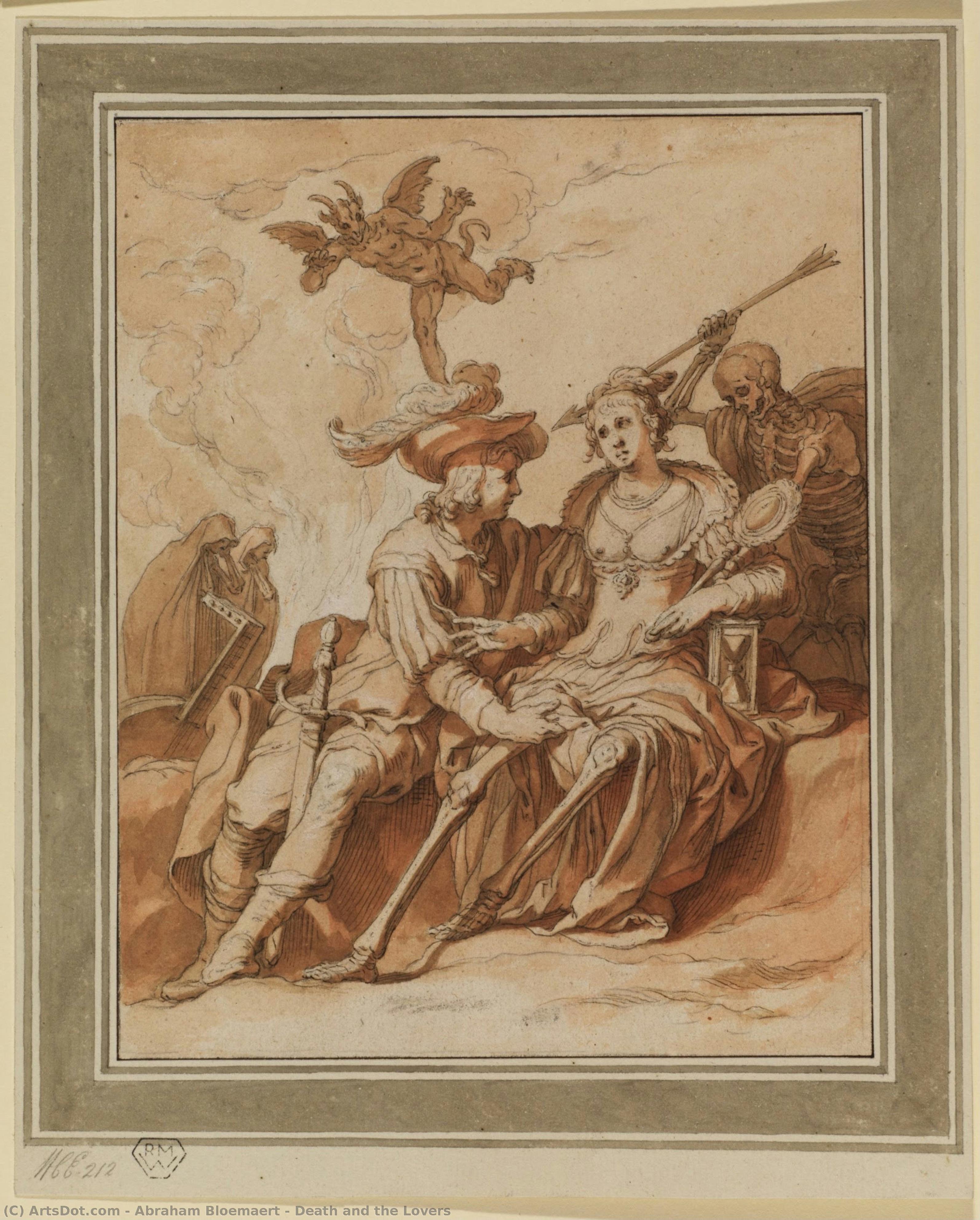
Abraham Bloemaert's "Death and the Lovers," painted around 1630, isn’t merely a depiction of a scene; it’s a profound meditation on life, love, and the inevitable embrace of mortality. This arresting work, housed within the meticulously rendered confines of a Dutch Baroque painting, transcends its subject matter to become a hauntingly beautiful allegory—a visual poem exploring the precarious balance between earthly pleasures and the looming shadow of death. Bloemaert, a pivotal figure bridging the Mannerist and Baroque eras, masterfully employs dramatic lighting, intricate detail, and a carefully orchestrated composition to evoke a powerful emotional response in the viewer.
The painting’s central drama unfolds within a richly furnished interior, bathed in a chiaroscuro effect—a stark contrast between light and shadow that immediately draws attention to the figures. A man, seemingly lost in his pursuit of a woman, sits beside her, who lies lifeless or dying at his feet. The scene is further populated by two other individuals: one standing nearby, observing with a mixture of sorrow and detachment, and another positioned further back, adding to the sense of unease and impending doom. Dominating the composition is an angelic figure, a subtle yet potent reminder of divine judgment and the consequences of earthly choices. A single bird, perched near the upper left corner, offers a fleeting symbol of freedom or perhaps, tragically, the last vestige of life’s potential.
A Study in Baroque Technique
Bloemaert's technical skill is immediately apparent in the painting’s meticulous detail. The fabrics—the man’s velvet doublet, the woman’s flowing gown—are rendered with astonishing realism, showcasing his mastery of color and texture. The artist utilizes a glazing technique, layering thin washes of paint to achieve luminous effects and subtle gradations of tone. This approach is particularly evident in the rendering of light reflecting off the polished surfaces of the furniture and the figures' skin. The use of red—particularly in the woman’s garments and the angel’s robes—intensifies the dramatic mood, symbolizing both passion and death. The composition itself is carefully constructed, employing a pyramidal arrangement to create stability and visual interest, while simultaneously directing the viewer’s eye through the scene.
Symbolism and Allegory
“Death and the Lovers” is laden with symbolic meaning, firmly rooted in the conventions of Renaissance and Baroque allegory. The central figures represent the fleeting nature of earthly love and the futility of pursuing pleasure at the expense of spiritual awareness. The woman’s death symbolizes the loss of innocence and vitality, while the man's inaction highlights the dangers of distraction and self-indulgence. The angel serves as a moral guide, representing divine judgment and the ultimate consequence of human choices. The inclusion of objects like an hourglass, a lute, and a mirror—traditional symbols of vanity, music, and reflection—further underscores the painting’s theme of transience and illusion. The bird, often associated with freedom or hope, becomes a poignant counterpoint to the scene's overall sense of despair.
Historical Context and Artistic Influence
Bloemaert painted “Death and the Lovers” during a period of significant religious and political upheaval in the Netherlands—a time marked by the Dutch Revolt against Spanish rule. This tumultuous context likely influenced the painting’s somber mood and its exploration of themes related to mortality and judgment. Bloemaert's work reflects the influence of both Mannerist artists like Pontormo and the emerging Baroque style, particularly the dramatic use of light and shadow championed by Caravaggio. His association with the Utrecht Caravaggisti—a group of Dutch painters who embraced Caravaggio’s intense realism and tenebrism—contributed to his distinctive artistic vision. The painting stands as a testament to Bloemaert's ability to synthesize these diverse influences into a powerfully expressive work of art.
A Timeless Reflection on Human Existence
“Death and the Lovers” remains a profoundly moving artwork, offering a timeless reflection on the complexities of human existence. Its haunting beauty and symbolic depth continue to resonate with viewers centuries after its creation. Whether viewed as a historical document, an artistic masterpiece, or simply a source of emotional contemplation, this painting serves as a potent reminder of our mortality and the importance of living a life guided by wisdom and compassion.