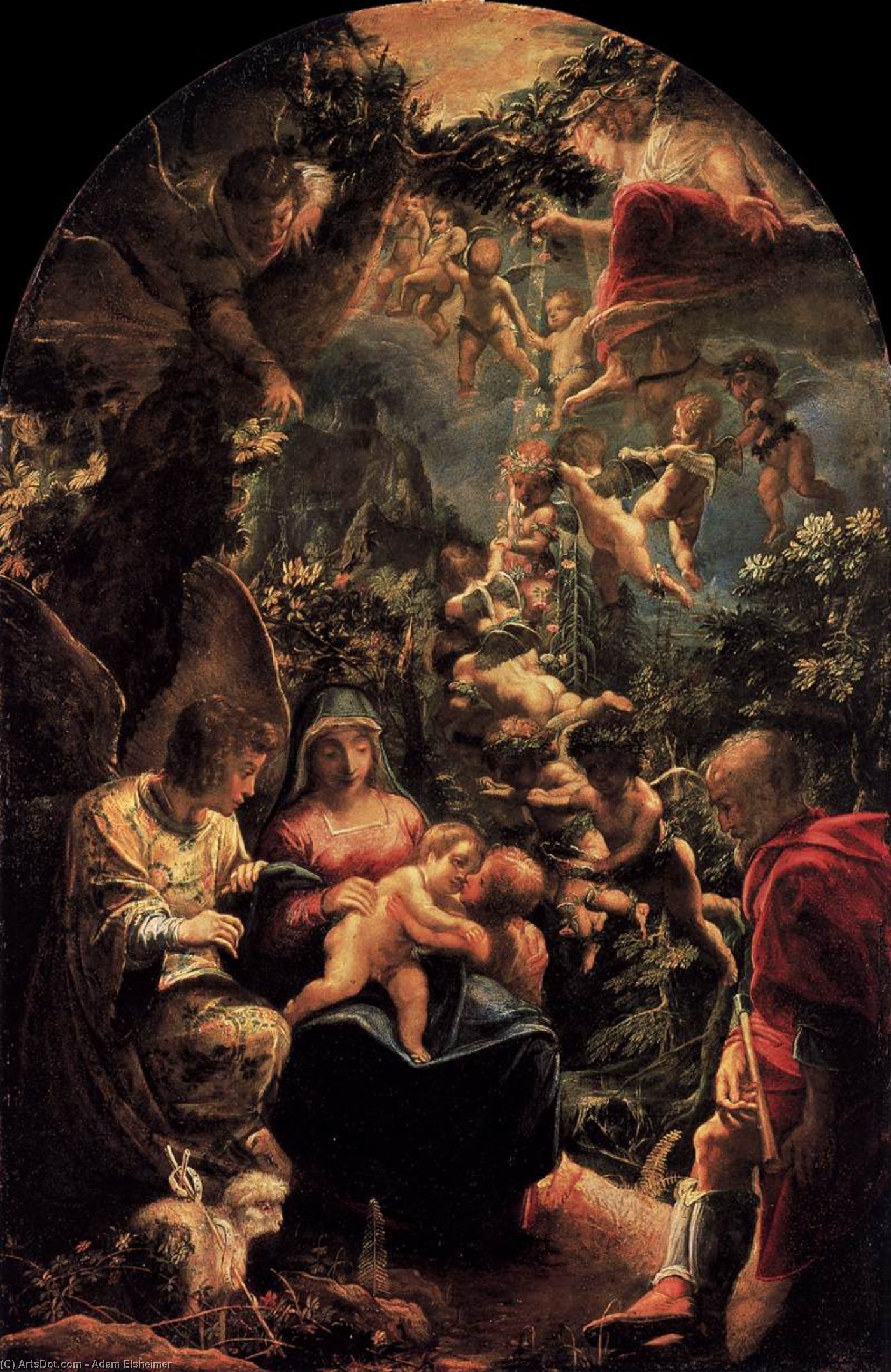
Rest on Flight into Egypt by Adam Elsheimer: A Moment of Grace in Shadow
Adam Elsheimer’s “Rest on Flight into Egypt,” painted in 1599, is not merely a depiction of a biblical scene; it's an exquisitely crafted tableau of serenity and profound emotional depth. Measuring just 37 x 24 cm, this small cabinet painting belies the monumental narrative contained within its intimate frame. It’s a work that speaks to the quiet dignity of faith, the tenderness of family, and the evocative power of light and shadow – qualities that would become hallmarks of the burgeoning Baroque style.
The scene unfolds with remarkable detail: Mary, Joseph, and the infant Jesus are nestled within a dark, richly textured forest, seeking refuge from the threat of King Herod. The composition is masterfully balanced, drawing the eye to the central figures while subtly incorporating a multitude of supporting characters – shepherds, angels, and individuals engaged in conversation or observation. These peripheral figures aren’t mere background detail; they contribute to a sense of bustling life and communal experience, suggesting that this moment of respite is part of a larger, ongoing journey.
A Pioneering Vision: Landscape and Light in the Early 17th Century
What distinguishes Elsheimer’s work from his contemporaries is his innovative approach to landscape. He wasn't simply setting the scene; he was actively shaping it, imbuing the forest with a palpable sense of atmosphere. The deep shadows and intricate details of the trees create an almost claustrophobic effect, contrasting sharply with the luminous glow emanating from the central figures and the angel hovering above them. This masterful manipulation of light – a technique heavily influenced by Venetian masters like Titian and Veronese – was revolutionary for its time. It’s widely considered to be one of the earliest examples of naturalistic night scenes in Western art, predating Caravaggio's dramatic nocturnal works by decades.
Elsheimer’s use of color is equally striking. The palette is restrained yet sophisticated, dominated by deep browns, greens, and blues, punctuated by flashes of gold and white. The subtle gradations of tone create a remarkable sense of depth and realism, while the carefully rendered details – the folds of Mary's robe, the texture of Joseph’s tunic, the delicate features of the infant Jesus – invite close inspection.
Symbolism and Narrative Resonance
Beyond its technical brilliance, “Rest on Flight into Egypt” is rich in symbolic meaning. The forest itself represents both danger and protection, mirroring the perilous journey undertaken by the Holy Family. The presence of angels serves as a visual reminder of divine intervention and guidance. Note the lamb of God with the staff – an attribute of John the Baptist – placed prominently on the left side, symbolizing sacrifice and redemption. The banner bearing the words “Ecce agnus dei” (Behold the Lamb of God) reinforces this theme.
The inclusion of the figures on the left and right sides adds another layer to the narrative. These individuals, seemingly engaged in conversation or observation, represent the wider community that witnesses and supports the Holy Family’s journey. They are not passive observers; they are active participants in a story of faith and hope.
A Legacy of Luminosity: Elsheimer's Influence
Adam Elsheimer’s tragically short life – he died at just thirty-two years old in Rome – nevertheless left an indelible mark on the history of art. His innovative use of landscape, his masterful manipulation of light and shadow, and his profound understanding of human emotion influenced a generation of artists, including Rembrandt and Rubens. His small-scale cabinet paintings, executed with exquisite detail and technical skill, continue to captivate viewers today, offering a glimpse into the artistic sensibilities of a truly remarkable artist.
ArtsDot is proud to offer meticulously hand-painted reproductions of “Rest on Flight into Egypt,” allowing you to bring this timeless masterpiece into your home or office. Each reproduction captures the painting’s original luminosity and emotional depth, ensuring that it will be treasured for generations to come.