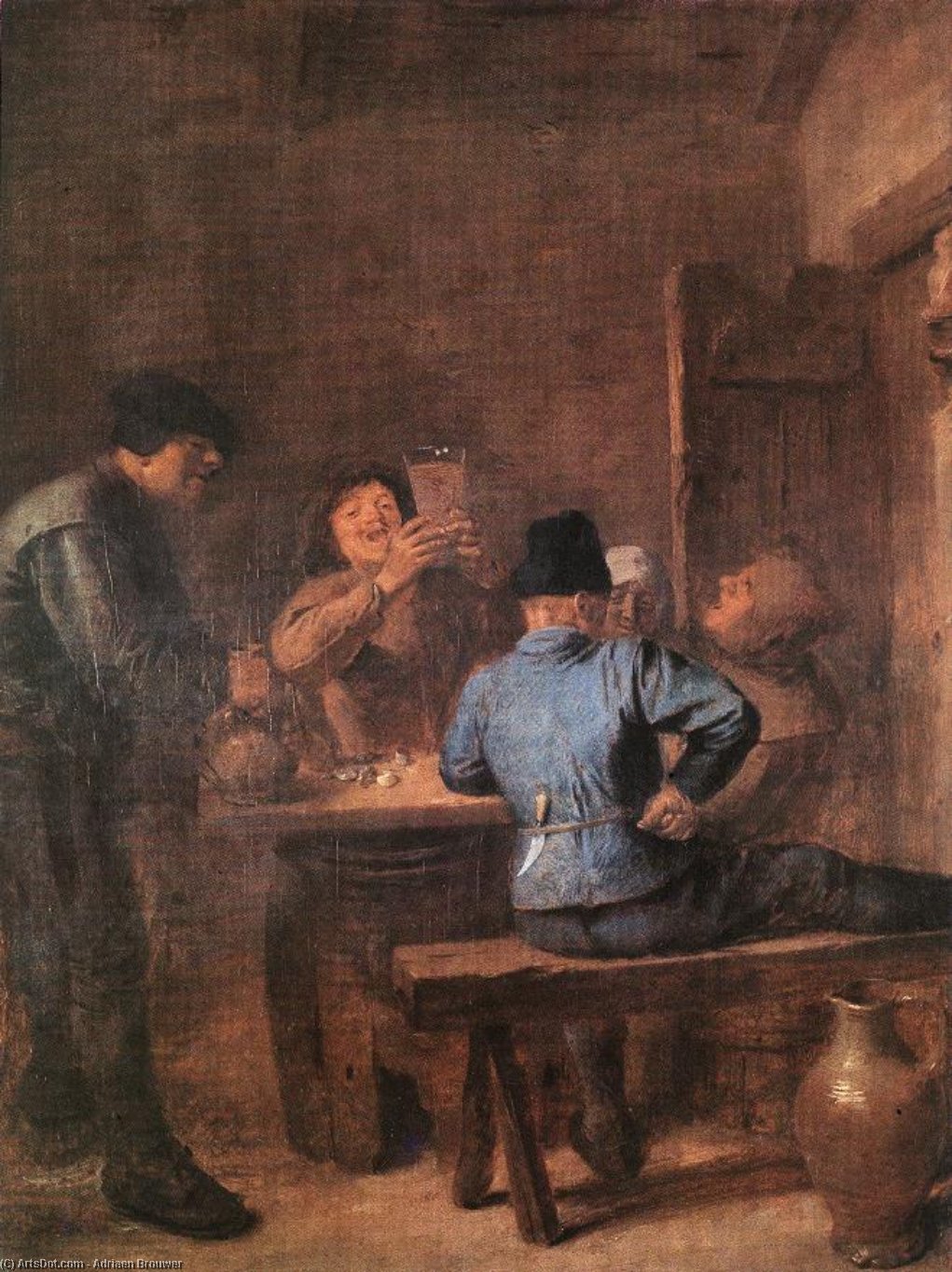
Experience the vibrant Baroque spirit of Adriaen Brouwer’s ‘In The Tavern’! This captivating genre painting captures Dutch peasant life with masterful detail and light – explore its legacy at ArtsDot.
Discover Adriaen Brouwer (1605-1638), a Flemish Baroque painter celebrated for his lively genre scenes of peasant life, taverns, and everyday moments. Explore his art!
Discover European art history at the Alte Pinakothek in Munich! Explore Renaissance & Baroque masterpieces by Dürer, Rembrandt & Rubens within a stunning neoclassical setting.
A Snapshot of Rustic Revelry: Adriaen Brouwer’s ‘Tavern Scene’
Adriaen Brouwer's “Tavern Scene,” painted in 1635, stands as a cornerstone of Baroque genre art—a vibrant testament to the everyday realities of Dutch society during its Golden Age. More than just a depiction of a tavern interior, it’s a masterful exploration of human behavior and social dynamics captured with breathtaking immediacy. Brouwer's genius lies not merely in his technical skill but in his ability to distill complex emotions into a single frame, inviting viewers to contemplate the nuances of human interaction.
The Baroque Vision: Light, Shadow, and Dramatic Composition
The painting embodies the tenets of Baroque aesthetics—a stylistic movement characterized by grandeur, dynamism, and theatricality. Brouwer skillfully employs chiaroscuro, manipulating light and shadow to create a palpable sense of depth and atmosphere. The central figure, bathed in warm illumination emanating from an unseen window, contrasts sharply with the darker recesses of the tavern, drawing attention to his posture and gaze—a gesture of quiet contemplation amidst the boisterous activity surrounding him. This deliberate use of lighting isn’t simply decorative; it serves as a crucial element in conveying emotion and highlighting textural details within the scene.
A Window into Dutch Life: Observation and Social Commentary
“Tavern Scene” offers an unparalleled glimpse into the lives of ordinary Dutch citizens—peasants, laborers, and merchants alike—who frequented taverns for sustenance, socializing, and entertainment. Brouwer’s meticulous observation is evident in every aspect of the composition, from the worn wooden bench to the earthenware jugs on the table. However, the painting transcends mere documentation; it subtly critiques societal norms through its portrayal of drunken revelry and coarse behavior. Brouwer doesn't shy away from depicting uncomfortable truths about human nature—a characteristic boldness that aligns perfectly with the Baroque tradition’s penchant for confronting moral dilemmas.
Technique and Artistic Impression
Brouwer’s technique is marked by loose brushstrokes and a palpable sense of spontaneity, reflecting the Baroque emphasis on capturing fleeting moments of experience. The artist's hand dances across the canvas, creating textured surfaces that convey the warmth of candlelight and the roughness of tavern furnishings. Color palettes are muted yet rich, dominated by earthy tones—browns, ochres, and reds—that contribute to the painting’s overall mood of rustic charm and understated drama. These stylistic choices underscore Brouwer's commitment to portraying reality with unflinching honesty while simultaneously elevating it into a work of art.
Legacy and Enduring Appeal
“Tavern Scene” continues to resonate with audiences today, serving as an enduring symbol of the Baroque period’s fascination with human psychology and its ability to capture the spirit of its time. Its influence can be seen in subsequent genre paintings—particularly those produced by Josse van Craesbeeck and Peter Fendi—who adopted Brouwer's innovative approach to depicting everyday life. More than just a beautiful image, it remains a profound meditation on human behavior and social observation—a timeless masterpiece that invites contemplation and inspires admiration for the artistry of Adriaen Brouwer.