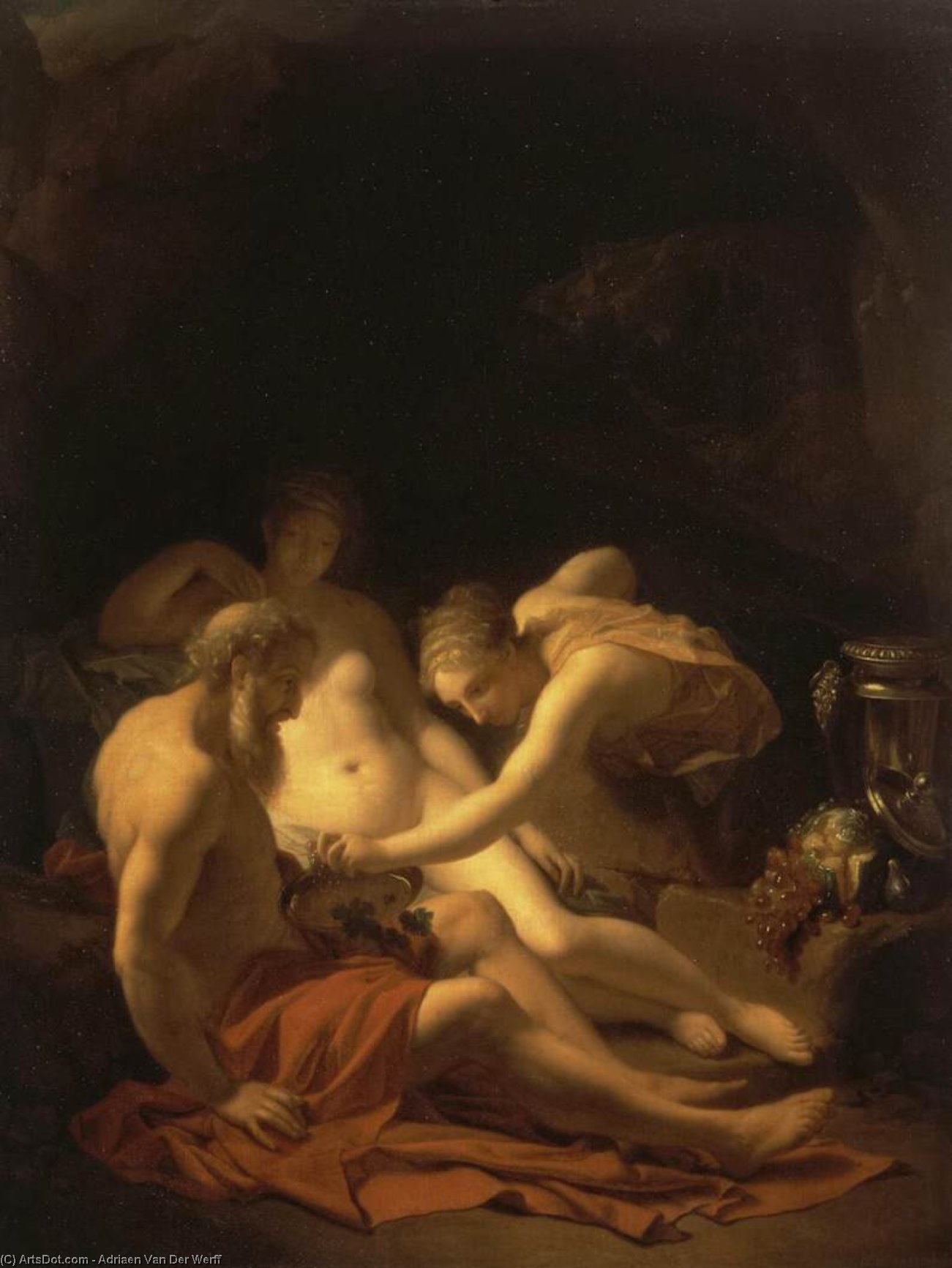
Experience the dramatic intensity of Adriaen van der Werff's 'Lot and his Daughters,' a Baroque masterpiece housed at The Hermitage Museum. Explore its masterful chiaroscuro technique and profound symbolism.
Adriaen van der Werff (1659-1722) was a Dutch Baroque painter renowned for his detailed portraits, mythological & erotic scenes. A highly lauded artist of his time, he served as court painter and influenced 18th-century art.
Explore the Hermitage Museum in St. Petersburg! Discover masterpieces from Renaissance to modern times within stunning historic palaces – a cultural journey awaits.
Lot and His Daughters: A Baroque Drama of Faith and Consequences
Adriaen van der Werff’s “Lot and His Daughters” (1711) transcends mere depiction; it embodies the very essence of Dutch Baroque painting—a breathtaking fusion of meticulous observation, dramatic lighting, and profound psychological insight. Housed within the esteemed Hermitage Museum in St. Petersburg, Russia, this oil on panel artwork remains a cornerstone of seventeenth-century artistic achievement. More than just a biblical narrative rendered visually, it’s an exploration of moral responsibility and familial devotion executed with unparalleled artistry.
A Masterclass in Chiaroscuro Technique
Werff's genius lies primarily in his masterful manipulation of chiaroscuro—the dramatic interplay between light and shadow—a technique perfected during the Baroque period. He achieves this effect not merely through skillful brushwork but through a deep understanding of how light sculpts form and conveys emotion. The cavernous space depicted is bathed in an unsettling luminescence, highlighting Lot’s anguished posture and emphasizing the vulnerability of his daughters. This deliberate contrast amplifies the scene's tension and underscores its thematic core: the inescapable repercussions of transgression against divine law. Notice how Werff uses subtle gradations of tone to create a palpable sense of depth and realism—a hallmark of Baroque painting that distinguishes it from earlier styles.
Symbolism Rooted in Biblical Narrative
The composition itself is laden with symbolic significance, reflecting the anxieties prevalent during the era. Lot, representing humanity’s moral failings, stands at the center, burdened by the consequences of his daughters' defiance – a deliberate allusion to Genesis 19 where Lot and his companions succumb to temptation and engage in incestuous acts. The daughters’ expressions convey both fear and determination, embodying the complexities of familial loyalty amidst ethical dilemmas. Their positioning—one supporting Lot’s arm, the other reaching towards him—represents the desperate plea for forgiveness and underscores the inescapable gravity of their actions. Furthermore, the dark cave setting symbolizes refuge from divine judgment but also serves as a visual metaphor for the inner turmoil experienced by Lot and his family.
The Artist's Vision: Rembrandt's Influence
Werff’s style bears unmistakable traces of Rembrandt van Rijn—a titan whose influence extended throughout the Dutch artistic landscape. Like Rembrandt, Werff prioritized capturing human emotion with unflinching honesty, prioritizing psychological realism over idealized beauty. The smooth finish achieved through meticulous layering and blending speaks to a dedication to craftsmanship that rivals even Rembrandt's own unparalleled skill. This unwavering commitment to detail elevates “Lot and His Daughters” beyond mere visual representation; it invites contemplation on themes of faith, morality, and the enduring power of familial bonds—themes central to Baroque art’s broader philosophical agenda.
A Legacy Enduring Through Reproduction
Today, a high-quality reproduction of “Lot and His Daughters” offers an opportunity to experience Werff's artistic brilliance firsthand. Explore more paintings by Adriaen Van Der Werff at /art/list/?Filter=adriaen+van+der+werff,adriaen,werff/, or delve deeper into his oeuvre with Painting by 'Adriaen Van Der Werff' | Adriaen Van Der Werff:Lot and his Daughters and Painting by 'Adriaen Van Der Werff' | Adriaen Van Der Werff:Self-Portrait.