A Window Into the Baroque Soul
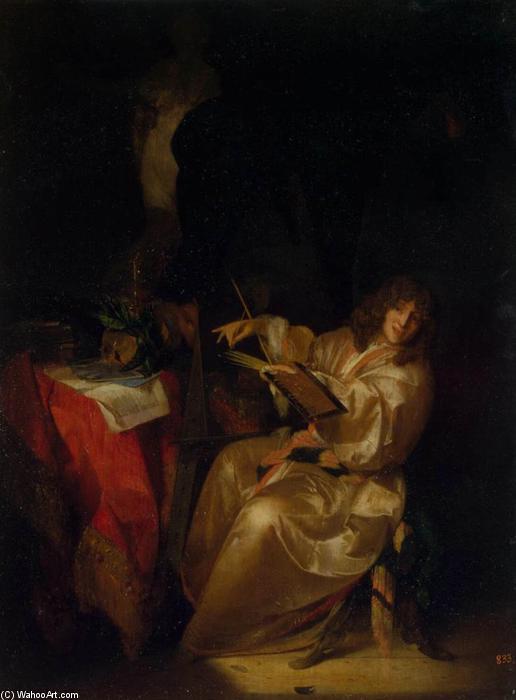
Adriaen van der Werff's Self-Portrait stands as an enduring emblem of Dutch Golden Age artistry—a profound testament to meticulous observation and psychological depth. Completed in 1696, this oil on panel masterpiece does more than merely capture a likeness; it invites the viewer into a contemplative dialogue about identity, intellect, and artistic ambition. As the artist gazes directly from the darkness, his expression remains focused and introspective, establishing a palpable intimacy that bridges the centuries between his era and our own. For the discerning collector or interior designer, this work offers more than decoration; it provides a focal point of quiet strength and historical gravity.
The painting is a masterclass in the chiaroscuro technique, where the dramatic manipulation of light and shadow sculpts form out of the void. Van der Werff skillfully directs a subtle illumination across the contours of his face and the textures of his attire, creating an illusion of three-dimensional depth that feels almost tactile. The way the light catches the pages of the open book held in his lap suggests a moment of interrupted study, hinting at the Enlightenment ideals of scientific inquiry and philosophical debate that were burgeoning during his lifetime. This interplay of light does not merely illuminate; it breathes life into the subject, imbuing the portrait with a luminous, lifelike quality that transcends mere representation.
The Mastery of Texture and Technique
To observe this work is to witness the pinnacle of late Baroque precision. Van der Werff’s technique was characterized by an unparalleled command over pigment, applying layers upon layers to maximize control over texture and luminosity. One cannot help but be captivated by the exquisite rendering of the fabric—the heavy, dignified folds of his garment suggest a weight and richness that speak to the artist's specialized training in drapery. This meticulous attention to detail ensures that every brushstroke serves the larger purpose of conveying character and status.
Beyond its technical brilliance, the painting carries a profound emotional resonance. The dark, atmospheric background, with its subtle hints of obscured objects, creates a sense of mystery and infinite space, pushing the subject forward into the viewer's personal sphere. This composition makes the piece an ideal selection for sophisticated interiors, particularly those seeking to evoke a sense of classical elegance or scholarly refinement. Whether placed in a private library or a grand salon, Van der Werff’s self-portrait serves as a window into a bygone era of grace, reminding us of the enduring power of the human spirit captured through the lens of masterful artistry.