A Symphony of Everyday Life
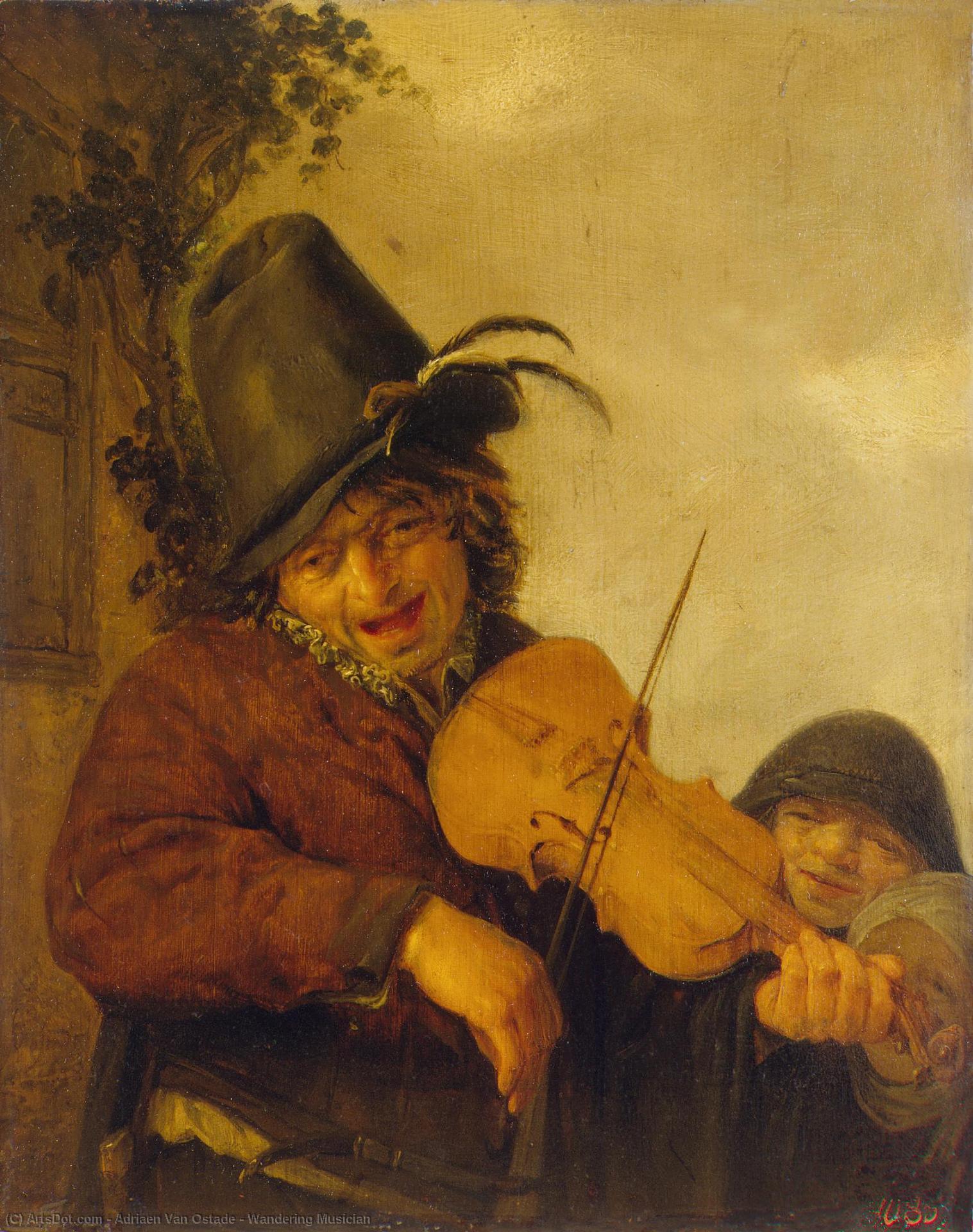
In the quiet, evocative depths of Adriaen van Ostade’s 1648 masterpiece, Wandering Musician, we are invited to step into a moment of pure, unadulterated joy captured from the Dutch Golden Age. This exquisite oil on panel painting serves as more than just a depiction of musicians; it is a window into the soul of 17th-century communal life. The scene unfolds with an intimate warmth, presenting two men lost in the rhythmic harmony of their instruments—one cradling a violin, the other a cello. As they perform, a subtle smile graces the violinist's face, suggesting that the music being played is not merely a performance, but a shared language of companionship and respite from the rigors of daily toil.
The composition is masterfully balanced, set against the weathered textures of an old building that evokes the solemnity of a village church. This architectural backdrop provides a grounded, historical weight to the fleeting melody of the musicians. In the periphery, the presence of distant figures adds layers of narrative depth, hinting at a larger, bustling world that continues its orbit around this central pocket of harmony. The sky above, filled with soft, drifting clouds, lends an atmospheric lightness to the piece, preventing the earthy tones of the foreground from feeling heavy and instead imbuing the entire scene with a sense of movement and breath.
Mastery of Light and Dutch Realism
Adriaen van Ostade was a virtuoso of the genre painting tradition, and in Wandering Musician, his technical prowess is on full display. Moving away from the broader, more energetic brushwork of his early mentor Frans Hals, Van Ostade developed a refined technique characterized by meticulous detail and a sophisticated command of chiaroscuro. The way light dances across the wood of the cello and catches the subtle folds of the musicians' clothing demonstrates a profound understanding of texture and luminosity. His use of a warm, earthy palette—rich in ochres, deep browns, and soft ambers—creates an inviting glow that draws the viewer into the very heart of the tavern or village square.
For the discerning collector or interior designer, this painting offers a profound emotional resonance. It is a work that celebrates the beauty found in the mundane, elevating the lives of common people to the status of high art. The delicate interplay of light and shadow does not merely illuminate the subjects; it creates a psychological space where one can almost hear the resonant vibration of the strings. Incorporating a high-quality reproduction of this work into a curated space brings with it an air of historical elegance and a sense of tranquil storytelling, making it an ideal centerpiece for those seeking to infuse their surroundings with the timeless charm of the Baroque era.