A Vision of Divine Suffering
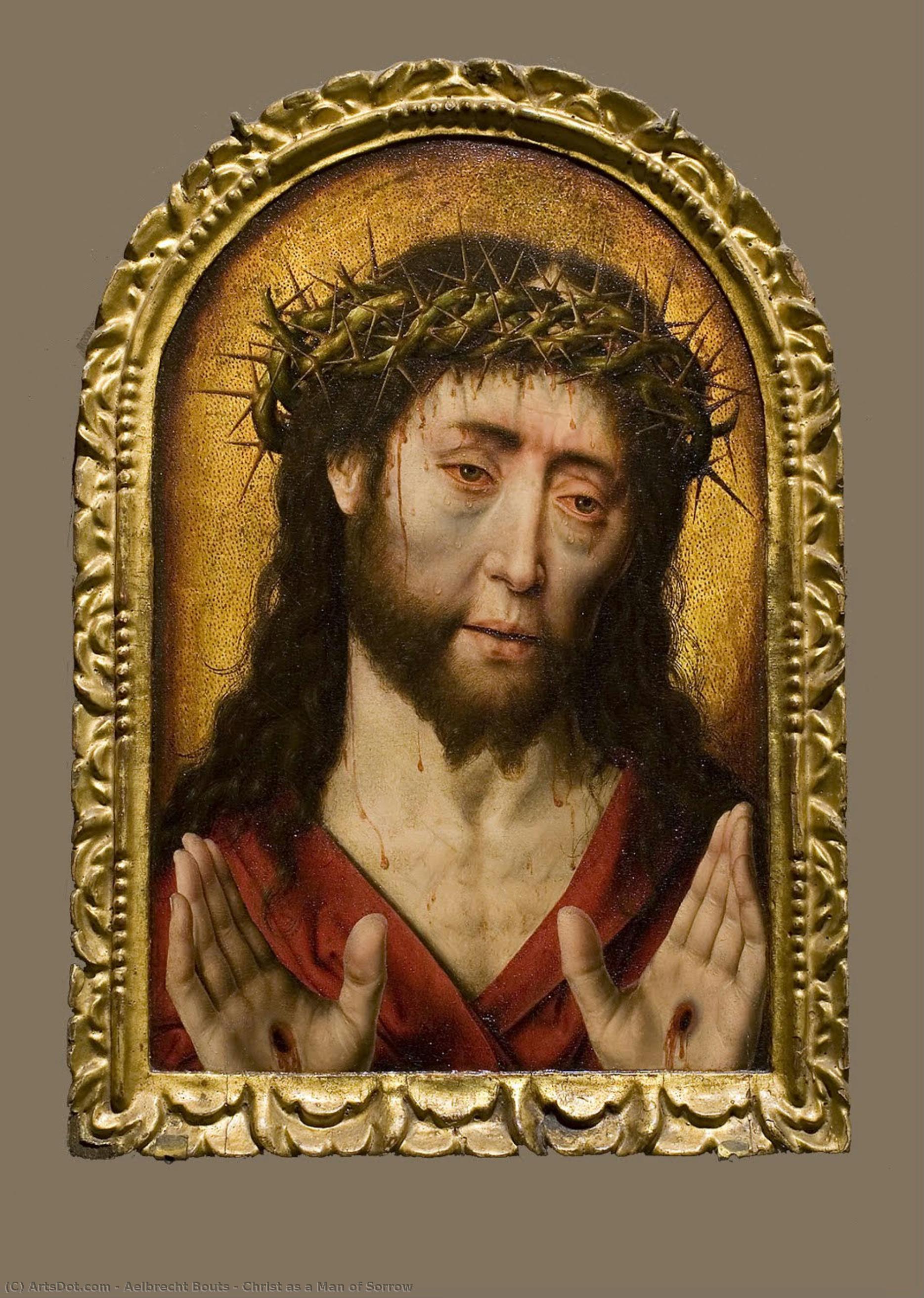
In the quiet intimacy of late fifteenth-century Flemish devotion, few images command the soul quite like Aelbrecht Bouts’ Christ as a Man of Sorrow. This profound close-up serves as more than just a portrait; it is a window into a moment of cosmic tragedy and spiritual transcendence. Originally conceived as part of a modest two-part altarpiece—paired with the sorrowing Mother of Christ, the Mater Dolorosa—this work was designed for the private chambers of the faithful. It invites the viewer into a deeply personal dialogue with the divine, focusing intently on the raw, human vulnerability of Jesus during his Passion. Through Bouts’ masterful hand, the historical reality of the crucifixion is elevated into an eternal, iconographic presence that continues to resonate with collectors and art enthusiasts today.
The composition is a masterclass in emotional restraint and symbolic depth. Bouts utilizes a striking gold ground, an abstract and luminous backdrop that strips away the distractions of time and geography. This gilded surface does not merely serve as a decorative element; it transforms the figure of Christ into a holy icon, lifting him out of the earthly realm and into a celestial space. Yet, even within this golden abstraction, the physical reality of suffering is inescapable. The artist meticulously depicts the crown of thorns pressing into the brow and the visible wounds upon his hands, ensuring that the viewer cannot look away from the cost of sacrifice. A particularly haunting detail is the presence of hundreds of tiny, blood-red dots scattered across the golden surface, an evocative technique that echoes the weeping wounds of Christ and creates a rhythmic, almost visceral connection between the figure and his environment.
The Mastery of Early Netherlandish Detail
Technically, the work exemplifies the pinnacle of the Early Netherlandish tradition. Aelbrecht Bouts, born into a prestigious lineage of painters in Leuven, inherited a profound sensitivity to detail that allowed him to manipulate light and texture with unparalleled precision. In this piece, his ability to render the subtle sheen of skin, the dampness of tears, and the sharp edges of the thorns creates a tactile experience for the observer. The interplay between the smooth, luminous flesh and the textured, patterned gold ground demonstrates a sophisticated command of contrast, making the subject appear to emerge from the very light itself.
For the discerning interior designer or art collector, a high-quality reproduction of this masterpiece offers an unparalleled opportunity to introduce a sense of historical gravity and contemplative peace into a space. Whether placed in a quiet study, a library, or as a focal point in a gallery-style living room, the painting’s rich palette of gold, crimson, and earthy tones provides a sophisticated anchor for classical or contemporary decor. It is an artwork that does not merely decorate a wall; it commands the atmosphere, inviting a moment of stillness and profound reflection in an increasingly hurried world.