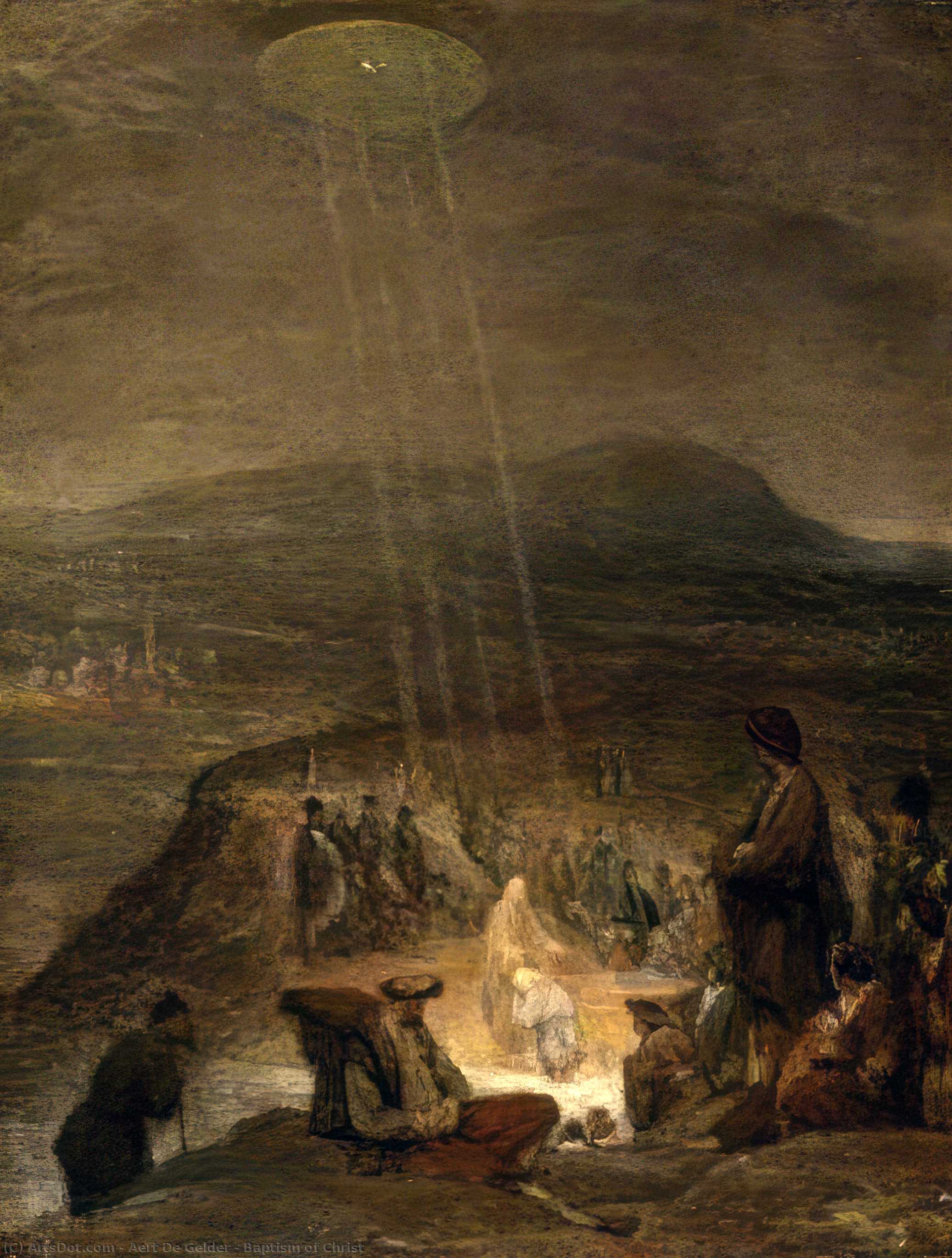
Experience Baroque drama with Aert De Gelder's 1710 Baptism of Christ, masterfully capturing Rembrandt-esque chiaroscuro and spiritual depth; bring this timeless piece home.
Discover Aert de Gelder’s masterful Rembrandt-inspired paintings! Explore his dramatic biblical scenes & portraits from the Dutch Golden Age. #art #Rembrandt #DutchArt
Discover art & history at the Fitzwilliam Museum, Cambridge! Explore world-class collections from ancient Egypt to modern masterpieces – free admission awaits!
A Moment Frozen in Time: Exploring Aert De Gelder’s Baptism of Christ
The painting “Baptism of Christ” by Aert De Gelder, completed around 1710, stands as a testament to the enduring power of Baroque art and its ability to convey profound spiritual emotion. Currently residing within The Fitzwilliam Museum in Cambridge, United Kingdom—a treasure trove for connoisseurs of European artistic heritage—this canvas offers more than just visual beauty; it invites contemplation on faith, humility, and divine grace. Measuring 48 x 37 cm, the artwork exemplifies De Gelder’s masterful assimilation of Rembrandt's late style, a stylistic lineage that prioritized dramatic lighting and psychological depth.
The Narrative Landscape of Faith
At its core, “Baptism of Christ” recounts a pivotal biblical episode—the baptism of Jesus by John the Baptist in the Jordan River—a scene meticulously rendered with painstaking detail. The composition centers around Jesus and John, portrayed as figures bathed in an ethereal glow emanating from a single source of light – a technique characteristic of Rembrandt’s oeuvre and skillfully adopted by De Gelder. Surrounding them are several attendants, including Mary Magdalene and Nicodemus, their expressions conveying reverence and astonishment at the sacred event unfolding before their eyes. The artist's deliberate positioning of these figures creates a dynamic tableau that captures not merely what transpired but also the palpable atmosphere of spiritual awakening.
Technical Brilliance: Rembrandt’s Legacy Embodied
De Gelder’s artistic prowess is evident in his masterful manipulation of chiaroscuro—the dramatic interplay between light and shadow—a technique perfected by Rembrandt himself. The artist employs subtle gradations of tonal value to sculpt the forms of the figures, emphasizing musculature and conveying a sense of realism that transcends mere representation. Furthermore, De Gelder’s meticulous brushwork contributes to the painting's textural richness, capturing the folds of robes and the contours of faces with remarkable precision. The muted palette—dominated by earthy hues—enhances the solemn mood of the scene and underscores its spiritual significance.
Symbolism Woven into Every Stroke
Beyond its technical achievements, “Baptism of Christ” is laden with symbolic meaning. The Jordan River represents purification and rebirth, mirroring Jesus’s baptism as a prelude to his ministry and ascension. The light emanating from the heavens symbolizes divine grace and illuminates the sacred narrative. The inclusion of angels—often depicted in Rembrandt's paintings—underscores the holiness of the occasion and reinforces the belief in God’s intervention in human affairs. Each element within the composition contributes to a larger tapestry of theological contemplation, inviting viewers to ponder themes of redemption and spiritual transformation.
A Reflection of Cambridge’s Artistic Soul
The Fitzwilliam Museum's acquisition of “Baptism of Christ” speaks volumes about its enduring appeal and its place within the broader canon of Baroque art. Founded in 1816 by Richard FitzWilliam, the museum has cultivated a distinguished collection spanning centuries of artistic innovation—a testament to Cambridge’s commitment to preserving cultural heritage. Viewing De Gelder's masterpiece alongside other celebrated artworks offers an unparalleled opportunity to immerse oneself in the aesthetic sensibilities of the Enlightenment era and to appreciate the profound impact that art can have on our understanding of faith and human experience.