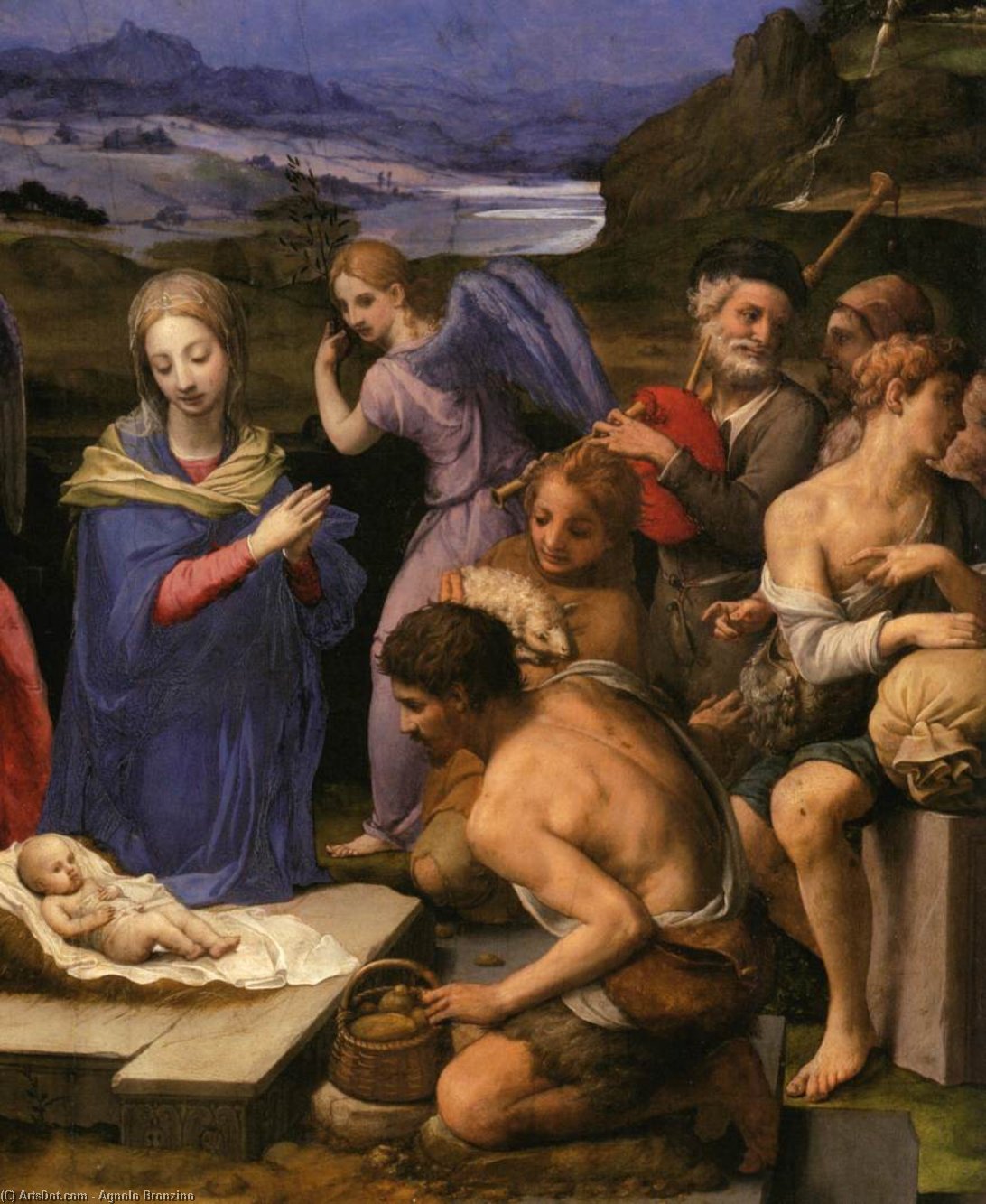
Agnolo Bronzino’s Reverent Portrait of Faith: Exploring ‘Adoration of the Shepherds’
Agnolo di Cosimo, universally known as Bronzino, stands as a singular figure within the illustrious tapestry of Renaissance Florence. Born into humble beginnings—his father a butcher—his artistic destiny defied convention, propelling him to become one of the era's most celebrated portraitists and cementing his legacy as a pivotal voice in Mannerism. Early influences from Raffaellino del Garbo instilled foundational stylistic principles, yet it was under Jacopo da Pontormo’s guidance that Bronzino truly honed his distinctive vision—a deliberate departure from his teacher’s expressive fervor, prioritizing cool composure and meticulous detail.
This profound contemplation of divine grace, ‘Adoration of the Shepherds,’ exemplifies Bronzino's mastery. Executed circa 1539-1540, it transcends mere representation; instead, it embodies a carefully constructed dialogue between observation and emotion. The painting depicts a serene tableau centered around a baby Jesus nestled within a manger—a scene deeply rooted in Christian iconography—surrounded by figures of reverence and devotion.
Composition and Technique: A Study in Controlled Elegance
- Bronzino’s technique is characterized by its remarkable smoothness and precision. He employed oil paint on poplar wood, utilizing a glazing method that achieved unparalleled tonal subtlety—a hallmark of Mannerist aesthetics. Layers upon layers of translucent pigment created an illusionistic depth, capturing the textures of drapery and flesh with astonishing accuracy.
- The composition is deliberately balanced, reflecting the Renaissance preoccupation with harmonious proportions. Bronzino skillfully arranges the figures to guide the viewer’s gaze towards the central Madonna and Child, emphasizing their sanctity.
Symbolism: Echoes of Biblical Narrative
Beyond its technical brilliance lies a rich tapestry of symbolic meaning. The angels flanking the manger represent divine guardianship and proclaim the incarnation of Christ—a cornerstone of Christian belief. The cup positioned at the bottom center symbolizes offering and generosity, reflecting the spirit of humility and piety inherent in the scene.
Historical Context: Renaissance Spirituality Under Pressure
'Adoration of the Shepherds' emerged during a period marked by significant religious upheaval—the Protestant Reformation was reshaping Europe’s spiritual landscape. Bronzino’s artwork reflects this tension, portraying an idealized vision of faith and piety amidst uncertainty. It speaks to the enduring human desire for solace and beauty in times of crisis.
Emotional Impact: A Moment of Transcendental Calm
The painting's subdued palette—dominated by muted golds, browns, and creams—contributes to its atmosphere of contemplative serenity. Bronzino’s masterful rendering captures not just the physical likenesses of his subjects but also their inner states—a palpable sense of reverence and devotion that resonates across centuries.
This exquisite depiction serves as a testament to Bronzino's artistic genius, securing his place among the titans of Mannerist art. Its enduring appeal lies in its ability to evoke profound emotion while upholding the highest standards of aesthetic refinement—a timeless masterpiece for connoisseurs and admirers alike.