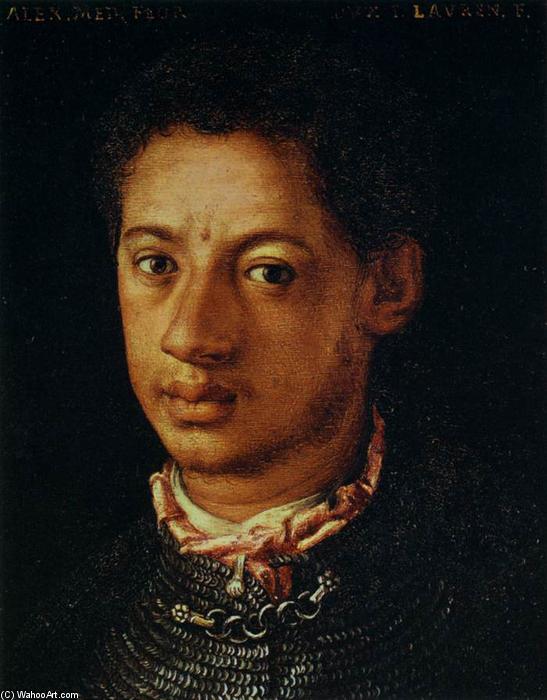
A Portrait of Power: Agnolo Bronzino’s Stoic Alessandro
Agnolo Bronzino’s “Alessandro de’ Medici” stands as a testament to the meticulous artistry and restrained elegance characteristic of Mannerism, a stylistic movement that dominated Florentine art in the mid-16th century. Executed around 1555, this portrait captures Alessandro I de' Medici—the first Duke of Florence—with an arresting stillness that belies the turbulent political landscape of his reign.
- Subject Matter: The painting depicts Alessandro in a formal pose, seated against a dark background. His gaze is direct and unwavering, conveying a sense of solemn authority and intellectual contemplation.
- Style & Technique: Bronzino’s signature style—characterized by polished surfaces, subtle modeling, and an almost sculptural quality—is evident throughout the composition. The artist employed oil paint on panel, utilizing meticulous layering to achieve remarkable tonal gradations and a velvety texture that enhances the portrait's dramatic impact.
- Historical Context: Alessandro’s ascension to the ducal throne followed a complex succession crisis fueled by papal ambition and dynastic disputes. Bronzino’s depiction reflects the prevailing artistic conventions of the time, prioritizing idealized representation over emotional expression—a hallmark of Mannerist aesthetics.
Symbolism: The Chain of Responsibility
Beyond its formal beauty lies a profound symbolic significance. The chain draped around Alessandro's neck serves as a potent emblem of his role as ruler, representing the burdens and responsibilities inherent in leadership. It underscores the seriousness of his position and subtly hints at the pressures faced by those who govern.
Furthermore, Bronzino’s masterful use of chiaroscuro—the dramatic interplay between light and shadow—amplifies this symbolic message. The dark background emphasizes Alessandro's figure, drawing attention to his face and gaze while creating a sense of depth and psychological complexity.
A Window into Renaissance Florence
"Alessandro de’ Medici" offers invaluable insight into the artistic sensibilities of Renaissance Florence during its twilight years. Bronzino’s work exemplifies the Mannerist preoccupation with intellectual contemplation and idealized beauty—a reaction against the exuberant dynamism of earlier High Renaissance styles. It speaks to a desire for clarity, precision, and psychological nuance, reflecting the anxieties and aspirations of an era grappling with political instability.
This portrait remains a captivating study in visual artistry and symbolic representation, inviting viewers to contemplate not only Alessandro’s physical appearance but also the weighty implications of his role as Duke—a figure forever enshrined in Bronzino's enduring legacy.