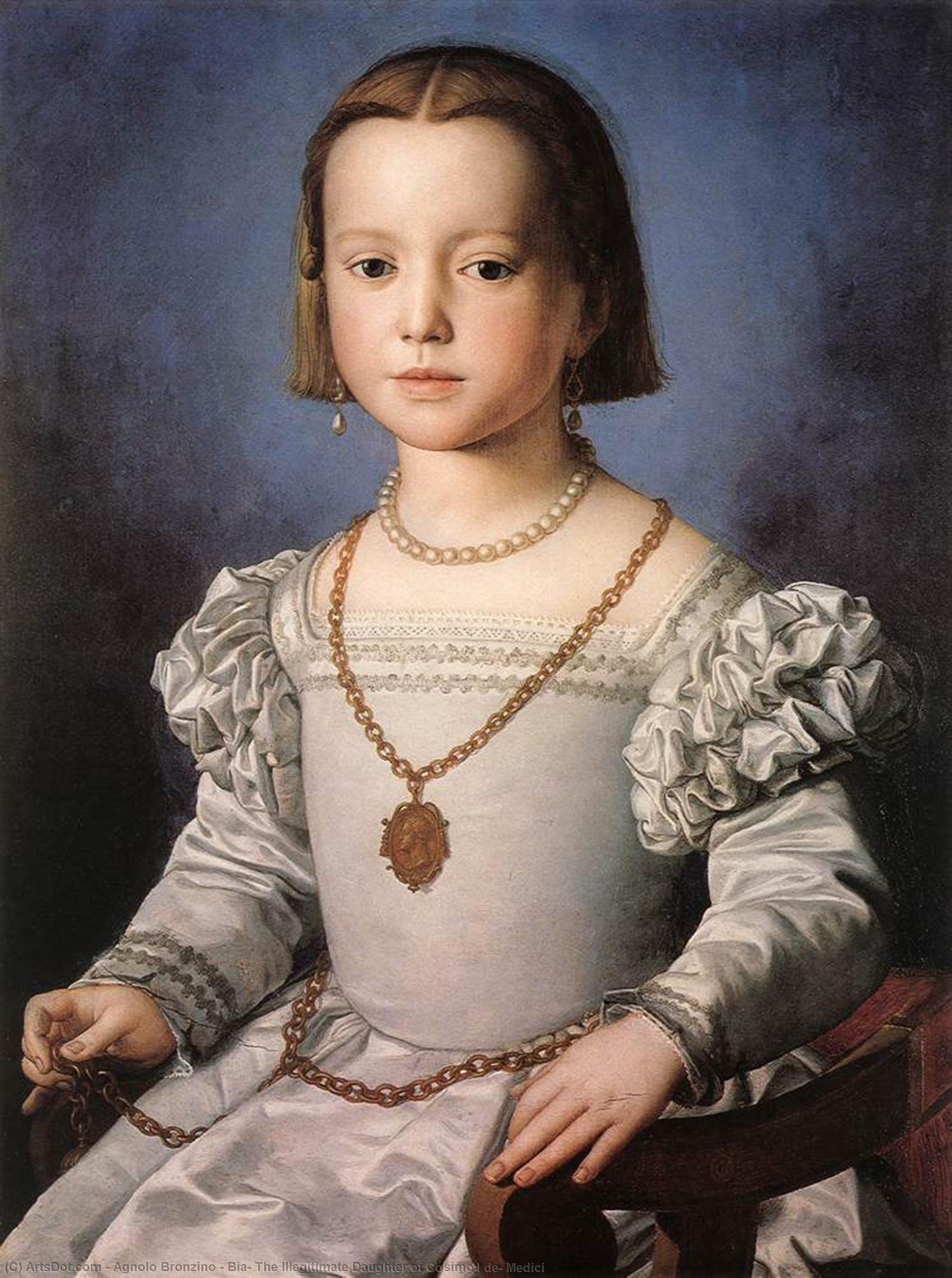
A Portrait of Quiet Dignity: Bia, The Illegitimate Daughter of Cosimo I de' Medici
Agnolo Bronzino’s *Portrait of Bia,* painted in 1542, stands as a testament to the Mannerist preoccupation with idealized beauty and psychological subtlety—a stylistic hallmark of Florence under Cosimo I’s reign. More than just a depiction of youthful flesh, this artwork embodies the complex political maneuvering inherent within the Medici court, reflecting the anxieties surrounding succession and dynastic legitimacy. The painting captures Bia, Cosimo's daughter born before his marriage to Eleonora di Toledo, in an exquisitely rendered pose that speaks volumes about Renaissance ideals of femininity and aristocratic refinement.
- Subject Matter: The portrait focuses on a young girl—Bia—seated gracefully upon a chair, her gaze directed outwards with serene composure. This deliberate positioning underscores the importance of outward appearance and social grace within Florentine society during this period.
- Style & Technique: Bronzino’s masterful use of tempera paint on wood exemplifies the Mannerist style's commitment to meticulous detail and illusionistic realism—a departure from the more expressive styles championed by Raphael and Michelangelo. The artist achieves a remarkable level of polish, creating surfaces that shimmer with subtle luminosity.
- Composition & Color Palette: The background is dominated by a tranquil azure sky, providing a harmonious counterpoint to the pale hues of Bia’s dress and jewelry. Bronzino skillfully employs chiaroscuro—the dramatic interplay of light and shadow—to sculpt Bia's form and imbue the portrait with an aura of dignified stillness.
The painting’s symbolism extends beyond mere representation; it operates on a deeper level to convey ideas about virtue, purity, and lineage. Bia’s attire—a white gown adorned with pearls—represents innocence and nobility—attributes highly valued by the Medici family as they sought to secure their position through strategic alliances and carefully cultivated reputations. The necklace and earrings further emphasize her status as a princess destined for marriage and motherhood, reinforcing the importance of upholding familial honor.
Historical Context: Cosimo I’s reign was marked by astute political acumen and an unwavering determination to consolidate Medici power. Bia’s portrait served not only as a visual celebration of youthful beauty but also as a calculated gesture aimed at legitimizing Cosimo's lineage—a crucial consideration in securing the succession of his heir. Bronzino skillfully navigated these complexities, crafting an image that simultaneously upheld Renaissance artistic conventions and communicated political messaging.
Emotional Impact: Despite its formal restraint, *Portrait of Bia* possesses a palpable emotional resonance. The girl’s gaze—direct yet distant—suggests introspection and conveys a sense of quiet dignity—qualities admired throughout the Renaissance. Bronzino's ability to capture this elusive psychological state elevates the portrait beyond mere likeness, transforming it into an enduring symbol of Florentine aristocratic culture and artistic excellence.