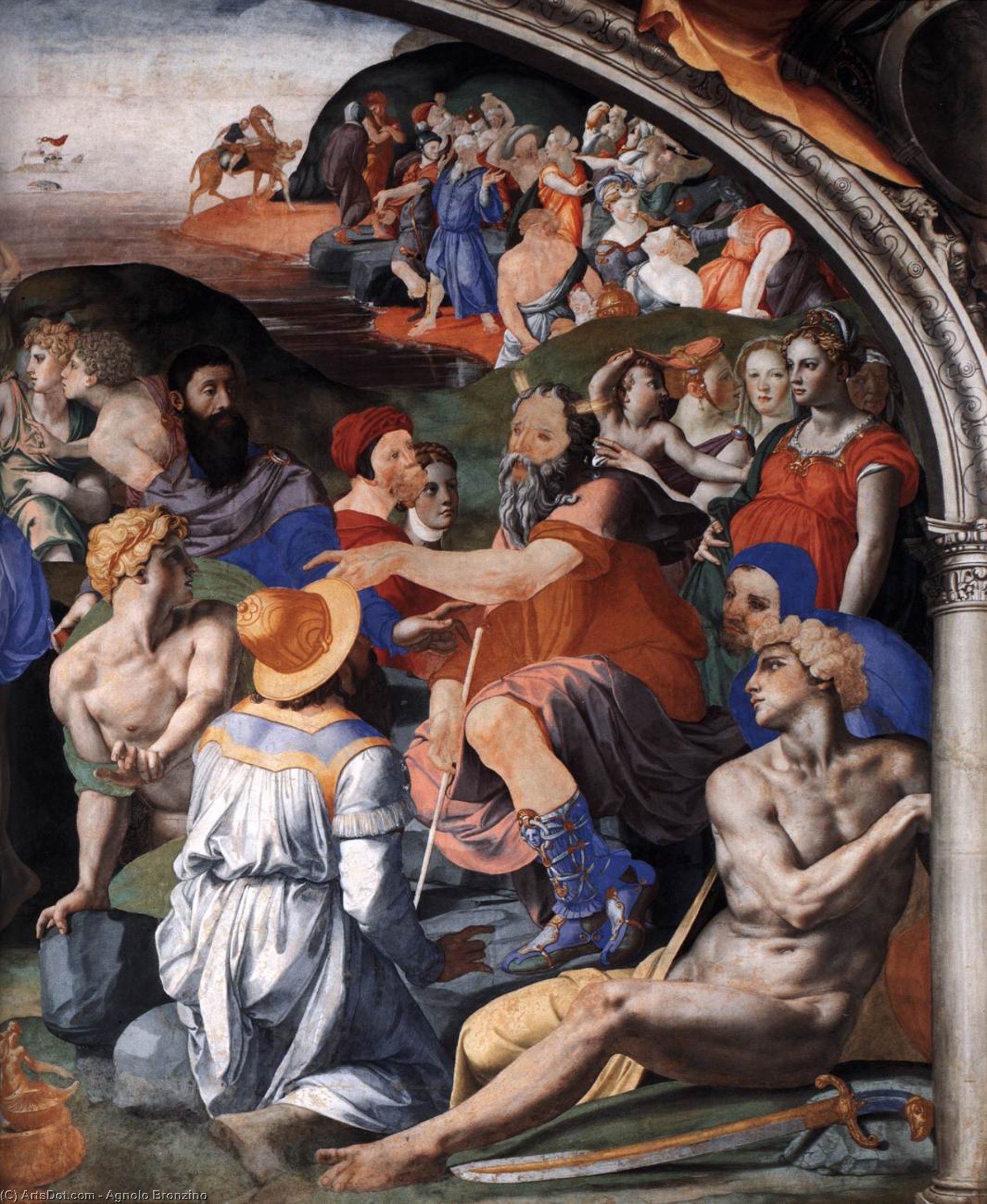
Agnolo Bronzino's monumental fresco portrays Moses leading the Israelites across the Red Sea, symbolizing faith and divine deliverance. Located in Palazzo Vecchio, Florence, this Mannerist masterpiece exemplifies refined elegance and meticulous artistry.
A Glimpse into Faith: Bronzino's "Crossing of the Red Sea"
Agnolo Bronzino’s “Crossing of the Red Sea,” painted in 1540, offers a compelling and enigmatic meditation on faith, obedience, and the dramatic power of biblical narrative. Executed as a fresco, this detailed depiction immediately draws the viewer into a scene brimming with human figures gathered around a substantial body of water – a visual representation of the pivotal moment recounted in Exodus. The sheer scale of the composition, combined with Bronzino’s signature meticulous attention to detail, creates an immersive experience, inviting contemplation on the courage and divine intervention that defined this foundational story for generations.
- Subject Matter: The artwork unequivocally portrays a key event from the Old Testament – the miraculous parting of the Red Sea as described in the Book of Exodus.
- Composition: Bronzino masterfully organizes the figures, placing them strategically to emphasize the scale and drama of the event. The juxtaposition of those standing on the shore with those navigating the boats creates a dynamic tension, reflecting the precariousness of their journey.
Mannerist Precision and Reserved Elegance
Bronzino’s style is quintessential Mannerism, a movement that flourished in Florence during the late 16th century. Unlike the High Renaissance emphasis on idealized beauty and harmonious proportions, Mannerism prioritized elegance, sophistication, and often, an unsettling sense of artificiality. In “Crossing of the Red Sea,” this manifests as elongated figures, subtly distorted perspectives, and a deliberate avoidance of naturalistic representation. The cool color palette – dominated by blues, grays, and ochres – further contributes to the painting’s refined and somewhat detached aesthetic. Bronzino's technique is characterized by smooth, polished surfaces achieved through meticulous layering of translucent glazes, a hallmark of his approach that lends the figures an almost porcelain-like quality.
- Technique: The fresco technique employed by Bronzino involved applying pigments to wet plaster, creating a durable and vibrant image. His masterful use of glazing created depth and luminosity within the composition.
- Formal Qualities: Noticeable are the subtly distorted poses and expressions, typical of Mannerist style, adding an element of psychological complexity to the scene.
Symbolism and Interpretation
Beyond its literal depiction of a biblical event, “Crossing of the Red Sea” is rich in symbolic potential. The multitude of figures suggests the collective faith and obedience of the Israelites. The boats themselves represent vulnerability and reliance on divine protection. The varying attire – from formal robes to more casual garments – could be interpreted as representing different levels of devotion or social standing within the community. The inclusion of details like ties adds a layer of contemporary observation, subtly grounding the biblical narrative in the realities of 16th-century Florentine society. Bronzino’s reserved elegance invites viewers to contemplate not just the event itself, but also the human condition – our capacity for both faith and doubt.
A Legacy of Artistic Mastery
Completed in 1540, “Crossing of the Red Sea” stands as a testament to Agnolo Bronzino’s exceptional skill and artistic vision. His reputation as a Florentine Master of Reserved Elegance was well-earned, and this painting exemplifies his ability to combine technical virtuosity with profound symbolic depth. A hand-painted reproduction offers an unparalleled opportunity to experience the beauty and intellectual richness of this remarkable artwork, bringing its timeless narrative into your home or studio.