The Cool Composure of Youthful Nobility
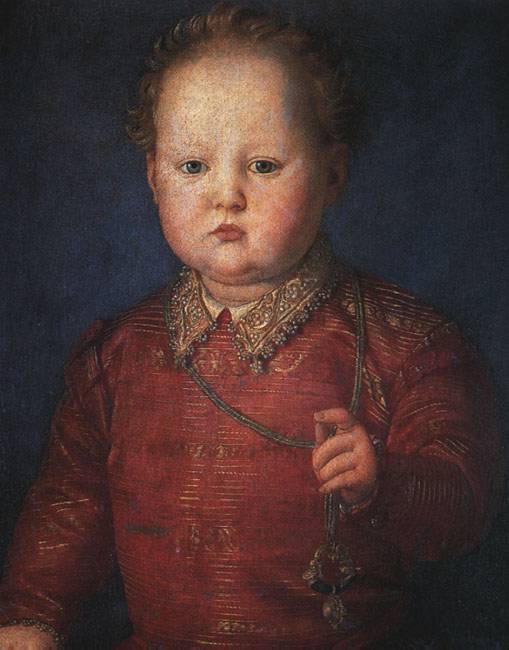
To gaze upon Agnolo Bronzino’s portrait, Don Garcia de' Medici, is to encounter an exquisite moment suspended in the amber glow of the Italian Renaissance. This depiction of a young boy transcends a mere likeness; it is a carefully constructed meditation on status, expectation, and the delicate passage of time. The subject, richly adorned in garments that speak volumes of his family’s elevated standing, possesses an almost porcelain quality to his skin, contrasting sharply with the deep, velvety expanse of the background—a dramatic blue void that serves only to elevate the figure before us. Bronzino masterfully captures a seriousness in the child's gaze, a contemplative depth that belies his years, inviting the viewer into a silent dialogue across the centuries.
Mannerist Grace and Technical Brilliance
The painting is a quintessential example of Mannerism, an art style characterized by its sophisticated elegance and emotional restraint. While the High Renaissance celebrated robust naturalism, Bronzino favored a more intellectualized beauty—a refined coolness that permeates every fold of fabric and curve of the neck. Observe the meticulous detail in the lace collar and the intricate patterning of the red garment; these elements are not simply decorative but serve as technical showcases for the artist’s unparalleled skill. The handling of light, or chiaroscuro, is subtle yet dramatic, sculpting the boy's features with an almost sculptural precision. It is this combination of idealized form and breathtaking technical execution that makes the work so enduringly captivating.
A Reflection of Florentine Court Life
Created around 1550, this portrait situates itself within a period when aristocratic identity was paramount. Bronzino, himself a court painter whose career flourished under powerful patrons, specialized in capturing the essence of nobility with an air of reserved grandeur. The subject’s attire and bearing suggest the rigid codes of conduct expected of the Medici circle—a life lived under the watchful eye of tradition and immense wealth. Owning a reproduction of this piece is not merely decorating a wall; it is curating a piece of history, bringing the rarefied atmosphere of 16th-century Florentine high society into your modern dwelling.
Symbolism in Silk and Shadow
Every element within the composition seems imbued with symbolic weight. The vibrant red clothing often symbolizes vitality and power, while the dark blue background can evoke depth, mystery, or even the infinite expanse of lineage. The pendant at his neck acts as a focal point, perhaps representing an heirloom or a familial promise. Bronzino does not paint emotion in outburst; rather, he paints it through suggestion—the slight tilt of the head, the steady directness of the eyes. This quiet power is what resonates so deeply with contemporary collectors and designers alike, offering a sophisticated anchor to any interior space.