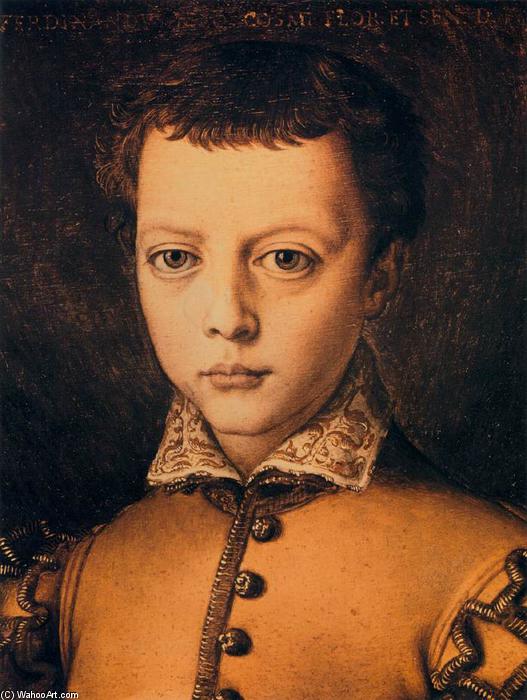
A Portrait of Regal Dignity: Agnolo Bronzino’s Ferdinando de' Medici
The painting “Ferdinando de’ Medici” by Agnolo Bronzino, completed in 1555, transcends mere representation; it embodies the very essence of Florentine Mannerism—a style characterized by meticulous detail, stylized poses, and an unsettling stillness that speaks volumes about its subject and era. This portrait depicts Ferdinando I de' Medici, ruler of Tuscany, a man whose countenance reflects both authority and profound contemplation. Bronzino’s masterful execution captures not just physical likeness but also the psychological complexities inherent in royal governance.
- Subject Matter: The painting focuses squarely on Ferdinando I, showcasing him in a formal attire typical for Renaissance princes – a ruffled collar and a prominent gold chain—symbols of wealth and status within the Medici court.
- Style & Technique: Bronzino’s signature Mannerist style is immediately apparent. He eschews the vibrant colors and expressive gestures favored by earlier artists like Raphael, opting instead for muted tones and subtly sculpted surfaces that create an illusionistic depth rarely achieved in portraiture. The artist employs a technique known as sfumato—a blurring of lines and contours—to soften edges and imbue the figure with an ethereal quality.
- Historical Context: Created during Ferdinando I’s reign, “Ferdinando de' Medici” reflects the anxieties and aspirations of Tuscany under Medicis rule. The portrait speaks to a period marked by political maneuvering, artistic patronage, and a desire for stability amidst turbulent European affairs. Bronzino served as court painter to Ferdinand I, aligning himself with the humanist ideals that underpinned Florentine culture.
Symbolism: Beyond its visual splendor, the portrait is laden with symbolic significance. The gold chain represents Ferdinando’s dominion and prosperity—a tangible manifestation of his power. Similarly, the stiff posture conveys dignity and composure, reflecting the expected behavior of a monarch responsible for safeguarding his realm. Bronzino's deliberate use of these elements underscores the importance of portraying not just appearance but also character and social standing.
Emotional Impact & Artistic Legacy
Bronzino’s “Ferdinando de’ Medici” doesn’t invite immediate emotional engagement; rather, it compels viewers to observe with careful consideration. The gaze of Ferdinando—direct yet distant—suggests a man burdened by responsibility and absorbed in thought. This deliberate restraint is characteristic of Mannerist art's preoccupation with psychological nuance. It invites contemplation on themes of power, duty, and the elusive nature of human experience.
- Bronzino’s influence extended far beyond his own lifetime, shaping the artistic sensibilities of subsequent generations. His meticulous attention to detail and mastery of technique established a benchmark for portraiture that continues to inspire artists today.
- Reproductions of “Ferdinando de' Medici” offer an opportunity to appreciate Bronzino’s genius in a setting accessible to collectors and interior designers alike, allowing them to bring the elegance and intellectual depth of Renaissance Florence into their homes.