A Glimpse into Florentine Mannerism: The Dramatic Depiction of St. Lawrence
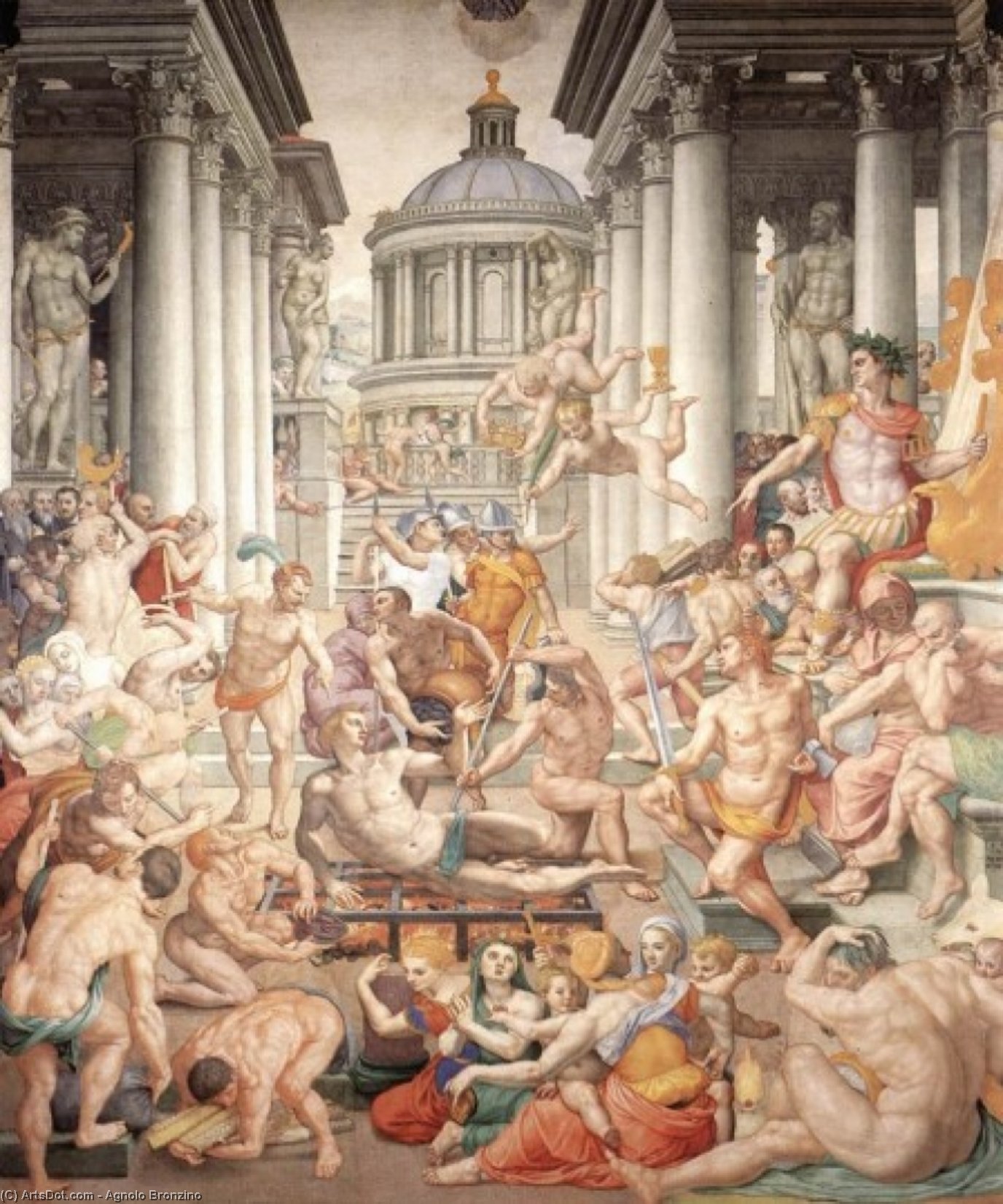
Agnolo Bronzino’s “Martyrdom of St. Lawrence,” painted in 1569, isn't merely a depiction of a historical event; it’s a profound meditation on faith, suffering, and the enduring spirit of martyrdom. Born in Florence during the height of the Renaissance, Bronzino was a master of reserved elegance, a style that prioritized meticulous detail and subtle psychological depth over overt emotionalism – a characteristic powerfully evident in this arresting fresco. The scene unfolds within a carefully constructed architectural setting, reminiscent of a Roman temple or church, lending an air of solemnity and timelessness to the unfolding drama. The composition is remarkably controlled, with a deliberate restraint that draws the viewer’s eye directly to the central figure – St. Lawrence himself – enduring his agonizing fate.
- Subject Matter: The painting portrays the martyrdom of Saint Lawrence, a Roman priest and deacon who was flayed alive in 258 AD for refusing to renounce his Christian faith.
- Historical Context: The late 16th century witnessed a resurgence of interest in early Christian martyrs within Europe, fueled by religious fervor and the Counter-Reformation. Bronzino’s work reflects this trend, offering a dignified and contemplative representation of a pivotal moment in Christian history.
Masterful Technique: The Language of Bronze
Bronzino's technical prowess is immediately apparent. He employs a technique known as *stiacciato*, a subtle relief effect achieved through carefully layered pigments, creating an illusion of depth and volume that adds considerable realism to the figures. The skin tones are rendered with astonishing precision – cool, pale, and almost porcelain-like, reflecting Bronzino’s signature style. Notice how he masterfully captures the texture of the fabric draped over Lawrence's body, conveying both its weight and its vulnerability. The use of light is equally deliberate; it highlights the central figure while casting subtle shadows that accentuate the drama of the scene. The artist’s attention to detail extends to every element – from the folds of the drapery to the expressions on the faces of the onlookers – creating a remarkably cohesive and believable image.
Key Techniques:
- Stiacciato: A subtle relief technique for creating depth.
- Precise rendering of skin tones and fabric textures.
- Controlled use of light and shadow to enhance the drama.
Symbolism and Emotional Resonance
Beyond a simple historical narrative, “Martyrdom of St. Lawrence” is rich in symbolic meaning. The presence of the dog at the base of the grill – a common motif in depictions of martyrdom – traditionally symbolizes loyalty and faithfulness. Lawrence’s serene expression, despite his excruciating ordeal, speaks to an inner strength and acceptance of God's will. He doesn’t scream or writhe in agony; instead, he appears almost detached, suggesting a profound spiritual fortitude. The onlookers, rendered with varying degrees of emotion – some horrified, others contemplative – represent the diverse reactions to witnessing such a brutal act. The overall effect is one of quiet dignity and unwavering faith, offering a powerful meditation on sacrifice and devotion.
A Legacy of Elegance: Bronzino’s Enduring Influence
Agnolo Bronzino's “Martyrdom of St. Lawrence” stands as a testament to his exceptional skill and artistic vision. His work exemplifies the refined elegance of Florentine Mannerism, characterized by its meticulous detail, subtle psychological depth, and controlled composition. The painting’s enduring appeal lies not only in its technical mastery but also in its profound exploration of human emotion and spiritual themes. Reproductions capture a fraction of the original's impact, offering a beautiful reminder of a master artist's ability to transform historical events into timeless works of art. It remains a compelling example of how art can simultaneously depict suffering and celebrate faith.