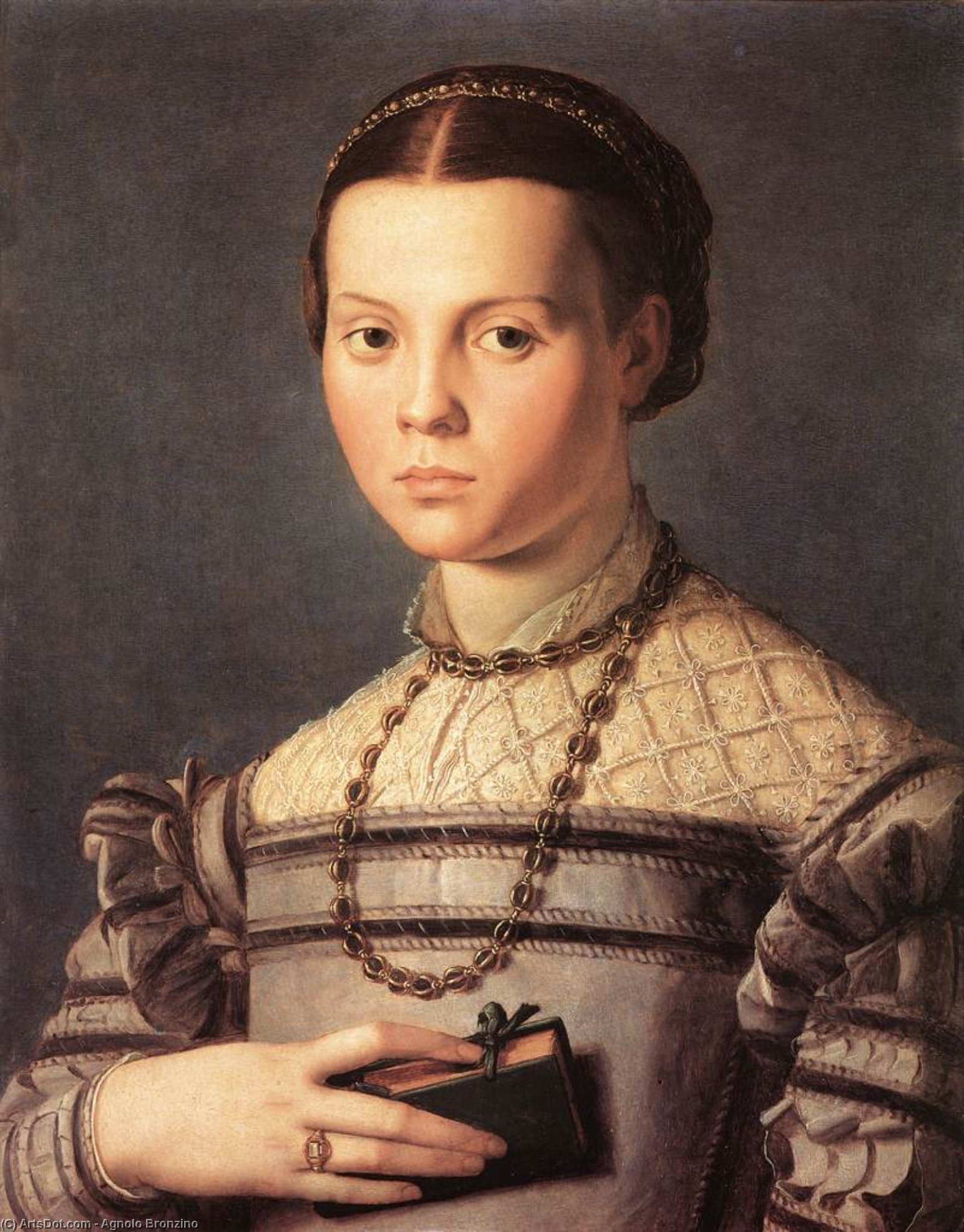
Bronzino served as official painter to the Medici Court, producing numerous portraits that solidified his reputation as one of Florence's foremost artists.
Explore the refined elegance of Agnolo Bronzino, Florentine Mannerist master & court painter to the Medici. Discover his iconic portraits and allegorical works.
Step into the Renaissance heart of Florence at the Uffizi Gallery! Explore masterpieces by Botticelli, Leonardo da Vinci & Michelangelo – an unforgettable art experience.
Portrait of a Young Girl – A Study in Reserved Elegance
Agnolo Bronzino’s “Portrait of a Young Girl,” painted in 1541, stands as an emblem of Florentine Mannerism—a stylistic movement that prioritized intellectual contemplation and stylized beauty over the exuberant expressiveness championed by its predecessors like Raphael and Michelangelo. Executed on canvas measuring 58 x 46 cm, this masterpiece resides within the hallowed halls of the Galleria degli Uffizi in Florence, Italy, offering visitors a rare glimpse into the artistic sensibilities of Renaissance Italy’s twilight years. The painting depicts a young woman—likely Isabella Gonzaga, daughter of Federico I—seated with poise and serenity, her gaze directed squarely at the viewer. This deliberate stillness is characteristic of Mannerist portraiture, rejecting the dynamic poses favored by earlier artists in favor of an idealized depiction of composure and dignity.
Style and Technique: The Language of Refinement
Bronzino’s technique exemplifies the meticulous precision demanded by Mannerism. He employed oil paint on canvas with painstaking detail, utilizing glazing techniques—thin layers of translucent pigment applied over subsequent coats—to achieve a luminous surface and subtle tonal variations. This masterful manipulation of light contributes significantly to the painting's ethereal quality, creating an illusionistic depth that transcends mere representation. Unlike the vibrant colors often found in High Renaissance art, Bronzino favored muted hues—primarily creams, browns, and pale blues—reflecting the influence of Venetian painters who had begun to explore atmospheric perspective. The artist’s attention to anatomical accuracy is notable; however, he deliberately flattened forms and simplified drapery, prioritizing elegance over naturalism. This stylistic choice underscores Bronzino's commitment to conveying an intellectual ideal rather than a literal portrayal of reality.
Historical Context: Florence Under Medici Patronage
The painting emerged during the reign of Federico I de’ Medici—Florence’s astute ruler—who fostered a flourishing artistic environment fueled by royal patronage. The Medicis recognized the importance of art in projecting prestige and consolidating power, commissioning works that celebrated their lineage and affirmed their cultural leadership. Bronzino served as Federico I's official painter for many years, producing portraits of prominent figures within the Medici court and contributing to monumental decorative schemes—a testament to his artistic reputation and influential position. This commission reflects the broader trend toward aristocratic portraiture during the period, where artists catered to the tastes of wealthy patrons who sought images that conveyed status and sophistication.
Symbolism: Beyond Appearance – An Expression of Virtue
Beyond its visual beauty lies a rich tapestry of symbolic meaning. The young girl’s book symbolizes knowledge and virtue—qualities highly valued in Renaissance humanist thought. Her serene gaze conveys an inner stillness, reflecting the ideal of contemplative piety that permeated Florentine society at the time. Furthermore, Bronzino's deliberate use of drapery—particularly the pale blue gown—references biblical imagery associated with purity and innocence. These subtle symbolic gestures elevate the portrait beyond a mere likeness, transforming it into a meditation on moral character and spiritual aspiration.
Emotional Impact: Capturing Inner Grace
“Portrait of a Young Girl” transcends its formal conventions to evoke a profound sense of tranquility and grace. Bronzino’s masterful rendering captures not just physical appearance but also an intangible quality—the inner serenity of youth—that speaks to the viewer on a psychological level. The painting's understated elegance invites contemplation, prompting us to consider themes of beauty, virtue, and intellectual refinement. It remains a compelling example of Mannerist art’s ability to convey complex ideas through deceptively simple forms, cementing Bronzino’s legacy as one of Florence’s most enduring artistic voices.