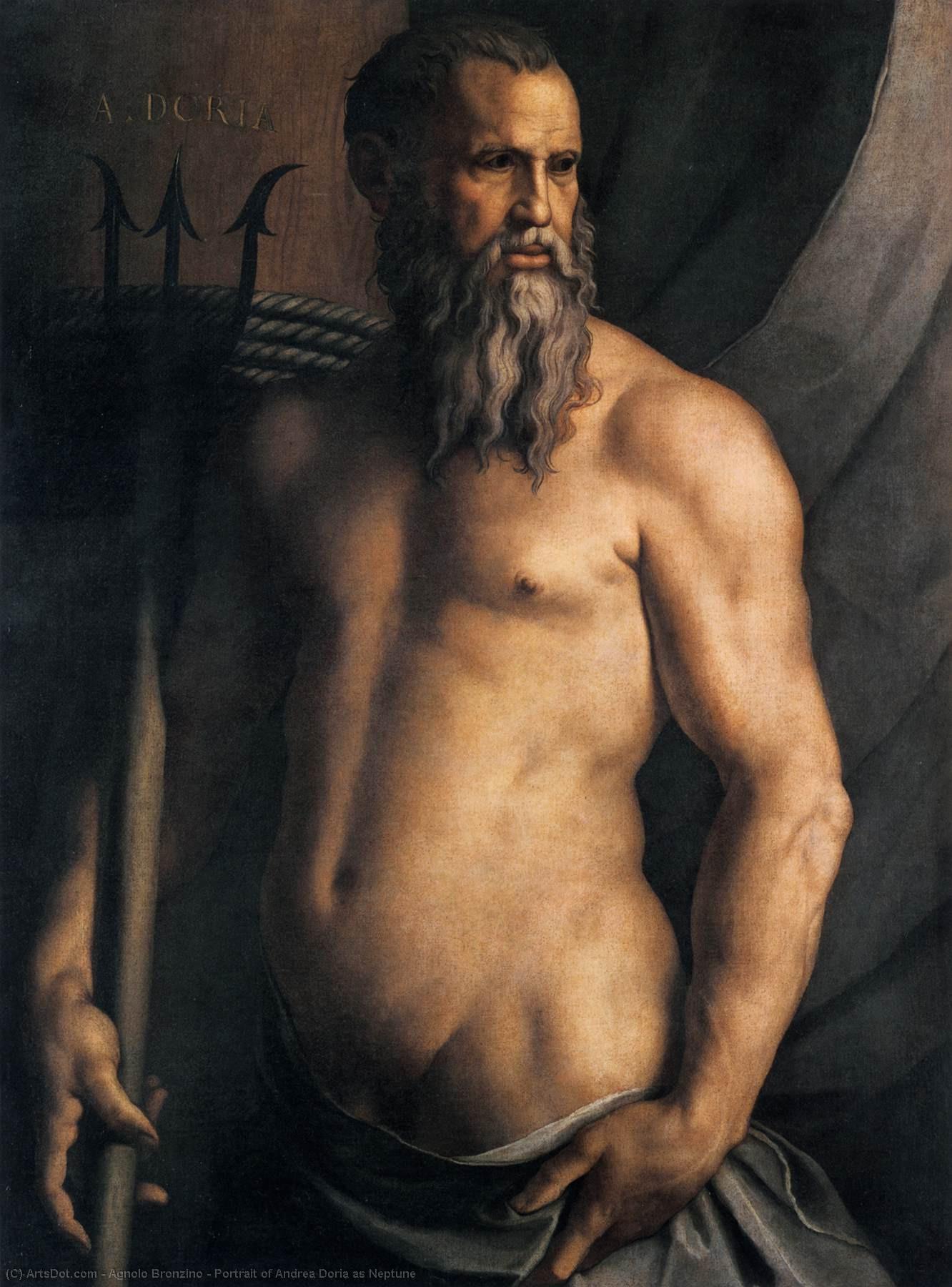
Portrait of Andrea Doria as Neptune
The Portrait of Andrea Doria as Neptune stands as a testament to Agnolo Bronzino’s mastery of Mannerist portraiture and his profound understanding of classical allegory—a captivating artwork that transcends mere representation, delving into the complexities of power, ambition, and divine symbolism. Completed circa 1545-6 for a private commission in Borgovico near Como, this monumental canvas embodies the spirit of its era while cementing Bronzino’s reputation as one of Florence's foremost artists.
- Subject Matter: The painting depicts Andrea Doria, a Genoese admiral and statesman who commanded respect throughout Europe during his lifetime. Rather than presenting him in conventional attire—a common practice for aristocratic portraits—Bronzino opted for an audacious conceit: portraying Doria as Neptune, the Roman god of the sea. This deliberate choice wasn’t simply stylistic; it served to elevate Doria's status and convey a message about his dominion over both earthly affairs and the forces of nature.
- Style & Technique: Bronzino’s signature Mannerist style is evident in every brushstroke—characterized by meticulous detail, flattened perspective, and an emphasis on idealized form rather than naturalism. The artist skillfully employs oil paint on canvas to achieve a velvety surface texture that captures the subtle nuances of light and shadow, creating an image imbued with serene composure and intellectual contemplation.
- Historical Context: Created during the tumultuous reign of Charles V—a period marked by religious conflict and imperial ambition—the portrait reflects the broader artistic currents of its time. Mannerism arose as a reaction against the exuberant dynamism of High Renaissance art, favoring restraint, elegance, and psychological depth. Bronzino’s work aligns perfectly with this aesthetic sensibility, mirroring the intellectual climate of Florence under papal patronage.
- Symbolism: The depiction of Doria nude alongside a mast and sailcloth is laden with symbolic significance. Neptune represents power, authority, and control—qualities that mirrored Doria's accomplishments as a naval commander. The nakedness itself underscores his virility and strength, while the sailcloth subtly hints at his dominion over the sea’s unpredictable currents. Furthermore, the trident replacing Doria’s original oar symbolizes divine influence and reinforces the allegorical framework of the piece.
- Emotional Impact: Despite its formal restraint, the portrait possesses a palpable emotional resonance. Bronzino captures Doria's gaze with remarkable precision—a look that conveys both confidence and thoughtfulness. The artist’s masterful use of color and composition contributes to an overall sense of grandeur and serenity, inviting viewers to contemplate the enduring legacy of Renaissance ambition and artistic innovation.
Provenance: Originally commissioned by Paolo Giovio for a museum he was establishing in Borgovico, this artwork has resided at the Pinacoteca di Brera since its acquisition. Its presence within Milan’s celebrated collection underscores its enduring importance as an exemplar of Florentine Mannerist art and Bronzino's unparalleled artistic vision.
Further Research: Explore additional insights into Andrea Doria’s life and career through scholarly articles examining his naval exploits and political influence. Discover the broader context of Mannerist portraiture within Renaissance Florence by delving into critical analyses of Bronzino’s oeuvre and comparing it to works by contemporaries like Rosso Fiorentino and Pontormo. Consider commissioning a high-quality reproduction of this iconic artwork to enrich your own collection or interior design scheme—a tangible connection to one of the most influential artistic achievements of the 16th century.