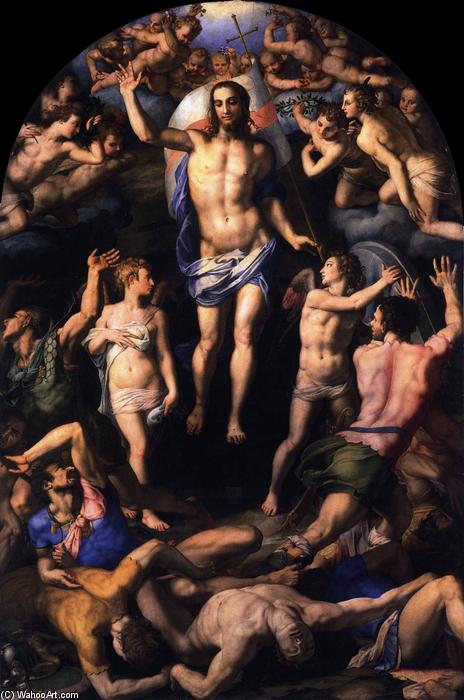
Agnolo Bronzino’s Resurrection embodies Mannerist elegance—a study in idealized beauty achieved through meticulous anatomical precision and ethereal sfumato. This Florentine masterpiece captures Christ's ascension amidst astonished mourners, showcasing Renaissance artistic mastery and inviting you to explore its timeless allure.
Agnolo Bronzino’s Resurrection: A Study in Mannerist Elegance
The Florentine Renaissance witnessed an explosion of artistic innovation, yet amidst the grandeur and dynamism of figures like Michelangelo and Leonardo da Vinci resided a quieter, more contemplative aesthetic – Mannerism. Agnolo Bronzino embodies this sensibility perfectly, producing works that prioritize refined detail and psychological subtlety over exuberant emotion. His masterpiece, “Resurrection,” completed in 1552, stands as a testament to the artist’s mastery of technique and his profound understanding of humanist ideals.
- Subject Matter & Composition: The painting depicts a pivotal biblical scene – the Resurrection of Christ – capturing the moment when Jesus ascends from the tomb, surrounded by grieving mourners who express astonishment and reverence. Bronzino eschews dramatic narrative flourishes typical of earlier Renaissance art; instead, he presents a carefully orchestrated tableau designed to convey spiritual contemplation rather than visceral emotion.
- Style & Technique: Bronzino’s Mannerist style distinguishes itself from its predecessors through elongated figures, stylized poses, and an unsettling sense of artificiality. He employs meticulous anatomical precision—a hallmark of Leonardo da Vinci’s influence—but applies it with a deliberate coolness that prioritizes idealized beauty over naturalism. The artist utilizes sfumato – the subtle blending of colors to create soft transitions – particularly evident in the drapery folds, enhancing the painting's ethereal quality.
Historical Context: Florence Under Medici Patronage
Florence during Bronzino’s lifetime was ruled by Cosimo I de’ Medici, a shrewd diplomat and ambitious ruler who fostered an environment of artistic excellence. The Medicis actively commissioned artists to decorate palaces and churches, elevating Florence to the cultural capital of Europe. This patronage fueled creativity and encouraged experimentation, resulting in a diverse range of artistic styles—from Raphael's harmonious idealism to Michelangelo's monumental grandeur. Bronzino’s “Resurrection” reflects this prevailing spirit of refined taste and intellectual curiosity.
- Symbolism: The painting is laden with symbolic significance. The central figure embodies divine grace and triumph over death, while the mourners represent humanity grappling with faith and sorrow. Bronzino’s masterful use of color—primarily earthy tones accented by luminous highlights—contributes to the overall mood of solemn reverence. Notably, the positioning of Christ's body emphasizes his ascension, symbolizing spiritual rebirth and eternal life.
Emotional Impact & Artistic Legacy
Despite its lack of overt emotional expression, “Resurrection” possesses a remarkable ability to evoke contemplation and wonder. Bronzino’s meticulous attention to detail—the subtle nuances of facial expressions, the drapery folds rendered with breathtaking realism—draws viewers into the scene, inviting them to consider profound questions about faith and mortality. The painting's enduring influence can be seen in subsequent Mannerist artists who sought to emulate Bronzino’s stylistic innovations. “Resurrection” remains a cornerstone of Renaissance art history, demonstrating that beauty and intellectual depth could coexist—a testament to Bronzino’s unparalleled artistic vision.