The Cool Composure of Mannerist Grace
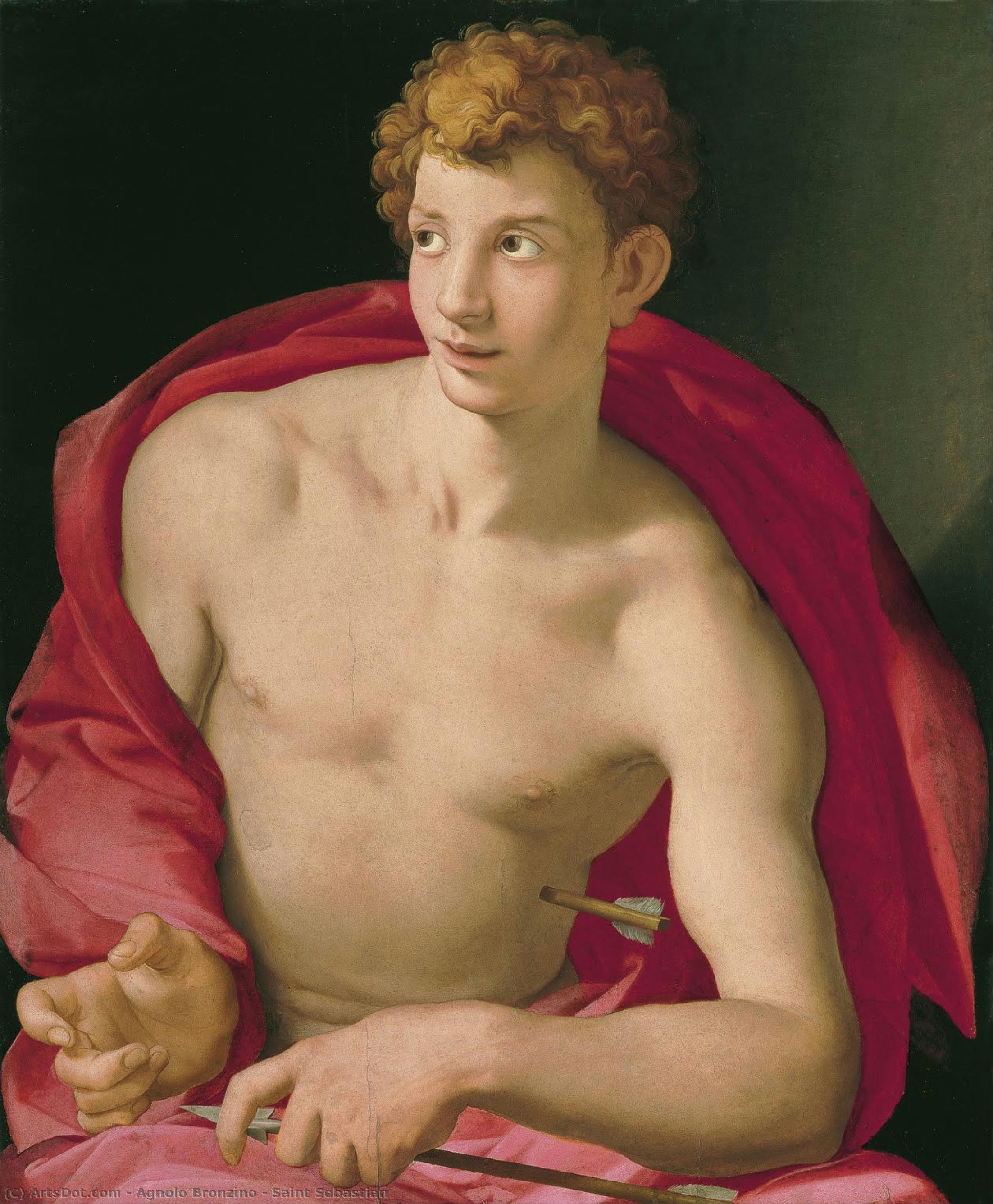
To stand before Agnolo Bronzino's depiction of Saint Sebastian is to encounter an embodiment of refined restraint—a hallmark of the High Renaissance transitioning into the sophisticated drama of Mannerism. This painting, dated to 1533, captures a moment steeped in classical allusion yet filtered through the unique lens of Florentine elegance. While the subject matter evokes martyrdom and divine suffering, Bronzino’s handling elevates the scene beyond mere piety; it becomes a study in poised physicality and aristocratic bearing. The very air around the figure seems imbued with a cool, almost intellectual composure that belies the narrative weight of his fate.
A Study in Form and Line
The visual evidence suggests an artist deeply concerned with structure and idealized form. The composition presents Saint Sebastian—rendered here with striking red hair and draped in rich crimson robes—in a pose that is both active and utterly controlled. He gazes outward, engaging the viewer directly, while his posture speaks of studied grace. One notes the subtle details: the bow held ready, suggesting an archer's readiness, juxtaposed with the more poignant element of the knife lying near the foreground. This careful arrangement of objects around the central figure guides the eye through a narrative tapestry woven from classical iconography and contemporary portraiture. The technique itself speaks to Bronzino’s mastery; every fold of the fabric, every strand of hair, is rendered with an almost enamel-like precision.
Historical Echoes and Artistic Lineage
Bronzino's career was one of absorbing and then perfecting influences. Having trained under masters like Pontormo, he absorbed emotional intensity only to temper it into his signature reserved elegance. This work reflects that maturation. Art historical research suggests a fascinating connection between this piece and earlier studies, perhaps even linking the figure’s pose to representations of the Evangelists in other Florentine chapels. It is as if Bronzino was not merely painting a saint, but participating in an ongoing visual dialogue with the great traditions of Italian art, refining them until they achieved a distinctly personal, polished sheen.
Symbolism and Emotional Resonance
The symbolism inherent in Saint Sebastian—the archer, the subject of arrows, the symbol of endurance—is potent. Yet, Bronzino’s interpretation softens this raw suffering with an almost courtly dignity. The vibrant red of his attire draws the eye immediately, a color traditionally associated with passion and sacrifice. For the modern collector or designer, this piece offers more than just religious iconography; it provides an anchor of sophisticated drama for any space. It speaks to enduring strength presented not through brute force, but through impeccable self-possession.
Bringing Renaissance Grandeur Home
Owning a reproduction of this work is to invite a fragment of 16th-century Florentine refinement into your contemporary life. The rich palette, the masterful handling of drapery, and the compelling gaze of the subject create an immediate focal point. Whether displayed in a formal drawing-room or alongside curated modern pieces, this artwork carries the weight of history while maintaining an air of timeless, cool sophistication. It is a piece that demands contemplation, rewarding the viewer with its layers of technical brilliance and quiet narrative power.