The Alluring Mystery of Bronzino’s “Venus, Cupid, and Time”
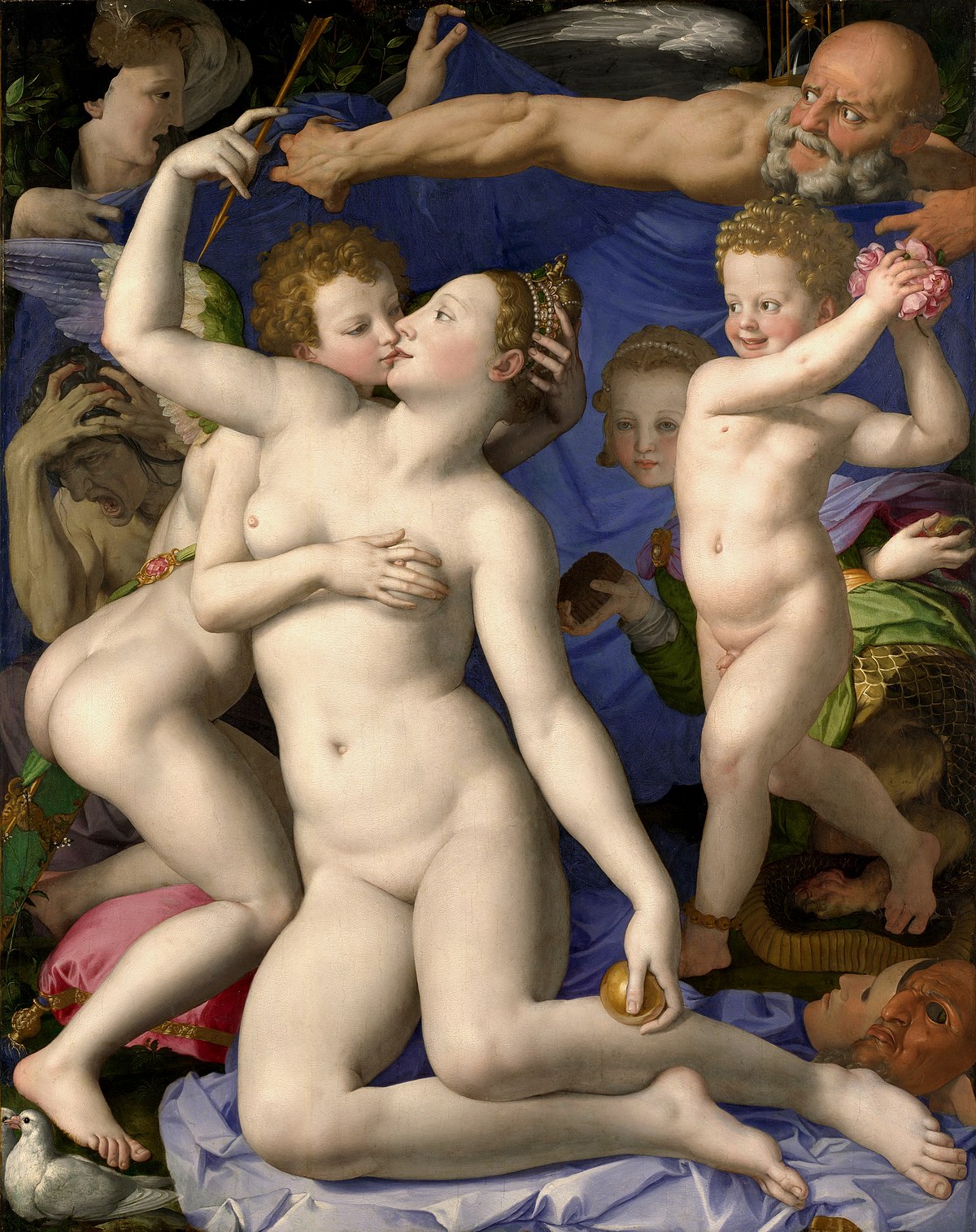
Agnolo Bronzino's "Venus, Cupid, and Time," painted in 1540, isn’t merely a depiction of mythological figures; it’s an exquisitely crafted allegory—a visual poem brimming with ambiguity and profound psychological depth. Housed within the National Gallery in London, this masterpiece immediately captivates with its cool elegance and unsettling stillness. Bronzino, a key figure in the Florentine Mannerist movement, rejected the exuberant naturalism of his predecessors, favoring instead a refined, almost detached style characterized by precise detail, elongated forms, and an emphasis on surface rather than volume. “Venus, Cupid, and Time” exemplifies this approach perfectly – it’s less about capturing a fleeting moment and more about constructing a carefully orchestrated tableau designed to provoke contemplation.
A Dance of Desire and Decay
At the heart of the composition lies Venus, a figure rendered with an almost unnerving composure. Her nudity isn’t overtly sensual; rather, it possesses a sculptural quality, reminiscent of a classical statue – cool, idealized, and deliberately devoid of emotional expression. She holds an apple, a reference to the Judgment of Paris, symbolizing her status as the embodiment of beauty and desire. Across from her, Cupid, her son, is caught in a tender embrace, his youthful passion juxtaposed against Venus’s serene detachment. The scene isn't one of joyous celebration but rather a carefully controlled tension—a suggestion of impending doom lurking beneath the surface of pleasure.
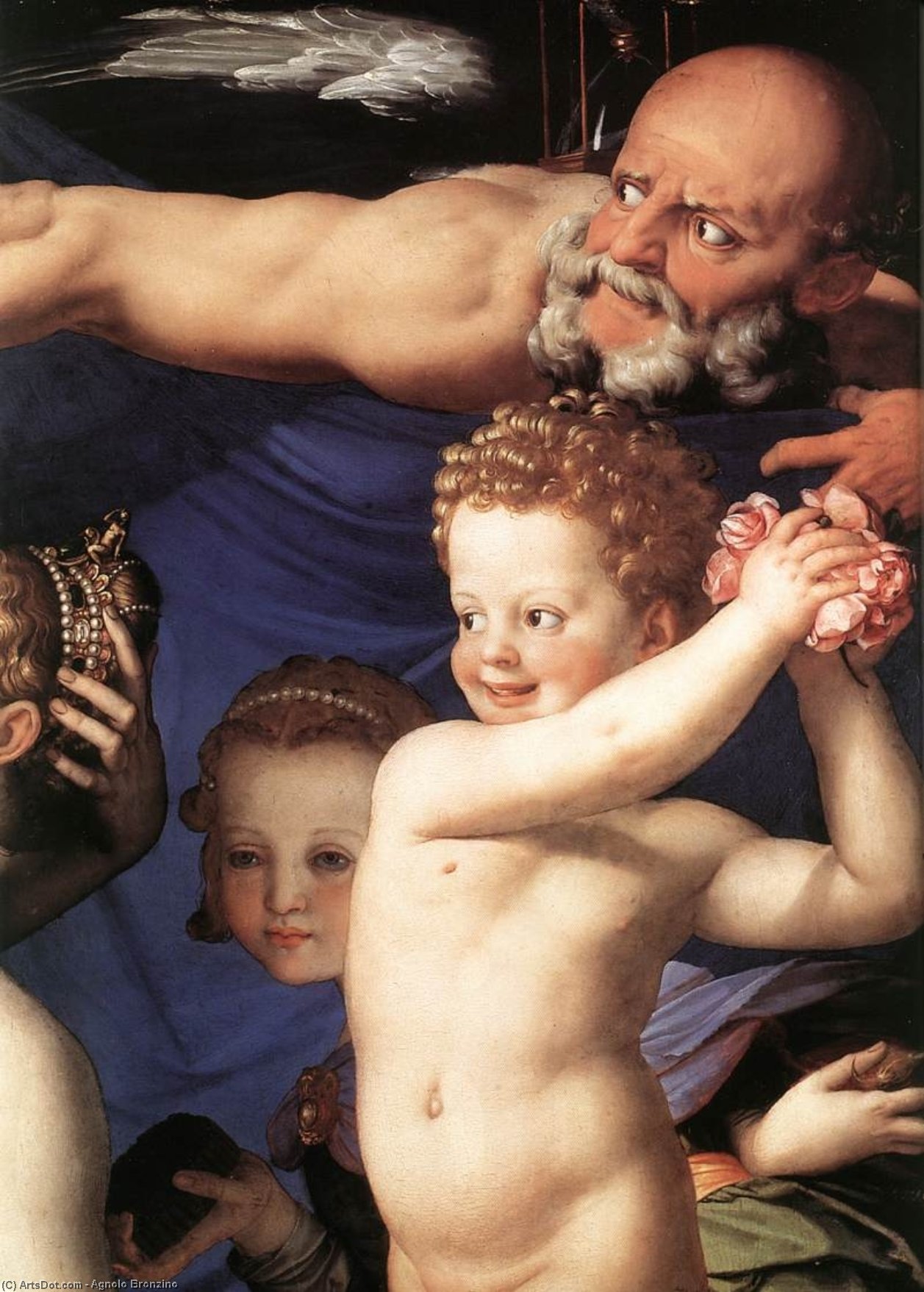
Adding to this complex interplay are several enigmatic figures surrounding the central couple. To the right, a putto prepares to shower them with rose petals – Folly, representing the fleeting and often destructive nature of earthly pleasures. A figure tearing at their hair—often interpreted as Jealousy or even Syphilis (a prevalent disease of the time)—underscores the potential for ruin within this intoxicating realm. And presiding over it all is Time, depicted as an aged man with a long beard, holding an hourglass and a scythe – a stark reminder of mortality and the inevitable passage of life.
Mannerist Techniques: Precision and Illusion
Bronzino’s mastery lies in his meticulous technique. The painting is executed in exquisite detail, with painstaking attention to texture—the smoothness of Venus' skin, the delicate folds of her drapery, the intricate patterns on Cupid’s garments. He employs a sophisticated use of *sfumato*, creating subtle gradations of light and shadow that lend an ethereal quality to the scene. The figures appear almost sculpted from light itself, their forms elongated and attenuated—a hallmark of Mannerist style. The background is deliberately shallow, enhancing the sense of depth and drawing the viewer’s eye towards the central figures.
Symbolism and Interpretation: A Timeless Enigma
“Venus, Cupid, and Time” resists easy interpretation. It's a complex allegory that speaks to themes of love, desire, mortality, and the deceptive nature of beauty. The painting can be viewed as a meditation on the fleeting nature of pleasure and the inevitability of decay. Some scholars suggest it represents the Medici family’s own pursuit of earthly power and immortality, mirroring Venus's eternal allure. Others see it as a cautionary tale about the dangers of unchecked passion. Ultimately, Bronzino leaves the meaning open to interpretation, inviting viewers to engage with the painting on a deeply personal level. It remains one of the most captivating and enduring works of the Renaissance—a testament to the artist’s skill and his profound understanding of human psychology.