The Last Supper

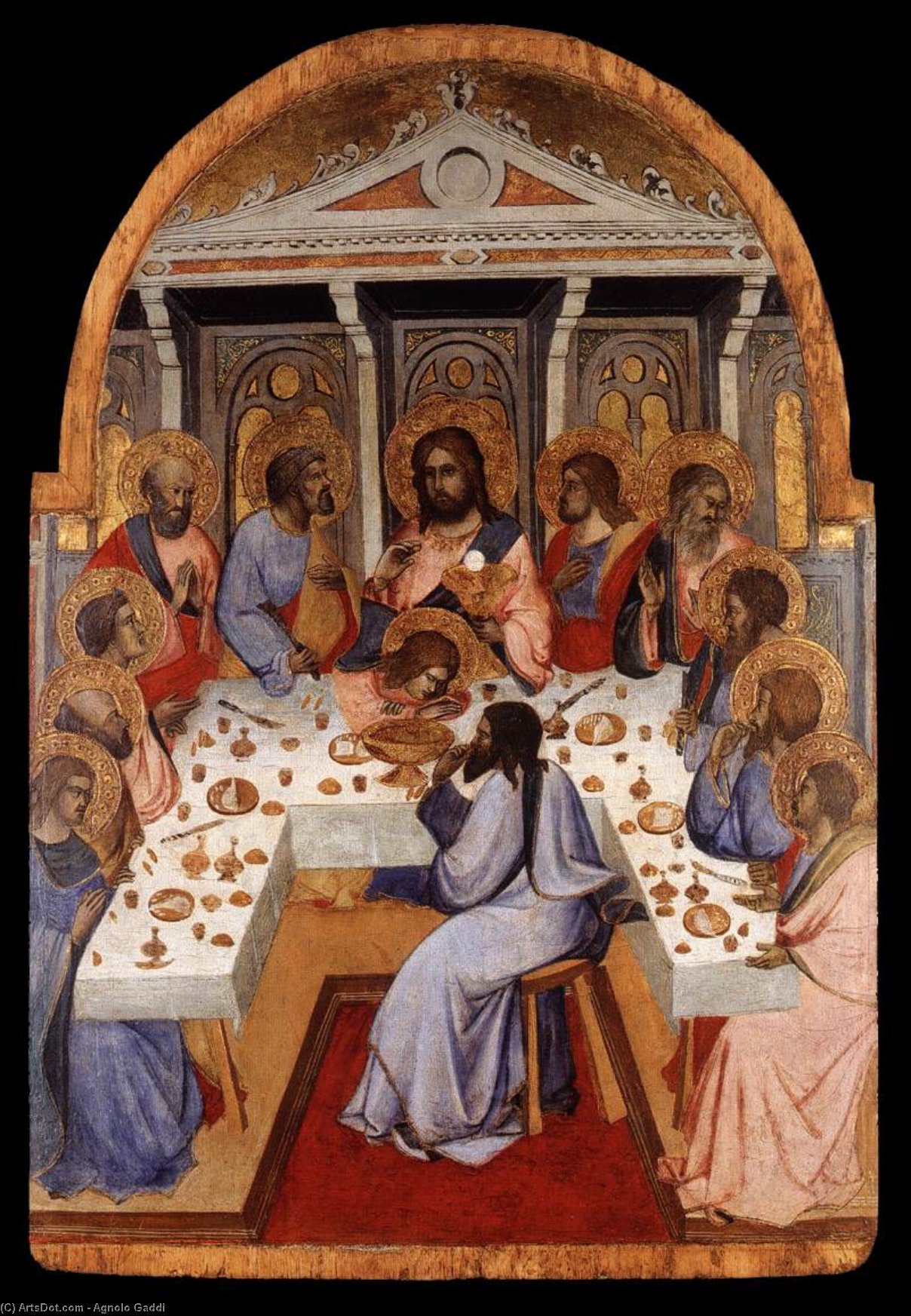
Discover Agnolo Gaddi’s ‘The Last Supper’ (1395). A stunning tempera panel depicting a pivotal biblical scene, showcasing Early Renaissance detail & solemn atmosphere. Explore this masterpiece at the Lindenau-Museum!


Agnolo Gaddi (1350 - 1396)

Agnolo Gaddi (1350-1396): Florentine painter & last major follower of Giotto. Known for intricate frescoes in Santa Croce and influencing artists like Cennino Cennini with his Gothic style transitioning to Early Renaissance.

Lindenau-Museum (Altengau, Germany)

Explore Lindenau-Museum in Altengau, Germany! Discover regional history & fine arts. A must-visit for culture lovers. Plan your visit today!

The Last Supper by Agnolo Gaddi: A Florentine Moment Frozen in Time

  • A Window into 14th Century Florence
  • Created in 1395, "The Last Supper" by Agnolo Gaddi offers a rare and poignant glimpse into the artistic landscape of Florence during its golden age. Executed as a tempera on panel, this artwork transcends mere representation; it’s a tangible connection to a pivotal moment in Christian history – the final meal shared by Jesus with his disciples before his crucifixion.
  • The Artist's Legacy
  • Agnolo Gaddi’s significance lies not just in his individual skill, but within his lineage. He was the son of Taddeo Gaddi, a direct student of the revolutionary Giotto di Bondone – the artist who fundamentally shifted painting towards a more naturalistic and emotionally resonant style. This familial link firmly places Gaddi at the heart of Florence’s artistic innovation, allowing him to both build upon and subtly refine Giotto's groundbreaking approach.

A Study in Composition and Technique

  • Formal Arrangement
  • The painting’s composition is a masterclass in controlled realism. Jesus Christ occupies the central position, framed by his twelve apostles arranged around a long table – a deliberate choice that emphasizes his role as both leader and sacrifice. The symmetrical arrangement, characteristic of the period, lends an air of solemn dignity to the scene.
  • Tempera on Panel: A Delicate Craft
  • Gaddi’s masterful use of tempera on panel is immediately apparent. This technique, common in 14th-century Florence, demanded meticulous planning and execution. The layering of translucent pigments created a rich depth of color and texture, while the inherent stability of the wood panel ensured the artwork's longevity.
  • Attention to Detail
  • The artist’s dedication to detail is remarkable. From the individual expressions on the apostles’ faces – conveying a range of emotions from contemplation to surprise – to the carefully rendered folds of their drapery and the tactile quality of the table setting, every element contributes to the painting's immersive realism.

Symbolism and Emotional Resonance

  • A Moment of Profound Significance
  • "The Last Supper" is far more than a depiction of a meal; it’s a powerful meditation on faith, sacrifice, and the human condition. The scene represents Jesus's final shared moments with his disciples before his betrayal and crucifixion – a moment laden with spiritual weight and foreshadowing.
  • Color and Light
  • Gaddi skillfully employs color and light to heighten the emotional impact of the work. The warm, earthy palette—dominated by browns, reds, and golds—creates an atmosphere of solemnity and reverence. Dramatic lighting focuses attention on Jesus, while subtle shadows define the figures’ forms, adding depth and volume.
  • Evoking Contemplation
  • The overall effect is one of profound contemplation. The painting invites viewers to reflect on themes of loyalty, betrayal, forgiveness, and redemption – timeless subjects that continue to resonate with audiences centuries later.

Provenance and Display

  • Current Location
  • Currently housed in the Lindenau-Museum in Altenburg, Germany, this artwork offers a unique opportunity for close examination of Gaddi’s technique and artistic vision.
  • Related Works
  • For further exploration of Agnolo Gaddi's oeuvre, consider visiting the Musée Tavet-Delacour in Pontoise, France, which holds additional works by this influential Florentine master.