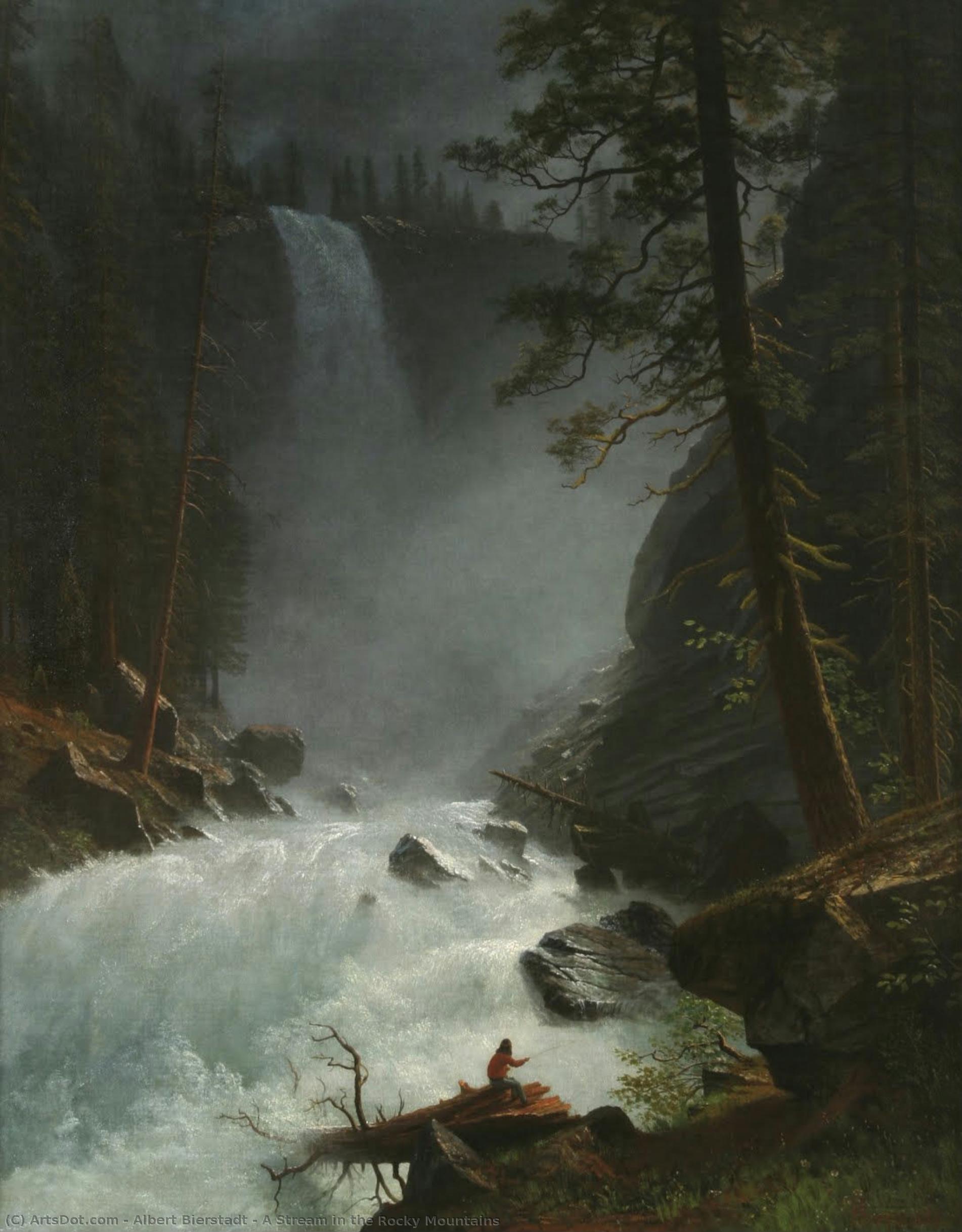
A Stream in the Rocky Mountains

Experience 'A Stream in the Rocky Mountains' by Albert Bierstadt! A dramatic Romantic landscape showcasing nature’s power & beauty. Hudson River School masterpiece.


Albert Bierstadt (1830 - 1902)

Discover Albert Bierstadt (1830-1902), master of the American West! Explore breathtaking landscapes & dramatic scenes from the Hudson River School painter known for his luminous style.

USC Fisher Museum of Art (Los Angeles, United States of America)

Discover European masters like Rubens & Warhol alongside contemporary art at the USC Fisher Museum of Art in Los Angeles! Explore rotating exhibitions, free admission, and a rich collection affiliated with USC.

A Symphony of Stone and Spray: Exploring Albert Bierstadt’s “A Stream in the Rocky Mountains”

  • Subject Matter & Composition The painting transports viewers directly into the heart of the American Rockies, capturing a breathtaking waterfall plunging down a rugged mountain slope enveloped by dense coniferous forest. Bierstadt's masterful composition utilizes a dominant diagonal line created by the cascade to guide the eye upwards, establishing a dynamic visual rhythm that underscores the grandeur of the scene. A solitary human figure—a deliberate inclusion—appears dwarfed by the immensity of nature, serving as a poignant reminder of humanity’s insignificance against the sublime forces of the wilderness.
  • Romantic Style & Artistic Influences “A Stream in the Mountains” firmly anchors itself within the Romantic movement, epitomized by artists like Caspar David Friedrich and J.M.W Turner. Like these contemporaries, Bierstadt prioritized emotional expression over precise scientific representation. He sought to evoke feelings of awe, wonder, and contemplation—a reaction against Enlightenment rationalism—drawing heavily on biblical imagery and philosophical ideas about God’s creation.
  • Technique & Materials Bierstadt employed meticulous oil painting techniques honed during his Düsseldorf studies. Visible brushstrokes contribute significantly to the artwork's textural richness, particularly evident in the depiction of rock formations and foliage. The artist skillfully manipulated light—a hallmark of the Hudson River School—to create dramatic chiaroscuro effects, highlighting the spray of the waterfall and casting long shadows that deepen the sense of atmosphere. Canvas stretched over wooden frame was used as support.
  • Color Palette & Symbolism Dominated by muted shades of grey, brown, and verdant green, Bierstadt’s color palette reflects the subdued beauty of the Rocky Mountains at dusk. The predominance of cool tones reinforces the painting's melancholic mood while simultaneously conveying a profound respect for the natural world. Beyond mere visual splendor, “A Stream in the Mountains” speaks to broader themes of spirituality and transcendence—a reflection of Romantic ideals concerning humanity’s relationship with God and the sublime.
  • Historical Context & Legacy Created in 1882, Bierstadt's masterpiece arrived during a period of fervent exploration and romanticization of the American West. It solidified the Hudson River School’s reputation for capturing monumental landscapes with unparalleled artistic skill and emotional depth. Today, reproductions of “A Stream in the Mountains” continue to inspire interior designers and art enthusiasts alike—serving as a testament to Bierstadt's enduring vision of nature’s majesty and its capacity to stir the human spirit.