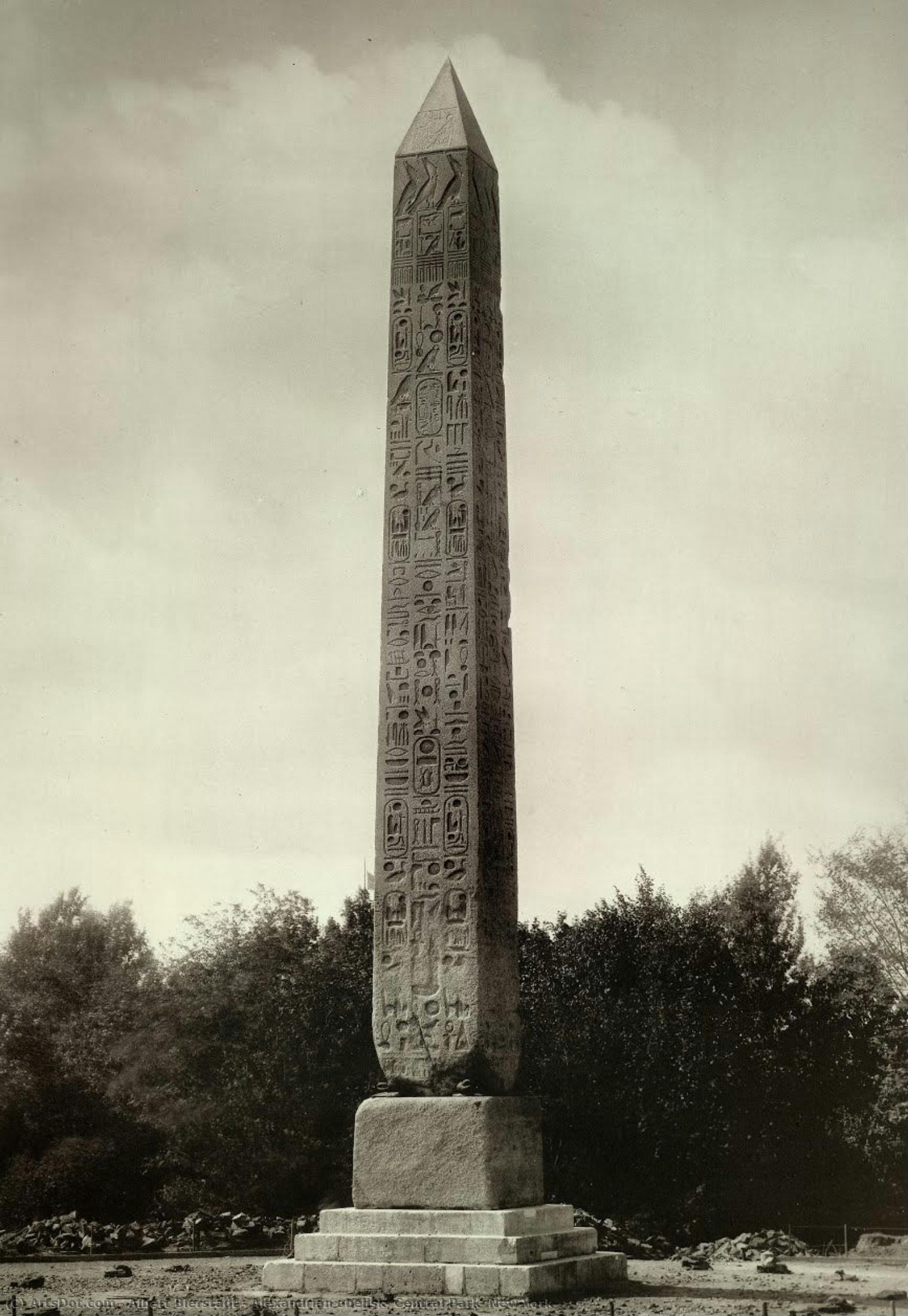
Experience the grandeur of Albert Bierstadt's iconic depiction of Alexandria Obelisk in Central Park! This stunning black and white photograph captures the sublime beauty of American wilderness.
Discover Albert Bierstadt (1830-1902), master of the American West! Explore breathtaking landscapes & dramatic scenes from the Hudson River School painter known for his luminous style.
Explore architectural excellence at the RIBA in London! Discover exhibits, the renowned RIBA Library, prestigious awards & events championing design – a living archive of British architecture's past and future.
A Monument to Egyptian Grandeur Amidst American Transcendence
The photograph depicts an imposing Alexandrian obelisk standing proudly in Central Park, New York City—a striking juxtaposition of ancient symbolism and modern urban landscape. Captured by Albert Bierstadt in 1881, this image encapsulates the spirit of the Hudson River School, a movement that championed Romantic idealism and sought to convey the awe-inspiring majesty of nature through meticulously rendered landscapes.
The Obelisk: Echoes of Egypt
Originally erected in Heliopolis during the reign of Ptolemy IV Philadelphus around 285 BC, the obelisk served as a testament to Egyptian power and religious devotion—a colossal granite pillar adorned with hieroglyphs commemorating Pharaoh Ramesses II’s military victories. Its journey across the Atlantic Ocean represents not merely an artifact of distant history but also embodies the burgeoning fascination with antiquity that characterized Victorian America. The photograph's careful composition highlights the obelisk’s geometric precision against the softer hues of the surrounding foliage, emphasizing its permanence and grandeur.
Bierstadt’s Technique: Mastering Light and Atmosphere
Albert Bierstadt was a master of capturing the sublime—the feeling of overwhelming beauty and spiritual significance—that artists like Caspar David Friedrich had pioneered in Northern Europe. His technique involved painstaking observation and meticulous brushwork, utilizing thick impasto to build up textured surfaces that faithfully reproduced the effects of sunlight filtering through trees. The artist’s palette favored muted earth tones—greens, browns, ochres—creating a harmonious blend with the natural environment. Bierstadt's dedication to realism combined with an expressive vision resulted in images that transported viewers into the heart of the wilderness experience.
Symbolism and Emotional Resonance
More than just a depiction of a physical object, the obelisk symbolizes Egypt’s enduring legacy as a cradle of civilization—a reminder of humanity’s capacity for monumental achievement and spiritual contemplation. Bierstadt's photograph aims to evoke feelings of reverence and wonder, mirroring the Romantic impulse to confront the sublime and recognize the insignificance of human existence in comparison to the vastness of nature. The image speaks to an appreciation for beauty, tradition, and the transformative power of encountering landscapes untouched by urban sprawl.
A Legacy Enduring Through Reproduction
Today, reproductions of Bierstadt’s “Alexandrian obelisk” continue to inspire interior designers and art enthusiasts alike—serving as a visual connection to a bygone era while celebrating the enduring allure of American wilderness artistry. Its timeless appeal resides in its ability to convey not only visual splendor but also profound emotional depth—a testament to Bierstadt's skill as an artist and his contribution to the artistic canon of the Hudson River School.