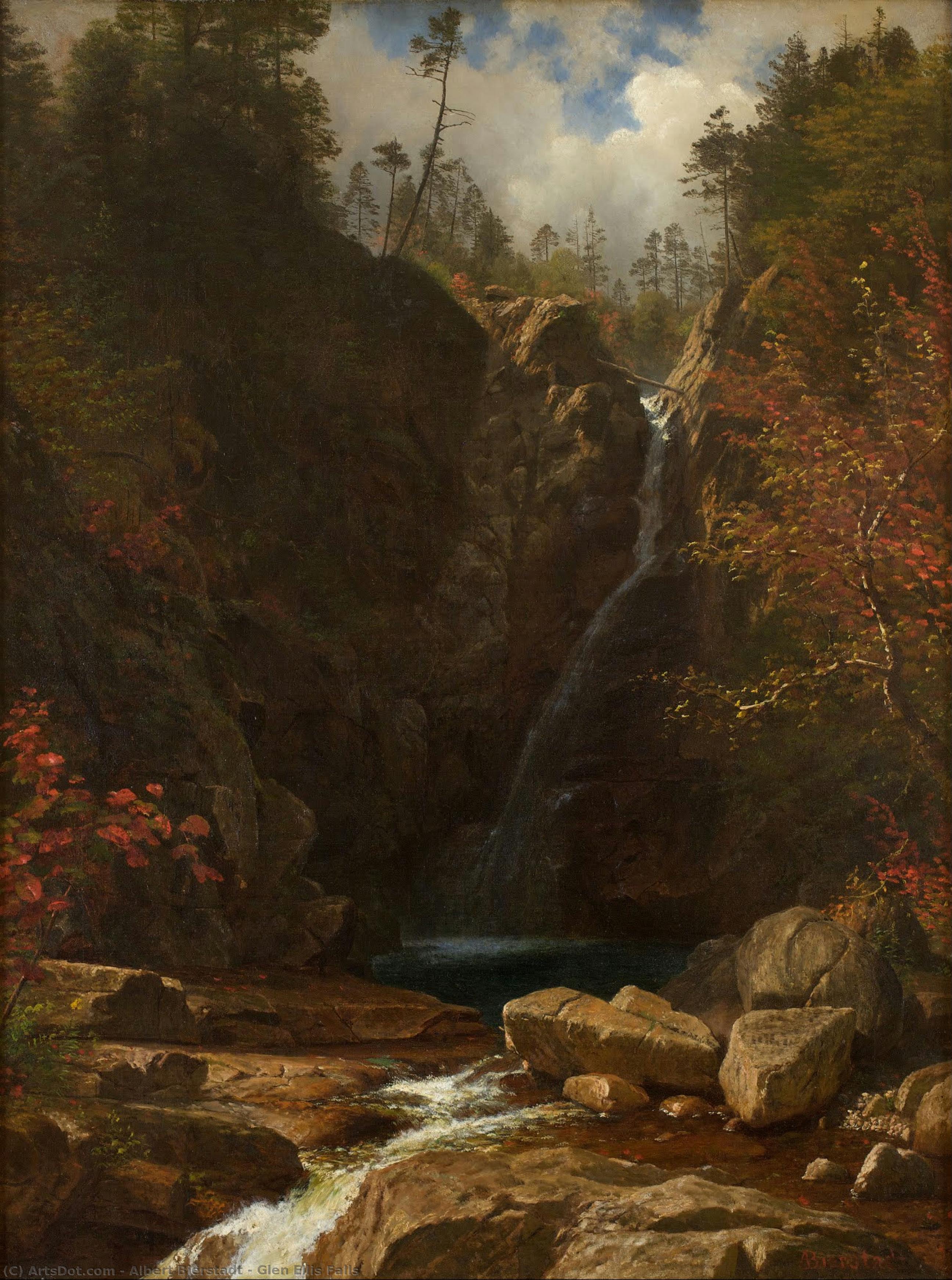
Glen Ellis Falls

Experience the grandeur of Albert Bierstadt’s iconic Glen Ellis Falls painting from 1869—a masterful Hudson River School landscape capturing breathtaking mountain vistas and conveying a profound sense of awe at nature's sublime beauty. Explore exquisite reproductions to bring this timeless masterpiece into your home.


Albert Bierstadt (1830 - 1902)

Discover Albert Bierstadt (1830-1902), master of the American West! Explore breathtaking landscapes & dramatic scenes from the Hudson River School painter known for his luminous style.

Zimmerli Art Museum at Rutgers University (New Brunswick, United States of America)

Discover 60,000+ artworks at the Zimmerli Art Museum! Explore Russian & Soviet Nonconformist art, 19th-century French prints, American art & more. Free admission and engaging programs await in New Brunswick, NJ.

Glen Ellis Falls: A Symphony of Sublime Landscape

  • Subject Matter Glen Ellis Falls is undeniably a landscape masterpiece—a breathtaking depiction of Yosemite Valley’s iconic waterfall, capturing its grandeur against the backdrop of towering granite cliffs and dense coniferous forests. Bierstadt meticulously rendered this natural spectacle, prioritizing accuracy in portraying the geological formations and vegetation of the American West.
  • Style & Technique Albert Bierstadt firmly established himself as a leading figure within the Hudson River School movement, characterized by its Romantic idealism and commitment to elevating nature’s beauty to spiritual significance. His technique involved painstaking observation combined with masterful brushwork—a layering of thin glazes that achieved remarkable luminosity and depth. The artist skillfully employed atmospheric perspective, subtly diminishing colors and tonal values as they receded into the distance, creating a convincing illusion of three-dimensionality.
  • Historical Context Painted in 1869, Glen Ellis Falls emerged during a period of intense fascination with exploration and westward expansion within the United States. Bierstadt’s work reflects the broader cultural preoccupation with capturing the sublime—that awe-inspiring experience of confronting overwhelming natural grandeur—a concept championed by Edmund Burke and influential on Romantic artists across Europe. The painting served as both an aesthetic statement and a promotional tool for Yosemite National Park, which was established just two years prior.
  • Symbolism Beyond its visual splendor, Glen Ellis Falls carries symbolic weight. The waterfall itself represents the relentless force of nature—a symbol of purification and renewal—while the granite cliffs embody permanence and resilience. Bierstadt’s deliberate framing emphasizes the immensity of Yosemite Valley, conveying a sense of humility before the sublime power of creation. It speaks to an enduring human desire for connection with the natural world.
  • Emotional Impact Viewing Glen Ellis Falls evokes a profound emotional response—a feeling of wonder and reverence for the unspoiled wilderness. Bierstadt’s masterful use of color and light transports the viewer into the heart of Yosemite Valley, capturing its misty atmosphere and conveying its breathtaking beauty. The painting's enduring appeal lies in its ability to inspire contemplation and reaffirm our appreciation for the sublime grandeur of nature—a timeless testament to Bierstadt’s artistic vision.