The Sublime Majesty of the American West
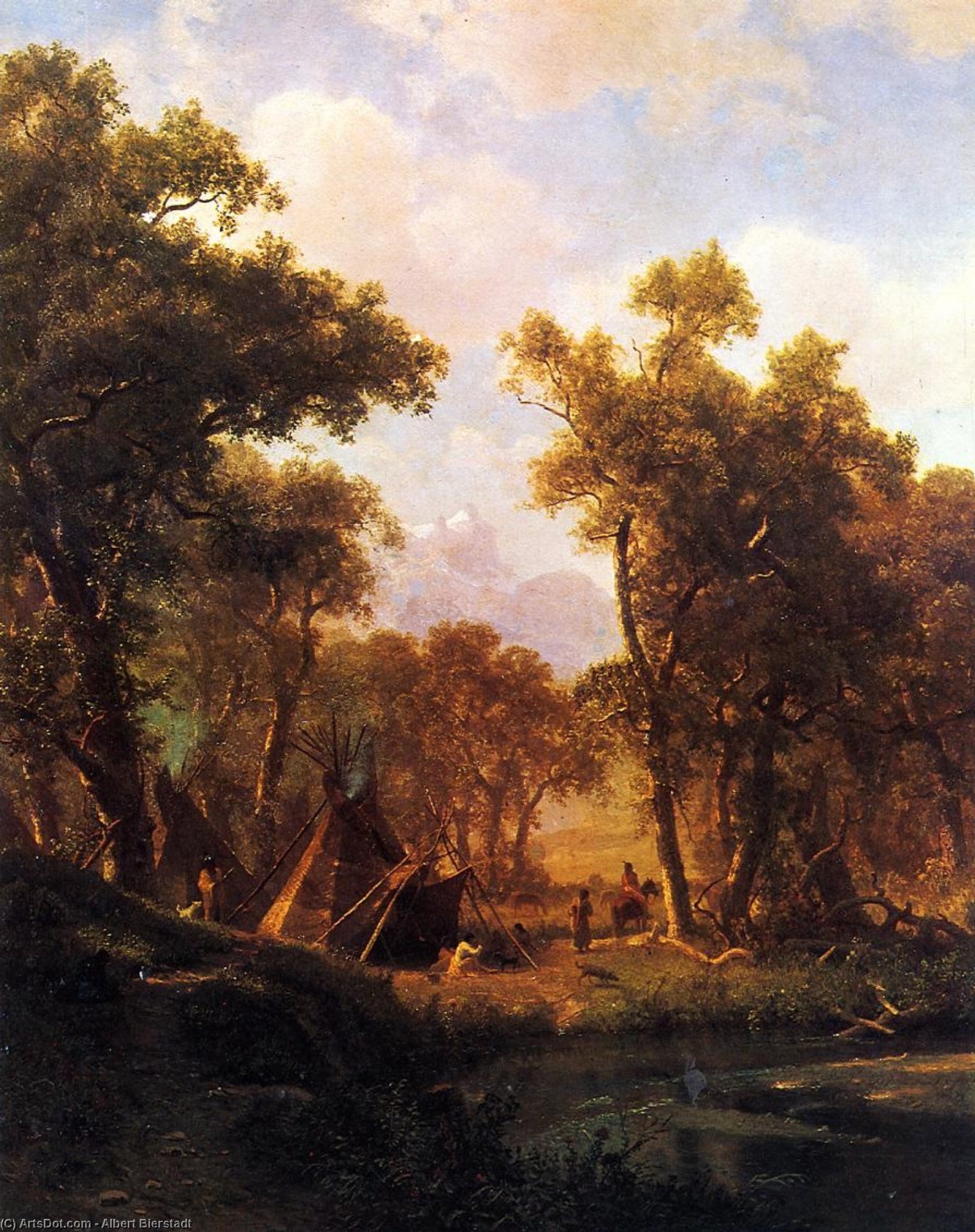
To gaze upon this depiction of an Indian Encampment in Shoshone Village is to be transported across time and space, deep into the heart of the untamed American wilderness. This painting, executed by Albert Bierstadt in 1860, is not merely a record of a landscape; it is an elegy to nature’s overwhelming grandeur. The scene unfolds with a breathtaking serenity, dominated by towering, verdant trees that guard the banks of a meandering river. Bierstadt masterfully captures the sublime—that feeling of awe mixed with slight terror when confronted by nature's immense power. The composition guides the eye along a central pathway, drawing the viewer inexorably into the depth of the forest and towards the distant, majestic mountains, suggesting both mystery and profound peace.
A Masterclass in Romantic Technique
Technically, this work is a quintessential example of the Hudson River School movement. Bierstadt’s handling of oil on canvas is nothing short of breathtaking; one can almost feel the visible, expressive brushstrokes that lend such rich texture to the foliage and the expansive sky. The light itself becomes a character in the painting. It bathes the scene in a warm, golden glow, suggesting the hushed magic of either dawn or dusk. This masterful use of chiaroscuro creates long, dramatic shadows and highlights the varied textures—from the soft folds of the canvas to the rough bark of ancient trees. While the perspective possesses an almost flattened quality common to the era’s grand visions, it is compensated for by a profound sense of atmospheric depth achieved through careful layering.
Symbolism and the Human Element
Nestled within this overwhelming natural spectacle are the delicate signs of human life: the small encampment, the figures, and the animals. These elements—the tents and the people—are rendered with a quiet dignity that speaks volumes. They do not dominate the landscape; rather, they seem to coexist with it, suggesting a harmonious, almost symbiotic relationship between humanity and the wild. Symbolically, the painting speaks to themes of exploration, solitude, and the enduring power of the natural world over fleeting civilization. It invites contemplation on man's place within the vast, beautiful machinery of creation.
Bringing the Wilderness Home
For those who seek to infuse their interiors with the spirit of grand adventure or timeless tranquility, a reproduction of this piece offers an unparalleled connection to art history. The rich palette—dominated by warm ochres, deep browns, and glowing golds—ensures that it serves as a magnificent focal point in any room. It is a piece that demands attention while simultaneously whispering secrets of quiet contemplation. Owning this artwork allows one to curate not just a wall hanging, but an entire emotional landscape, bringing the sublime majesty of Bierstadt’s vision into your modern sanctuary.