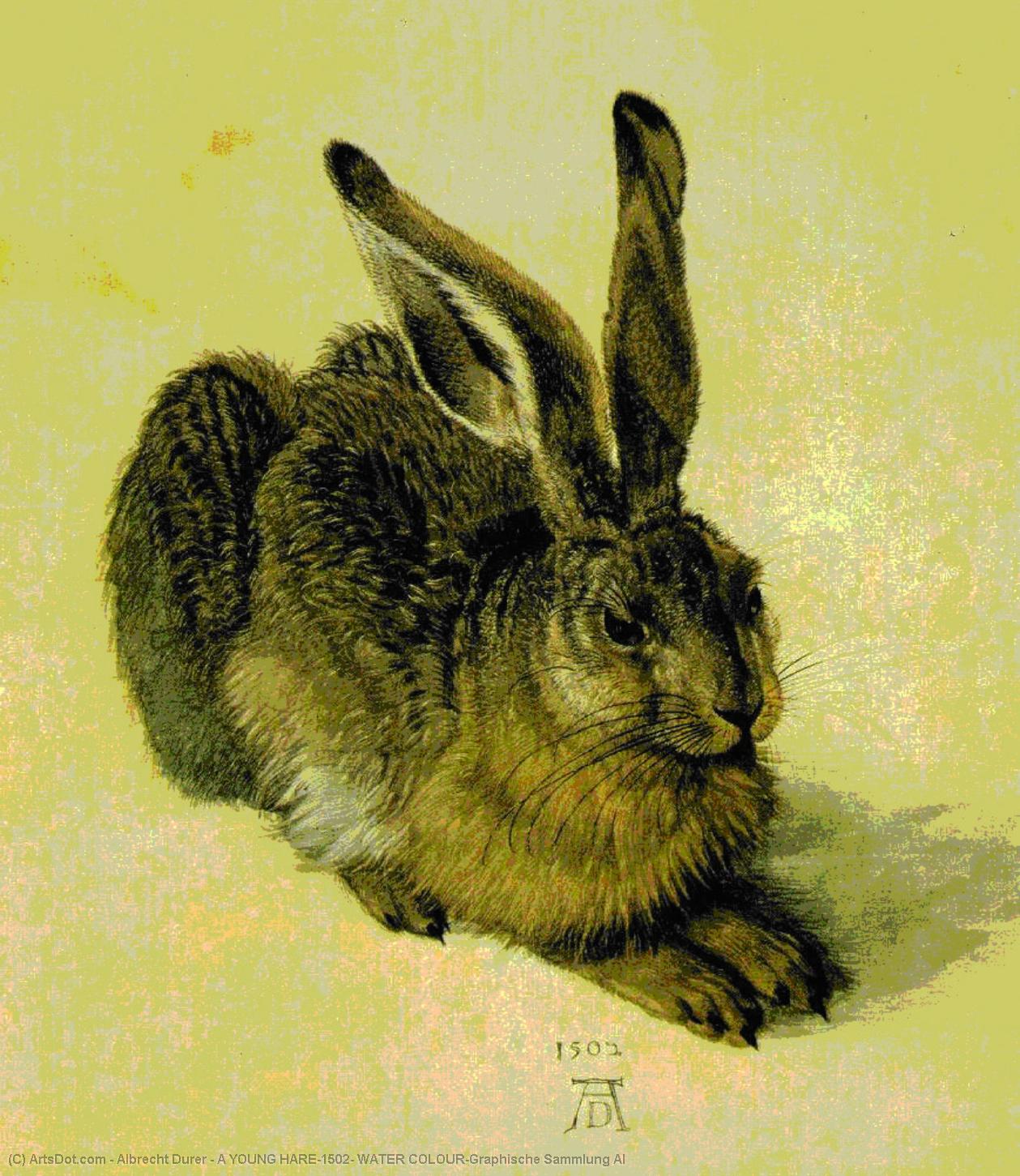
A Moment Frozen in Time: Albrecht Dürer’s *A Young Hare* (1502)
Albrecht Dürer's A Young Hare, executed in delicate watercolour around 1502, is more than just a charming depiction of a woodland creature; it represents a pivotal moment in the artist’s development and offers a profound glimpse into the burgeoning humanist ideals of the German Renaissance. This seemingly simple composition – a young hare poised on the ground, its ears alert and attentive – reveals Dürer's meticulous observation skills and his nascent exploration of naturalism within a symbolic framework. The painting’s stark black-and-white palette, reminiscent of early printmaking techniques, lends it an immediate sense of antiquity, transporting the viewer back to a time when artistic innovation was driven by both technical mastery and intellectual curiosity.
Technical Brilliance: Watercolor as a Novel Medium
Dürer’s use of watercolour in this work is particularly noteworthy. While he had experimented with the medium previously, A Young Hare demonstrates his growing command of its subtle capabilities. Watercolour, known for its transparency and fluidity, demanded a precise hand and an understanding of layering – techniques Dürer employed to build up tonal variations and create a remarkable sense of depth and texture within the hare’s fur. The artist utilized fine brushes with incredible control, achieving a level of detail previously unseen in watercolour depictions of wildlife. This wasn't simply copying nature; it was a deliberate attempt to capture its essence through a new and challenging medium. The lack of colour further emphasizes Dürer’s focus on form, line, and the inherent beauty of the subject itself.
Symbolism and the Renaissance Ideal
Beyond its technical merits, A Young Hare carries significant symbolic weight within the context of the early 16th century. The hare, a frequent motif in Northern European art, was often associated with fertility, speed, and cunning – qualities valued during this period of rapid social and economic change. Dürer’s depiction aligns with the Renaissance fascination with observing and understanding the natural world, reflecting the humanist emphasis on human potential and connection to nature. The hare's direct gaze towards the viewer can be interpreted as an invitation for contemplation, a challenge to observe and appreciate the beauty of the mundane. It speaks to a desire for knowledge and a celebration of life’s simple wonders.
A Legacy in Reproduction
ArtsDot offers meticulously crafted hand-painted reproductions of Dürer's A Young Hare, ensuring that this iconic artwork remains accessible to collectors and interior designers alike. Our skilled artisans employ the same techniques – careful layering, precise brushwork, and a deep understanding of Dürer’s artistic vision – to create a faithful representation of this masterpiece. Whether adorning a gallery wall or gracing a private residence, a ArtsDot reproduction allows you to experience the enduring power and beauty of Dürer's genius.