The Intimacy of Line: Reimagining Dürer’s Adam and Eve
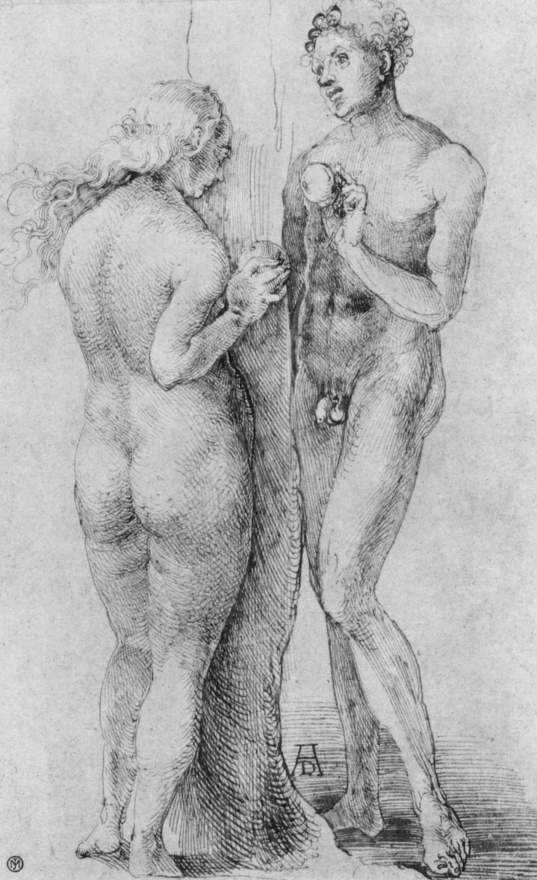
In the quiet, focused realm of Albrecht Dürer, the boundaries between anatomical study and profound storytelling dissolve into a single, breathtaking moment. His drawing, Adam And Eve 2, serves as a masterclass in the power of monochrome, stripping away the distractions of color to reveal the raw, pulsing essence of the human form. This work is not merely a depiction of two figures; it is an exploration of tension, connection, and the delicate balance between vulnerability and strength. As the eye wanders across the meticulous pen and ink strokes, one feels transported to the workshops of Nuremberg, where the precision of a goldsmith’s lineage met the soaring imagination of the German Renaissance.
The composition is anchored by a striking verticality, drawing the viewer into an intimate encounter between two nude male figures. Dürer employs a style that leans toward Mannerism, utilizing elongated proportions and dramatic, expressive gestures to heighten the emotional stakes of the interaction. The figure on the left, presented with his back to the observer, allows us to admire the sculptural quality of his musculature, rendered through incredibly fine hatching and precise linework. In contrast, the figure facing forward offers a window into the soul; his expression, marked by a subtle frown or a flicker of concern, introduces a narrative ambiguity that keeps the viewer perpetually engaged. Is this a moment of shared peace, or a prelude to conflict?
A Symphony of Ink and Anatomy
Technically, the piece is a triumph of pen and ink mastery. Dürer’s ability to suggest three-dimensional volume on a two-dimensional plane is nothing short of miraculous. Through varying densities of line and the strategic use of shadow, he creates a sense of weight and presence that makes the figures feel almost tangible. The lighting, appearing to descend from above, casts soft shadows that define the contours of the ribs, the curve of the spine, and the tension in the limbs. This meticulous attention to anatomical accuracy reflects Dürer’s deep commitment to the scientific observation of nature, a hallmark of his enduring legacy.
Beyond the technical prowess, the symbolism embedded within the work invites deep contemplation. The small sphere held by the right-hand figure acts as a focal point—a singular, precious object that could represent fertility, the world itself, or perhaps a symbol of fleeting beauty. This element, combined with the nakedness of the subjects, evokes themes of primordial innocence and the weight of human existence. For the collector or the interior designer, this artwork offers more than just aesthetic beauty; it provides a profound intellectual anchor for a space, inviting guests to pause and reflect on the complexities of the human condition.
Timeless Elegance for the Modern Collector
For those seeking to curate a collection that speaks to both historical depth and contemporary sophistication, a high-quality reproduction of Adam And Eve 2 is an incomparable choice. The stark, black-and-white palette makes it a versatile masterpiece, capable of harmonizing with minimalist modern interiors or adding a layer of classical gravitas to more traditional settings. It possesses that rare quality of "living art"—a piece that changes character depending on the light and the mood of the room.
Owning such a work is an invitation to inhabit the world of the Northern Renaissance. It brings into one's home the spirit of Albrecht Dürer, a man who bridged the gap between the artisan’s craft and the artist’s vision. Whether displayed as a centerpiece in a study or as part of a curated gallery wall, this drawing remains a testament to the enduring power of the human form and the eternal dance of light and shadow.