A Portrait of Ambition: Albrecht Dürer’s ‘The Man with a Hat’
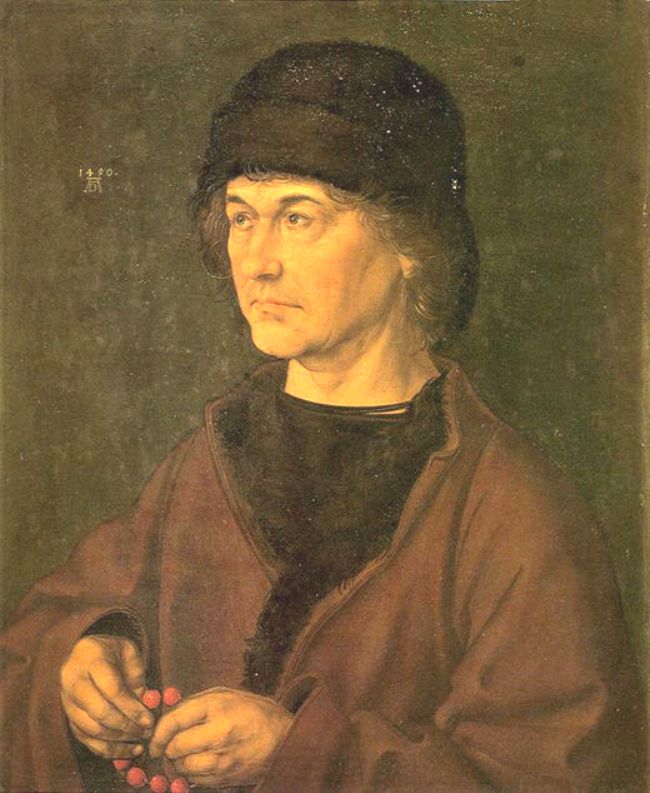
Albrecht Dürer's “The Man with a Hat,” painted around 1500, is more than just a portrait; it’s a meticulously crafted meditation on human ambition, intellectual pursuit, and the burgeoning spirit of the German Renaissance. Executed in oil on panel, this work immediately draws the viewer into a scene brimming with quiet contemplation. The subject, identified as Albrecht Dürer the Elder himself, presents a strikingly direct gaze, his hand raised as if presenting an idea or examining a point of interest. His attire – the dark brown coat and black hat – speaks to the status and formality of the period, while the scattered red balls introduce a subtle yet potent element of symbolism.
- Subject & Composition: The central figure dominates the composition, his pose conveying both confidence and introspection. The background, featuring a glimpse of a book, subtly reinforces the theme of learning and knowledge – a cornerstone of Dürer’s own life and artistic philosophy.
- Technique: Dürer's mastery is immediately apparent in the incredibly detailed rendering of fabrics, textures, and facial features. His use of oil paint allowed for subtle gradations of tone and color, creating a remarkable sense of realism that was revolutionary for its time. The meticulous application of brushstrokes demonstrates his painstaking attention to detail, a hallmark of his artistic approach.
The Symbolism of Red and the Pursuit of Knowledge
The inclusion of red balls is perhaps the most intriguing aspect of this portrait. While seemingly simple, these spheres have been interpreted in various ways. In Renaissance symbolism, red often represented passion, virtue, or even divine love. The scattering of the balls could signify a collection of ideas, concepts, or perhaps even the challenges and obstacles encountered on the path to intellectual achievement. The book in the background further emphasizes this pursuit – Dürer was a prolific writer as well as an artist, producing numerous treatises on art theory and technique. His interest in mathematics and geometry, evident in his engravings, also contributed to the symbolic weight of the image.
- Color Theory: Dürer’s use of color is carefully considered. The dark tones of the figure's clothing contrast sharply with the vibrant red of the balls, drawing attention to the subject and creating a dynamic visual effect.
- Geometric Precision: The composition itself adheres to strict geometric principles, reflecting Dürer’s fascination with mathematical proportions and his belief that art should be grounded in rational order.
Historical Context & The Artist's Legacy
Painted during a period of immense artistic and intellectual ferment – the High Renaissance – “The Man with a Hat” reflects the shift towards humanism, which emphasized individual potential and achievement. Dürer’s work stands as a testament to this movement, celebrating the power of human intellect and creativity. Born in Nuremberg in 1471, Albrecht Dürer was a pivotal figure in German art history, bridging the gap between Gothic traditions and the emerging Renaissance style. His influence extended far beyond his own lifetime, shaping the course of Northern European painting for centuries to come. This portrait offers a rare glimpse into the mind of one of the greatest artists of all time, inviting us to contemplate the enduring themes of ambition, knowledge, and the human condition.
- Dürer’s Workshops: Dürer spent considerable time refining his techniques in his own workshop, experimenting with new methods and materials.
- Influence on Later Artists: The meticulous detail and psychological insight displayed in this portrait profoundly influenced generations of artists who followed him.