A Window Into Renaissance Romance: Albrecht Dürer’s “Amorous Peasants”
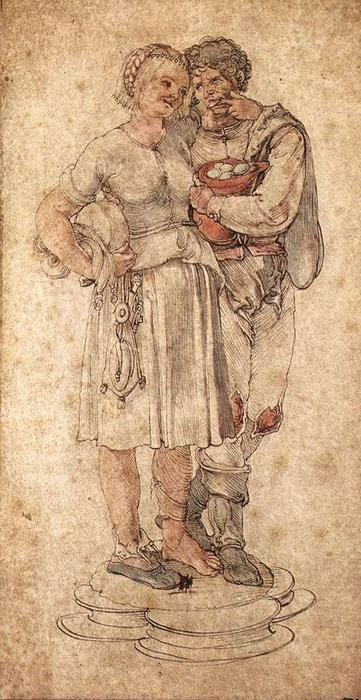
Albrecht Dürer's "Amorous Peasants," completed in 1503, stands as a testament to the burgeoning humanist spirit of the German Renaissance and a masterful exploration of idealized love. More than just a depiction of two figures embracing—though their tender gesture undeniably dominates the composition—the painting delves into profound symbolic layers that resonate with themes of fertility, virtue, and divine grace. Situated in Nuremberg’s vibrant artisan landscape during Dürer's formative years, this artwork exemplifies his meticulous attention to detail and innovative approach to printmaking, cementing its place as a cornerstone of Northern Renaissance art history.
- Style: The painting adheres firmly to the Northern Renaissance style, characterized by a balanced composition, precise realism blended with idealized forms, and an emphasis on moral allegory. Dürer consciously rejected Mannerist distortions in favor of clarity and harmony—a deliberate choice reflecting the humanist ideals prevalent at the time.
- Technique: Executed as a woodcut print (after several preparatory drawings), “Amorous Peasants” showcases Dürer’s unparalleled skill in transferring intricate imagery onto woodblocks. This technique demanded painstaking precision and patience, resulting in remarkably detailed lines that capture the subtle nuances of human expression and drapery folds. The artist skillfully utilized hatching and cross-hatching to create tonal variations—a crucial element in conveying depth and texture.
Historical Context: Renaissance Ideals Embodied
The painting emerged from a period marked by significant intellectual advancements, fueled by rediscovered classical texts and a renewed interest in human anatomy and perspective. Dürer’s contemporaries—artists like Michael Wolgemut and Hans Holbein the Younger—were similarly engaged in exploring humanist themes, reflecting the broader cultural shift away from medieval dogma toward a celebration of earthly beauty and human potential. “Amorous Peasants” embodies these ideals by portraying two figures bathed in soft light—a deliberate allusion to biblical representations of Adam and Eve—suggesting an unspoiled innocence and spiritual purity.
- Symbolism: The embrace itself symbolizes the union of male and female fertility, representing the divine blessing upon marriage and the continuation of humankind. The man’s helmet is interpreted as a symbol of courage and protection—attributes associated with Christian virtue—while the woman's draped garment signifies modesty and grace. Furthermore, the positioning of the figures within the frame contributes to the overall sense of balance and harmony, mirroring the Renaissance fascination with geometric proportions.
Emotional Impact: A Moment Frozen in Time
Despite its formal precision, “Amorous Peasants” possesses a palpable emotional resonance. The tender gaze exchanged between the figures conveys a profound intimacy—a quiet affirmation of love and companionship that transcends mere physical contact. Dürer’s masterful rendering of facial expressions captures subtle nuances of emotion—a testament to his ability to convey psychological depth through visual means. Viewing this artwork evokes feelings of warmth, serenity, and contemplation—capturing the essence of Renaissance humanism's belief in the transformative power of beauty and compassion.
Legacy & Reproduction
“Amorous Peasants” continues to inspire artists and collectors alike, serving as a timeless exemplar of Renaissance artistic excellence. Reproductions crafted by skilled artisans preserve Dürer’s original vision—allowing audiences worldwide to experience the beauty and symbolism of this iconic masterpiece. Its enduring appeal underscores the profound impact of art on shaping cultural values and capturing the spirit of an era.