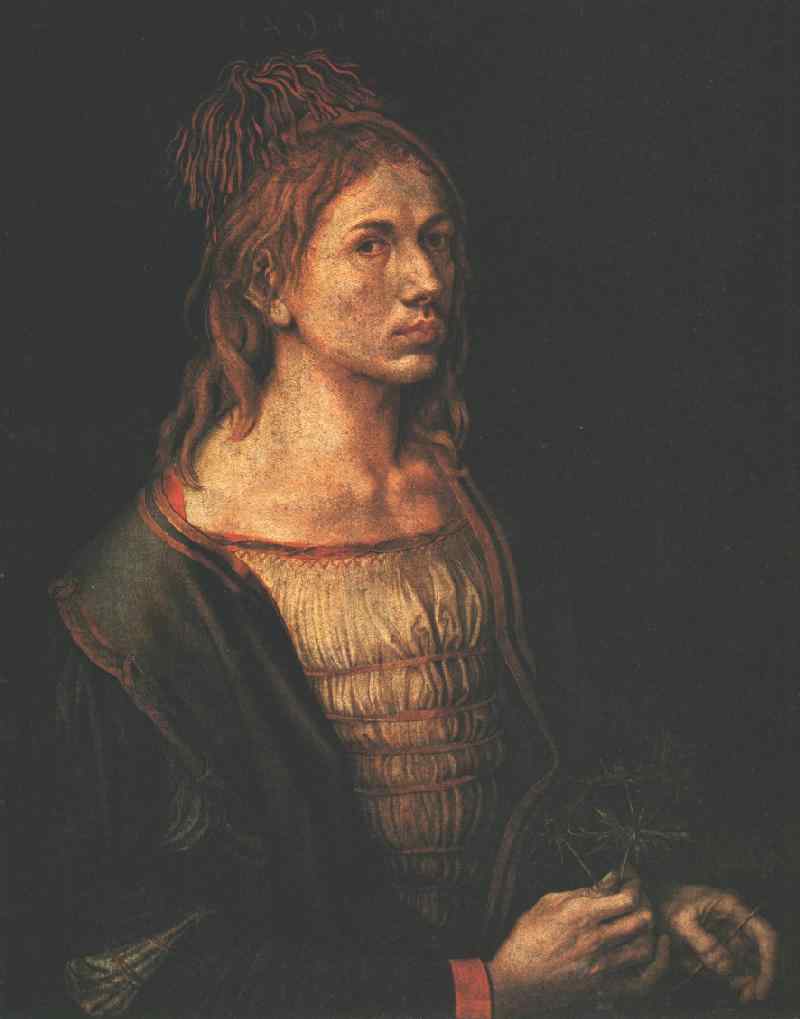
A Portrait of Introspection: Unveiling Dürer's "Autoportret"
Albrecht Dürer’s “Autoportret,” a captivating black and white study, transcends the simple depiction of a woman; it is a profound meditation on self-awareness rendered with the meticulous precision that defined the artist’s genius. The image, imbued with a palpable vintage quality, immediately evokes the spirit of the German Renaissance, echoing the stylistic hallmarks of Dürer himself while hinting at influences from the illuminated manuscripts and woodcut illustrations he meticulously studied during his formative years in Michael Wolgemut's workshop. The subject, presented centrally with an unwavering gaze directed towards the viewer, possesses a regal bearing accentuated by her elegantly styled updo – a detail that speaks to the artistic conventions of portraiture within the period, yet is imbued with a distinctly personal touch.
Technical Mastery and Dürer’s Signature Style
- Composition: The central positioning of the figure immediately draws the eye, establishing a direct connection between the subject and the observer. This technique was frequently employed by Dürer to emphasize psychological depth within his portraits.
- Line Work: Dürer’s mastery of line is instantly recognizable. Each stroke is deliberate, precise, and imbued with a remarkable sense of weight and volume. The rendering of the hair, in particular, demonstrates an extraordinary understanding of texture and movement.
- Monochromatic Palette: The restricted use of black and white amplifies the emotional impact of the piece, forcing the viewer to focus on form, expression, and subtle tonal variations. This was a common strategy employed by Dürer to control the narrative and enhance the dramatic effect.
Symbolism and the Renaissance Ideal
Beyond mere likeness, “Autoportret” embodies key themes of the Northern Renaissance. The woman’s serious expression suggests a contemplative mood, inviting viewers to engage in introspection – a hallmark of humanist thought prevalent during this era. The small object she holds, possibly jewelry or a decorative item, could represent wealth, status, or perhaps even a personal talisman, adding layers of symbolic meaning to the portrait. Dürer frequently used such details to elevate his subjects beyond simple representations, imbuing them with narrative potential.
Historical Context and Dürer’s Legacy
Created during Dürer's prolific career (1471-1528), “Autoportret” reflects the artist’s evolving artistic concerns. Born in Nuremberg, a vital center of commerce and craftsmanship, Dürer was deeply influenced by both Italian Renaissance ideals – particularly those of Leonardo da Vinci – and the established traditions of German art. His work bridged these influences, creating a uniquely powerful synthesis that cemented his place as one of the most important artists of the era. This piece stands as a testament to his enduring legacy—a timeless exploration of selfhood rendered with unparalleled skill and emotional resonance.