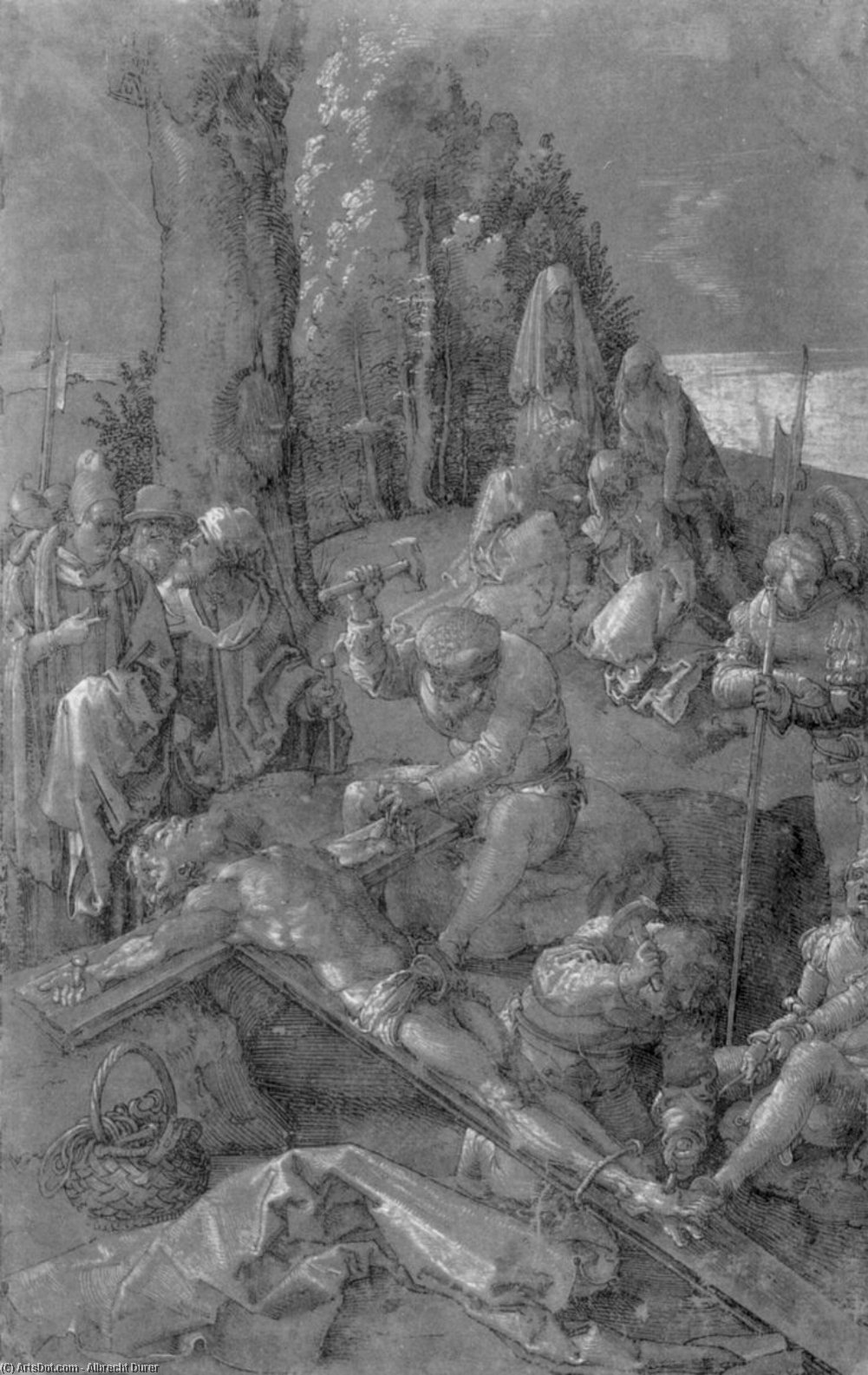
A Descent into Sorrow: Albrecht Dürer's Entombment of Christ
Albrecht Dürer’s “Christ,” a monochrome woodcut or engraving, isn’t merely a depiction of a biblical event; it’s a profound meditation on sacrifice, grief, and the enduring power of faith. Executed around 1508, this artwork, born from the heart of the Northern Renaissance in Nuremberg, possesses an arresting immediacy that draws the viewer into the solemn scene of Christ's entombment. The sheer technical mastery evident in every meticulously carved line speaks to Dürer’s unparalleled skill and his deep understanding of both artistic principles and the emotional weight of the subject matter.
- A Masterclass in Technique: Dürer’s process, typical of the era, involved painstakingly transferring a drawing onto a woodblock or metal plate. The artist then meticulously carved away the areas that would not be inked, leaving only the lines to create the final image. This technique, perfected over years of experimentation, resulted in an incredibly detailed and nuanced composition.
- Monochrome Drama: The absence of color is deliberate and powerfully effective. Dürer utilizes a sophisticated system of hatching and cross-hatching – layering parallel lines to build up tonal values – to create the illusion of form, light, and shadow. This masterful manipulation of grayscale evokes a sense of starkness and solemnity, amplifying the emotional impact of the scene.
- Compositional Strength: The composition is carefully structured, guiding the viewer’s eye from the central figure of Christ downwards towards the tomb. The surrounding figures – Roman soldiers, mourners, and witnesses – are rendered with a remarkable degree of realism, contributing to the overall sense of narrative depth.
The Northern Renaissance Vision
Dürer's work firmly places him within the context of the Northern Renaissance, a movement characterized by its emphasis on meticulous detail, realistic representation, and a fascination with storytelling. Unlike the Italian Renaissance, which focused heavily on classical ideals and vibrant color palettes, the Northern Renaissance prioritized observation and precise execution. Dürer’s “Christ” exemplifies this approach, showcasing his profound understanding of human anatomy, perspective, and the expressive potential of line.
The scene itself is deeply rooted in Christian iconography. The entombment of Christ represents a pivotal moment in the faith – the culmination of his suffering and sacrifice. It’s a visual representation of hope amidst despair, offering a poignant reminder of humanity's capacity for compassion and redemption. Dürer’s ability to translate this complex theological narrative into a visually compelling image is a testament to his artistic genius.
Symbolism and Emotional Resonance
Beyond its technical brilliance, “Christ” is laden with symbolic meaning. The downward movement of Christ's body – the very act of being lowered into the tomb – symbolizes his descent into death, but also foreshadows his resurrection. The surrounding figures, rendered in varying states of grief and reverence, amplify this emotional weight. Their expressions convey a profound sense of sorrow, highlighting the universal human experience of loss and mourning.
The stark monochrome palette further enhances the artwork’s emotional impact. It strips away any distractions, forcing the viewer to confront the raw reality of the scene. The shadows cast by the figures create a dramatic atmosphere, intensifying the feeling of solemnity and reverence.
A Legacy in Line
Dürer's “Christ” remains a powerful testament to his artistic vision and technical skill. Its enduring appeal lies not only in its meticulous detail but also in its profound emotional resonance. A hand-painted reproduction offers an unparalleled opportunity to experience the full impact of this masterpiece, bringing its beauty and symbolism into your home or studio. This artwork is more than just an image; it’s a window into the soul of the Northern Renaissance – a period defined by innovation, artistry, and a deep engagement with the human condition.