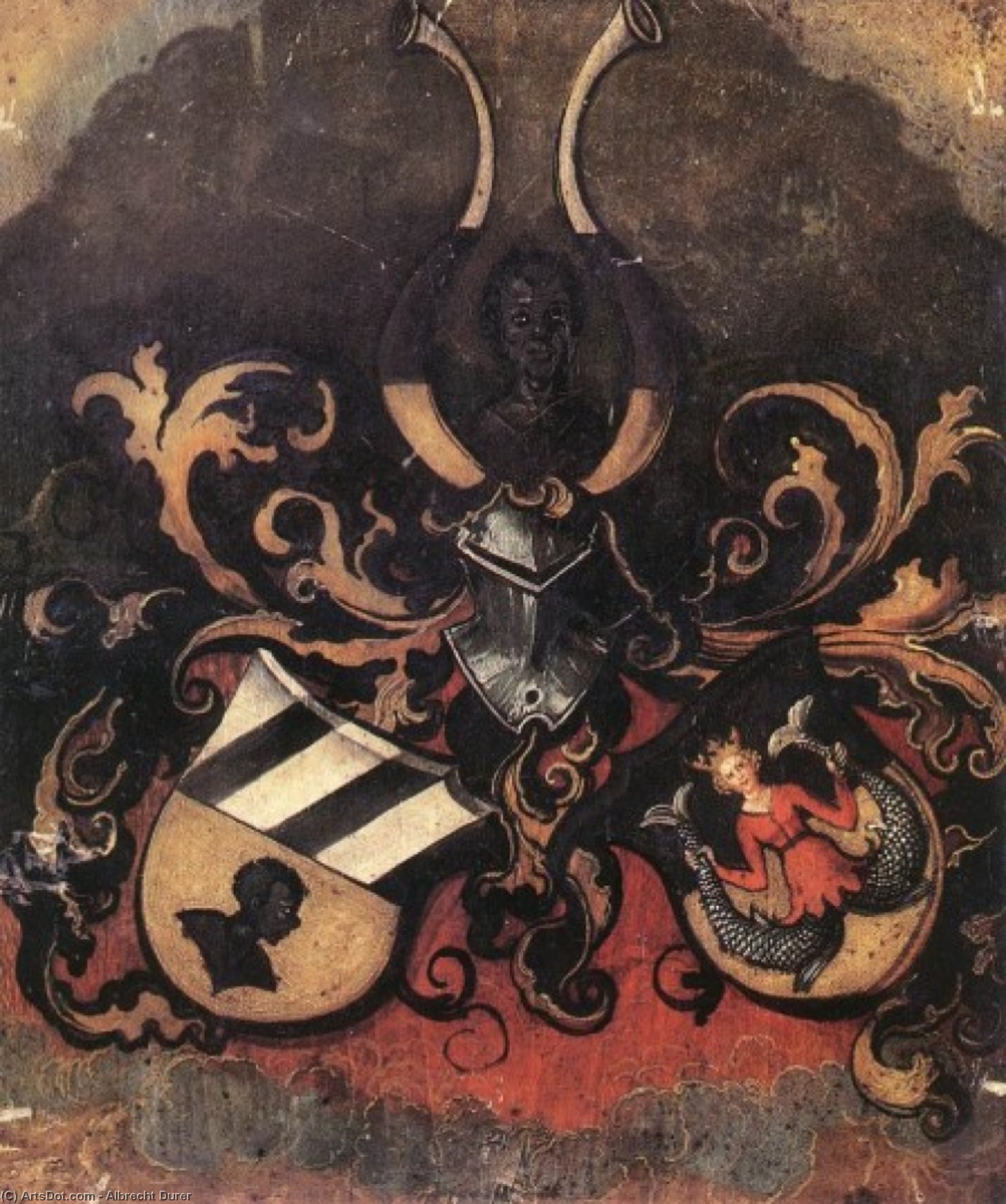
A Symphony of Heraldry and Technique: Albrecht Dürer’s “Combined Coat of Arms”
The year is 1499. Nuremberg pulses with the energy of burgeoning commerce and artistic innovation—a city that proudly championed the ideals of the Renaissance, nurturing talents like none other. Amidst this vibrant landscape emerged Albrecht Dürer, a young artist whose prodigious skill would soon etch his name into the annals of art history. Commissioned by Michael Wolgemut, Nuremberg’s foremost illuminator, Dürer embarked on an apprenticeship that proved transformative—immersing him in the meticulous craft of manuscript illumination alongside the burgeoning practice of woodcut illustration. This formative experience instilled within him not merely technical proficiency but a profound understanding of visual storytelling and the expressive power of artistic representation.
- Subject Matter: The painting depicts a knight, clad in armor—a symbol of chivalry and military prowess—standing atop a castle-like structure. This architectural element speaks to notions of authority, defense, and permanence—themes prevalent throughout Renaissance art.
- Style: Dürer’s “Combined Coat of Arms” exemplifies Northern Renaissance style, characterized by its balanced composition, precise detailing, and harmonious color palette. It reflects the humanist preoccupation with classical ideals of beauty and proportion.
Technique: Oil on Panel – Mastering Light and Texture
Dürer’s masterful use of oil paint on panel distinguishes his work from earlier tempera techniques. This medium allowed for unparalleled control over tonal gradations—capturing the subtle nuances of light and shadow with breathtaking realism. The artist painstakingly layered thin glazes upon a prepared surface, building up depth and texture to create an illusion of palpable materiality. Careful observation of natural forms informed Dürer’s approach, mirroring the Renaissance fascination with scientific inquiry and anatomical accuracy.
- Color Palette: The painting employs a restrained color scheme—primarily muted reds, blues, and golds—reflecting the aristocratic tastes of its patrons. These colors are skillfully blended to convey mood and atmosphere, enhancing the overall visual impact.
- Detailing: Dürer’s meticulous attention to detail is evident in every aspect of the artwork—from the intricate embossing on the knight's armor to the subtle rendering of stone textures on the castle walls. This level of precision underscores his commitment to artistic excellence.
Symbolism: The Union of Power and Legacy – Representing Tucher and Rieter Families
Beyond its aesthetic qualities, “Combined Coat of Arms” is laden with symbolic significance. The knight embodies courage and nobility—values revered during the Renaissance period. Simultaneously, the castle symbolizes stability and enduring power—reflecting the ambition of the families depicted. The heraldic emblems—the Tucher and Rieter coats-of-arms—represent not merely familial identity but also historical lineage and social status. These symbols underscore the painting’s role as a visual testament to the cultural values of Nuremberg at the dawn of the fifteenth century.
Ultimately, Albrecht Dürer's “Combined Coat of Arms” transcends mere representation; it embodies the spirit of the Renaissance—a celebration of human intellect and artistic achievement. Its enduring appeal lies in its ability to evoke contemplation and inspire admiration for the sublime beauty of art history. A reproduction by ArtsDot captures this essence, offering a glimpse into a masterpiece that continues to resonate across centuries.